Representative James Polk Latta
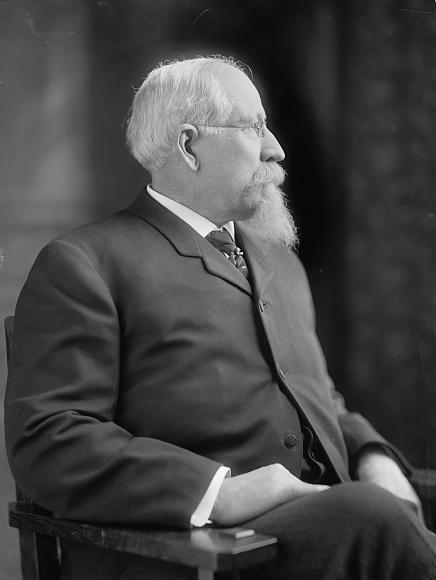
Here you will find contact information for Representative James Polk Latta, including email address, phone number, and mailing address.
| Name | James Polk Latta |
| Position | Representative |
| State | Nebraska |
| District | 3 |
| Party | Democratic |
| Status | Former Representative |
| Term Start | March 15, 1909 |
| Term End | March 3, 1913 |
| Terms Served | 2 |
| Born | October 31, 1844 |
| Gender | Male |
| Bioguide ID | L000117 |
About Representative James Polk Latta
James Polk Latta (October 31, 1844 – September 11, 1911) was a Nebraska Democratic politician who served as a Representative from Nebraska in the United States Congress from 1909 to 1911. A member of the Democratic Party, he represented Nebraska’s 3rd congressional district during the Sixty-first and part of the Sixty-second Congresses, contributing to the legislative process during a significant period in American history. His tenure in the House of Representatives reflected the interests of his largely agricultural constituency in northeastern Nebraska and placed him within the broader national debates of the Progressive Era.
Latta was born near Ashland, Ashland County, Ohio, on October 31, 1844. In 1846 he moved with his parents to Jackson County, Iowa, where he attended local schools and worked on the family farm. His early life in the rural Midwest, marked by farm labor and limited formal schooling, shaped his familiarity with agricultural concerns and the economic challenges of frontier communities. These formative experiences would later inform his public service and his advocacy for the interests of farmers and small-town residents.
In 1863 Latta moved to the Nebraska Territory, settling in Tekamah, Burt County, where he began his career as a schoolteacher. While teaching school in Tekamah, he became more firmly established in the community and soon turned to farming and stock raising in Burt County. Over time he expanded his agricultural pursuits and became a substantial farmer and stockman, gaining local prominence as a businessman and landowner. His success in agriculture and livestock operations provided the financial and social foundation for his later ventures into banking and politics.
Latta’s growing interest in finance led him to play a leading role in the development of local banking institutions. In 1890 he organized the First National Bank of Tekamah, reflecting the increasing economic sophistication of the region as it transitioned from frontier settlement to a more stable agricultural economy. He served as president of the First National Bank of Tekamah from its organization in 1890 until his death in 1911. Through this position he became a central figure in the economic life of Tekamah and Burt County, providing credit and financial services to farmers, merchants, and local enterprises.
Latta entered public life through state politics in Nebraska. He was elected to the Nebraska House of Representatives in 1887, where he served as a Democratic member during a period of growing political activity among farmers and rural communities in the state. After years of continued involvement in local and regional affairs, he was elected to the Nebraska Senate in 1907. His service in both chambers of the Nebraska Legislature gave him experience in lawmaking and party leadership, and it enhanced his reputation as a representative of agricultural and small-town interests in northeastern Nebraska.
Building on his state legislative career, Latta ran for and won election as a Democrat to the United States House of Representatives from Nebraska’s 3rd congressional district. He was elected to the Sixty-first Congress and reelected to the Sixty-second Congress, serving from March 4, 1909, until his death on September 11, 1911. During his time in Congress, he participated in the democratic process at the national level, representing the interests of his constituents during a transformative era that included debates over tariffs, banking, and regulatory reforms. His service coincided with the administration of President William Howard Taft and the continuing evolution of Progressive Era policies, and he aligned his work in Washington with the needs of the agricultural communities he had long served.
Latta died in office on September 11, 1911, in Rochester, Minnesota, while still serving in the Sixty-second Congress. At the time of his death he remained president of the First National Bank of Tekamah, underscoring his continued engagement in both public service and local economic life. He was interred in Tekamah Cemetery in Tekamah, Nebraska, where his career as teacher, farmer, banker, state legislator, and United States Representative had been rooted.