Representative James B. Longley Jr.
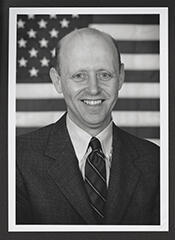
Here you will find contact information for Representative James B. Longley Jr., including email address, phone number, and mailing address.
| Name | James B. Longley Jr. |
| Position | Representative |
| State | Maine |
| District | 1 |
| Party | Republican |
| Status | Former Representative |
| Term Start | January 4, 1995 |
| Term End | January 3, 1997 |
| Terms Served | 1 |
| Born | July 7, 1951 |
| Gender | Male |
| Bioguide ID | L000431 |
About Representative James B. Longley Jr.
James B. Longley Jr. served as a Representative from Maine in the United States Congress from January 3, 1995, to January 3, 1997. A member of the Republican Party, he represented Maine’s 1st Congressional District for one term in the U.S. House of Representatives and contributed to the legislative process during a period of significant political change in the mid-1990s. He is part of a family with a notable record of public service that includes his father, James B. Longley (1924–1980), who served as governor of Maine, and relatives who have held public and professional roles in other countries, such as Jim Longley (born 1958), an Australian accountant and politician, and James Wilberforce Longley (1849–1922), a Canadian journalist, lawyer, politician, and judge. The name James Longley is also shared by an American documentary filmmaker, James Longley (filmmaker), underscoring the need to distinguish among several prominent individuals bearing the same name.
Born James Bernard Longley Jr. on July 7, 1951, in Lewiston, Androscoggin County, Maine, he grew up in a politically engaged household. His father, James B. Longley, was a businessman who became Maine’s first independent governor, serving from 1975 to 1979, and his mother, Helen Angela Walsh Longley, was active in civic and charitable work. Raised in Maine’s Roman Catholic community, he was exposed early to debates over government efficiency, fiscal restraint, and public accountability that would later shape his own political outlook.
Longley attended local schools in Maine before pursuing higher education out of state. He enrolled at the College of the Holy Cross in Worcester, Massachusetts, where he studied political science and graduated with a Bachelor of Arts degree. He later attended the University of Maine School of Law in Portland, earning a Juris Doctor and gaining admission to the bar. His legal training provided a foundation for his subsequent work in business, law, and public policy, and helped prepare him for the legislative and oversight responsibilities he would assume in Congress.
Before entering Congress, Longley built a career in business and law in Maine. He worked in the insurance and financial services sector, including involvement with the family’s insurance business, where he gained experience in regulatory issues, risk management, and small-business concerns. His professional background reinforced his interest in reducing regulatory burdens and promoting private-sector growth. He also became active in Republican politics in Maine, aligning himself with the party’s emphasis on limited government, lower taxes, and fiscal conservatism, and he emerged as a candidate at a time when national politics were shifting toward the Republican Party in the mid-1990s.
Longley was elected to the U.S. House of Representatives in the Republican wave election of 1994, part of the broader “Contract with America” movement that brought the Republican Party to majority status in the House for the first time in decades. Representing Maine’s 1st Congressional District, he took office on January 3, 1995. During his single term in Congress, he participated in the democratic process and represented the interests of his constituents in southern Maine, engaging in debates over federal spending, welfare reform, and regulatory policy. As a member of the House of Representatives, he contributed to the legislative agenda of the 104th Congress, which focused on balancing the federal budget, restructuring federal programs, and redefining the relationship between the federal government and the states. His voting record reflected his Republican affiliation and his commitment to fiscal restraint and government reform.
Longley’s service in Congress occurred during a significant period in American history, marked by divided government and intense negotiations between the Republican-controlled Congress and the Democratic administration of President Bill Clinton. He participated in the legislative battles that led to government shutdowns in 1995–1996 and in efforts to reshape federal programs such as welfare and Medicare. Despite his active engagement in these issues, he was defeated in his bid for reelection in 1996, ending his congressional service on January 3, 1997, after one term in office.
After leaving Congress, Longley returned to private life in Maine, resuming work in business and legal affairs and remaining involved in public policy discussions and Republican politics. While he did not return to elective office at the federal level, his congressional tenure, combined with his family’s broader legacy of public service through his father’s governorship and the public roles of other individuals sharing the Longley name, secured his place in the political history of Maine.