Representative James Henry MacLafferty
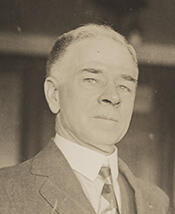
Here you will find contact information for Representative James Henry MacLafferty, including email address, phone number, and mailing address.
| Name | James Henry MacLafferty |
| Position | Representative |
| State | California |
| District | 6 |
| Party | Republican |
| Status | Former Representative |
| Term Start | April 11, 1921 |
| Term End | March 3, 1925 |
| Terms Served | 2 |
| Born | February 27, 1871 |
| Gender | Male |
| Bioguide ID | M000028 |
About Representative James Henry MacLafferty
James Henry MacLafferty (also spelled Maclafferty) (February 27, 1871 – June 9, 1937) was an American businessman and Republican politician who served as a Representative from California in the United States Congress from 1921 to 1925, completing two terms in office. He served two terms as a U.S. Representative from California from 1922 to 1925, contributing to the legislative process during a significant period in American history and representing the interests of his constituents in the House of Representatives.
MacLafferty was born in San Diego, California, on February 27, 1871. In his early childhood he moved frequently with his parents along the Pacific Coast and the Pacific Northwest. The family relocated to Oakland, California, in 1874, then to Eugene, Oregon, in 1880, to Astoria, Oregon, in 1883, and finally to Tacoma, Washington, in 1884. He attended public schools in the communities where his family settled, receiving a basic education that prepared him for a career in business rather than formal higher education.
Entering the workforce at a young age, MacLafferty became involved in the lumber business in Tacoma, Washington. He later continued in the same line of work in Seattle, Washington, remaining in the lumber trade there until 1889. By the end of the century he had shifted his focus to the paper industry, engaging in the wholesale paper business in Chicago in 1899. In 1900 he returned to the Pacific Coast and settled once again in Oakland, California. There he worked as a traveling salesman and continued his involvement in the paper business, building a reputation as a capable businessman and establishing the commercial and civic connections that would later support his entry into public life.
MacLafferty’s political career developed out of this business background and his standing in the community. A member of the Republican Party, he was elected to the United States House of Representatives as a Republican to the Sixty-seventh Congress to fill the vacancy caused by the death of Representative John A. Elston. He was subsequently reelected to the Sixty-eighth Congress. His service in Congress extended from November 7, 1922, to March 3, 1925, encompassing two terms in office during a period marked by post–World War I economic adjustment and evolving national policy debates. During these years he participated in the democratic process in the House of Representatives and represented the interests of his California constituents within the broader legislative agenda of the Republican majority. He was an unsuccessful candidate for reelection in 1924 to the Sixty-ninth Congress, which brought his congressional service to a close in early 1925.
After leaving Congress, MacLafferty continued his public service at the federal level. He served as an assistant to the Secretary of Commerce from March 24, 1925, until August 31, 1927, a period that coincided with the pro-business policies of the 1920s and the expanding role of the Department of Commerce in promoting American industry and trade. Following his tenure in Washington, he returned to Oakland and resumed his business activities. Drawing on his long experience in commerce and transportation-related enterprises, he became vice president of the Pacific American Steamship Association and of the Shipowners’ Association of the Pacific Coast, positions that placed him at the center of maritime and shipping interests on the West Coast.
James Henry MacLafferty died in Oakland, California, on June 9, 1937. His remains were cremated. His career combined substantial experience in private business with service in Congress and in the executive branch, reflecting the close ties between commercial development and public policy on the Pacific Coast in the early twentieth century.