Representative James George Maguire
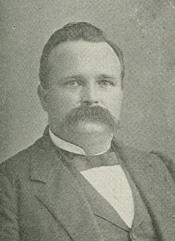
Here you will find contact information for Representative James George Maguire, including email address, phone number, and mailing address.
| Name | James George Maguire |
| Position | Representative |
| State | California |
| District | 4 |
| Party | Democratic |
| Status | Former Representative |
| Term Start | August 7, 1893 |
| Term End | March 3, 1899 |
| Terms Served | 3 |
| Born | February 22, 1853 |
| Gender | Male |
| Bioguide ID | M000059 |
About Representative James George Maguire
James George Maguire (February 22, 1853 – June 20, 1920) was an American attorney, jurist, politician, and Georgist who served in the California State Assembly from 1875 to 1877, on the San Francisco County Superior Court from 1883 to 1889, and in the United States House of Representatives from 1893 to 1899. A Democrat who at times broke with his party over issues of land reform and political bossism, he was also the unsuccessful Democratic nominee for Governor of California in 1898, losing to Republican Henry T. Gage. Short in stature but weighing over two hundred pounds, he was widely known by the nickname “Little Giant,” a sobriquet used by both supporters and opponents.
Maguire was born on February 22, 1853, in Boston, Massachusetts, to Irish immigrant parents, his father originating from County Donegal and his mother from County Kildare. In February 1854, when he was still an infant, the family moved to California, where he was raised. He attended the public schools of Watsonville in Santa Cruz County and later studied at the private academy of Joseph K. Fallon. Before entering the professions of law and politics, Maguire worked with his hands and in the classroom: he apprenticed for four years as a blacksmith and subsequently taught school for about a year and a half. These early experiences, combined with his Irish Catholic background and exposure to working-class life in California, helped shape his later interest in labor issues and land reform.
Maguire’s first sustained public involvement came through the temperance and Catholic fraternal organization the Knights of Father Mathew, in which he was active from at least 1874 through 1880. In 1875 he also began military service as a lieutenant in the California National Guard, a position he held until 1879. During this period he was called upon to help suppress the San Francisco riots, an experience that placed him at the intersection of public order, labor unrest, and urban politics. That same year, at just twenty-two years of age, he entered elective office as one of twenty members representing the five San Francisco districts in the California State Assembly, serving from 1875 to 1877 and becoming the youngest member of the Legislature.
While serving in the Assembly, Maguire studied law and was admitted to the bar by the Supreme Court of California in January 1878. He commenced legal practice in San Francisco, where he quickly developed a reputation as a capable attorney and mentor; among his students and clerks was future assemblyman Jeremiah J. McCarthy. Seeking judicial office, Maguire pursued the fusion nomination of the Democratic and Workingmen’s Parties for judge of the San Francisco County Superior Court in 1880 and for city attorney of San Francisco in 1881, but he failed to secure either nomination. Persisting in his judicial ambitions, he ran again for the Superior Court in 1882 and was elected, serving as a judge from 1883 to 1889. During these years he became increasingly disillusioned with what he regarded as the domination of the Democratic Party by political bosses and large landowners. In 1887 he left the Democratic Party to join Henry George’s United Labor Party, reflecting his growing commitment to Georgist single-tax ideas, and remained active in that organization until its dissolution in 1888, after which he rejoined the Democrats.
Maguire’s national political career began with his election as a Democrat to the U.S. House of Representatives from California’s 4th congressional district in 1892. He served three consecutive terms in the 53rd, 54th, and 55th Congresses, from March 4, 1893, to March 3, 1899, representing his San Francisco–based constituency during a period of economic turbulence and intense debate over monetary policy, immigration, and imperial expansion. In the House he rose to positions of influence, serving as the ranking member of the Committee on Immigration and Naturalization during his first term and as ranking member of the Committee on Elections during his third. Among his notable legislative achievements was authorship of the Maguire Act, which abolished the practice of imprisoning sailors who deserted from coastwise vessels, a measure that reflected his concern with labor rights and personal liberty.
Maguire’s congressional record also reflected the racial and economic tensions of his era. He was a strong supporter of Chinese exclusion, contending that what he called the “semibarbarism” of Chinese immigrants threatened the “Caucasian civilization” of the United States. He argued that “coolie labor” depressed wages and contributed to unemployment, insisting that it was “manifestly impossible to maintain one standard of wages for American labor and another for alien labor, competing in the same market, with natural opportunities equally closed against them.” In line with the Democratic Party’s anti-imperialist plank, he opposed the annexation of Hawaii. At the same time, he was involved with the California Afro-American League, an association that underscored the complex and sometimes contradictory nature of his views on race and civil rights. A committed Georgist, he sought to advance single-tax principles in Congress; on January 31, 1894, he proposed an amendment to the Wilson–Gorman Tariff Act that would have replaced the bill’s income tax with a national single tax, levying a direct tax of $31,311,125 on land values nationwide. Only five other representatives—Michael D. Harter and Tom L. Johnson of Ohio, Charles Tracey and J. De Witt Warner of New York, and Jerry Simpson of Kansas—voted with him. After the amendment’s defeat, Maguire supported both the original House version of the tariff bill and the final version returned by the Senate.
In 1898, while still serving in Congress, Maguire became the Democratic-Populist-Silver Republican fusion candidate for Governor of California. He campaigned on a platform of anti-monopolism, support for the war with Spain, and opposition to the War Revenue Act of 1898, positioning himself as a defender of small producers and opponents of concentrated economic power. Despite a vigorous campaign, he lost to Republican Henry T. Gage, receiving about 45 percent of the vote. His candidacy was opposed by nearly every major newspaper in the state, with the notable exception of William Randolph Hearst’s San Francisco Examiner, which backed him. The campaign was marked by a bitter controversy with Irish Catholic priest Peter Yorke, who denounced Maguire for his 1888 book, “Ireland and The Pope; A Brief History of Papal Intrigues Against Irish Liberty from Adrian IV to Leo XIII,” in which Maguire argued that certain medieval popes had abetted English domination of Ireland. Yorke’s attacks were so severe that Archbishop Patrick William Riordan publicly distanced himself, telling the press that “Father Yorke is alone responsible for his utterances.” Maguire did not seek renomination to Congress in 1898, and his service in the House concluded on March 3, 1899.
After leaving Congress, Maguire resumed the practice of law in San Francisco, remaining a prominent figure in Democratic and reform circles. He served as a delegate to the Democratic National Conventions of 1900 and 1912, at the latter pledged to Speaker Champ Clark. He attempted a return to Congress in 1908, running on a Democratic–Union Labor–Independence fusion ticket, but was defeated by the Republican incumbent, Julius Kahn. In 1911 he made his final bid for public office, seeking election as district attorney of San Francisco; he was defeated in the primary by the incumbent, Charles Fickert. Throughout these years he continued to advocate Georgist ideas and labor reforms through speeches and publications. His works included “Ireland and The Pope; A Brief History of Papal Intrigues Against Irish Liberty from Adrian IV to Leo XIII” (1888); “Single-tax vs. Socialism: Debate between James G. Maguire and Job Harriman” (1895); and a series of pamphlets and articles such as “The Tax That Can’t Be Shifted” (1906), “Not Opposed to Property in Land” (1906), “Does Not Invade Vested Rights” (1906), “The Gompers-Case Usurpation” (1909), “Judge Maguire’s Memories of Henry George” (1909), and “The Philosophy of The Single Tax Movement” (1920). He also published and circulated his congressional speeches, including “Direct Taxation of Land Values. Industrial Depressions. How to Make Labor Free” (containing speeches delivered January 11, 1894, and August 23 and 26, 1893), “Chinese Exclusion” (October 13–14, 1893), and two addresses on silver delivered on August 25 and 26, 1893.
Maguire remained active in civic and fraternal life until his final years. A member of the Independent Order of Odd Fellows since 1877, he maintained his affiliation for more than four decades. He died in San Francisco on June 20, 1920. His funeral was conducted under the auspices of the Odd Fellows, reflecting his long-standing membership in the organization. James George Maguire was interred at Greenlawn Memorial Park in Colma, California. His public service and advocacy for labor and land reform were later commemorated during World War II when a Liberty ship, the SS James G. Maguire, was named in his honor and launched in 1943.