Representative James Earl Major
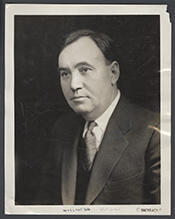
Here you will find contact information for Representative James Earl Major, including email address, phone number, and mailing address.
| Name | James Earl Major |
| Position | Representative |
| State | Illinois |
| District | 21 |
| Party | Democratic |
| Status | Former Representative |
| Term Start | December 3, 1923 |
| Term End | January 3, 1935 |
| Terms Served | 4 |
| Born | January 5, 1887 |
| Gender | Male |
| Bioguide ID | M000073 |
About Representative James Earl Major
James Earl Major (January 5, 1887 – January 4, 1972) was an American lawyer, jurist, and Democratic politician who served as a United States Representative from Illinois, a United States District Judge of the United States District Court for the Southern District of Illinois, and a United States Circuit Judge of the United States Court of Appeals for the Seventh Circuit. Over the course of his public career, he represented Illinois in the United States House of Representatives from 1923 to 1935, contributing to the legislative process during four terms in office, and later held significant judicial responsibilities at both the district and appellate levels.
Major was born in Donnellson, Montgomery County, Illinois, on January 5, 1887. He attended the common and high schools of his native city, receiving his early education in the local public school system. Seeking further training, he enrolled at Brown’s Business College, from which he graduated in 1907. He then pursued legal studies in Chicago at the Illinois College of Law, an institution that later became part of DePaul University College of Law, and completed his legal education there in 1909.
After finishing law school, Major was admitted to the bar in 1910. He commenced the practice of law in Hillsboro, Illinois, in 1912, establishing himself professionally in Montgomery County. That same year he entered public service as prosecuting attorney of Montgomery County, Illinois, a position he held from 1912 to 1920. In this role, he gained experience in criminal prosecution and local governance, building a reputation that would support his later bids for federal office.
Major’s national political career began with his election as a Democrat to the 68th United States Congress. He served his first term in the House of Representatives from March 4, 1923, to March 3, 1925, representing an Illinois district during a period of post–World War I adjustment and early 1920s domestic policy debates. Although he was an unsuccessful candidate for reelection in 1924 to the 69th Congress, he remained active in law and politics and resumed the practice of law in Hillsboro. He returned to Congress after winning election to the 70th Congress, serving from March 4, 1927, to March 3, 1929. Again defeated for reelection in 1928 to the 71st Congress, he nonetheless secured election to the 72nd and 73rd Congresses and served from March 4, 1931, until his resignation on October 6, 1933, upon his appointment to the federal bench. During this final period of congressional service, he was one of the managers appointed by the United States House of Representatives in 1933 to conduct the impeachment proceedings against Harold Louderback, Judge of the United States District Court for the Northern District of California. Across these nonconsecutive terms, Major participated in the democratic process and represented the interests of his Illinois constituents during a significant era that included the onset of the Great Depression and the early New Deal.
Major’s judicial career began while he was still serving in Congress. On June 12, 1933, President Franklin D. Roosevelt extended to him a recess appointment as a Judge of the United States District Court for the Southern District of Illinois, filling the vacancy created by the elevation of Judge Louis FitzHenry. Following this temporary appointment, Roosevelt formally nominated Major to the same district court position on January 8, 1934. The United States Senate confirmed his nomination on January 23, 1934, and he received his commission on January 26, 1934. His service as a district judge continued until April 5, 1937, when he was elevated to the United States Court of Appeals for the Seventh Circuit.
On March 9, 1937, President Roosevelt nominated Major to a seat on the United States Court of Appeals for the Seventh Circuit, again succeeding Judge Louis FitzHenry. The Senate confirmed him on March 17, 1937, and he received his commission on March 23, 1937. Major served on the Seventh Circuit for decades, becoming Chief Judge of the court in 1948. He held the position of Chief Judge until 1954, during which time he also served as a member of the Judicial Conference of the United States from 1949 to 1954, participating in the formulation of national policy for the federal judiciary. He assumed senior status on March 23, 1956, continuing to serve the court in a reduced capacity while maintaining an active role in appellate adjudication.
James Earl Major spent his later years in Hillsboro, Illinois, where he had long resided and maintained his professional and personal ties. He died there on January 4, 1972, one day before his eighty-fifth birthday. He was interred in Oak Grove Cemetery in Hillsboro, closing a career that spanned local prosecution, multiple terms in the United States House of Representatives, and long service on the federal bench at both the district and appellate levels.