Senator James Edgar Martine
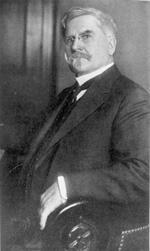
Here you will find contact information for Senator James Edgar Martine, including email address, phone number, and mailing address.
| Name | James Edgar Martine |
| Position | Senator |
| State | New Jersey |
| Party | Democratic |
| Status | Former Representative |
| Term Start | April 4, 1911 |
| Term End | March 3, 1917 |
| Terms Served | 1 |
| Born | August 25, 1850 |
| Gender | Male |
| Bioguide ID | M000205 |
About Senator James Edgar Martine
James Edgar Martine (August 25, 1850 – February 26, 1925) was an American Democratic Party politician who represented New Jersey in the United States Senate from 1911 to 1917. A member of the Democratic Party, he contributed to the legislative process during one term in office, serving during a significant period in American history and participating in the democratic process as he represented the interests of his constituents.
Martine was born in New York City on August 25, 1850, to Daniel W. Martine and Anna Neher Martine, who were of German and English descent. In 1863, when Martine was still a boy, his father died, and he was placed in charge of the family’s large ancestral farm in Plainfield, New Jersey. This early responsibility shaped his working life and business interests. As Plainfield expanded and urbanized in the late nineteenth century, Martine not only managed the farm but also developed a successful real estate practice, selling off portions of the property for development and establishing himself as a local businessman and landowner.
Martine’s political career began at the local level in Plainfield, where he was elected to the common council. He quickly became a familiar figure in New Jersey politics, though for many years he was more notable for his persistence than for electoral success. He was a frequent and usually unsuccessful candidate for higher office, running unsuccessfully for the United States House of Representatives, for Governor of New Jersey three times, for the New Jersey State Senate four times, and for the New Jersey General Assembly twice. He also sought various local and county offices, including mayor, before finally attaining statewide prominence.
Martine’s breakthrough came in 1910, when he entered the first-ever popular primary in New Jersey for the office of United States Senator. Although the primary was non-binding and the presumptive Democratic candidate, former Senator James Smith Jr., did not formally register, Martine won the most votes in the contest. When the Democratic Party subsequently gained control of the state legislature, a struggle ensued between supporters of Martine and Smith over whether the legislators should honor the result of the popular primary. The contest became a test of the principle of popular choice in senatorial selection. With the backing of Governor-elect Woodrow Wilson, who championed primary reform and the will of the voters, Martine ultimately prevailed and was elected by the legislature to the United States Senate, taking office in 1911.
During his Senate service from 1911 to 1917, Martine held several important committee assignments. He served as chairman of the Committee on Coast Defenses in the Sixty-third Congress and as chairman of the Committee on Industrial Expositions in both the Sixty-third and Sixty-fourth Congresses. His tenure coincided with the Progressive Era and the early years of World War I, a time of significant social, economic, and political change. Martine became particularly noted for his role in the 1913 Senate investigation into the West Virginia miners’ strike. As a member of the investigating committee, he aggressively questioned Kanawha County coal company executive Quinn Morton about the arming and deployment of the armored “Bull Moose” train against a tent colony of striking miners and their families at Holly Grove on the night of February 2, 1913. During that attack, a young miner, Charles Estep, who had a young child and a pregnant wife, was killed. The train carried dozens of private mercenaries equipped with a Gatling gun, and Martine pressed Morton on his refusal to acknowledge giving the order to fire and on reports that he had asked the sheriff to have the train backed up to repeat the assault. His pointed questioning led the other two senators on the committee to attempt to restrict him by requiring that his questions be submitted in advance for review. As noted by historian David Alan Corbin in his 1990 book The West Virginia Mine Wars, the Congressional Record of the hearing “breaks off suddenly, the topic switches, and Senator Martine disappears from the panel of inquisitors,” suggesting that his aggressive stance may have contributed to his marginalization in the inquiry.
Although Martine’s election to the Senate had been secured with the crucial support of Governor Woodrow Wilson, their relationship deteriorated after Wilson became President of the United States. Martine emerged as a critic and opponent of several key Wilson policies. He was skeptical of American participation in World War I and opposed aspects of Wilson’s foreign policy, including the proposal for a League of Nations. His independence from the administration and his antiwar stance placed him at odds with Wilson’s allies in New Jersey. In the 1916 Democratic primary, he was challenged by John W. Wescott, the Attorney General of New Jersey and a close Wilson ally. Martine survived this intraparty challenge, securing renomination, but in the general election he was defeated by Republican Joseph S. Frelinghuysen by a wide margin, bringing his single Senate term to an end in 1917.
In his later years, after leaving the Senate, Martine withdrew from national office but remained a figure of note in New Jersey’s political history as an example of a locally rooted businessman who rose to the Senate through the emerging primary system and who often took independent positions once in office. He spent his final years away from the center of political power. James Edgar Martine died of apoplexy in Miami, Florida, on February 26, 1925. He was interred at Hillside Cemetery in Scotch Plains, New Jersey, closing the life of a senator whose career bridged local politics, progressive-era reforms, and the contentious debates surrounding America’s entry into World War I.