Representative James Madison Marvin
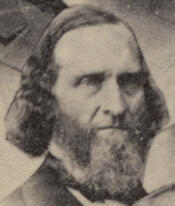
Here you will find contact information for Representative James Madison Marvin, including email address, phone number, and mailing address.
| Name | James Madison Marvin |
| Position | Representative |
| State | New York |
| District | 18 |
| Party | Republican |
| Status | Former Representative |
| Term Start | December 7, 1863 |
| Term End | March 3, 1869 |
| Terms Served | 3 |
| Born | February 27, 1809 |
| Gender | Male |
| Bioguide ID | M000210 |
About Representative James Madison Marvin
James Madison Marvin (February 27, 1809 – April 25, 1901) was a businessman and U.S. Representative from New York who served three consecutive terms in Congress from 1863 to 1869, during the latter half of the American Civil War and the early years of Reconstruction. A member of the Republican Party, he contributed to the legislative process in the House of Representatives while representing the interests of his New York constituents.
Marvin was born on February 27, 1809, in Ballston, New York. He was the son of William Marvin and Mary Benedict Marvin, and the brother of Thomas J. Marvin, who later became a Saratoga County judge and a member of the New York State Assembly in 1833. He attended the common schools of the area and, as a young man, moved to Saratoga Springs, New York, in 1828. In 1838 he married Rhoby H. Barnum. The couple had five children: a son, William, who died at age nine in 1855, and four daughters—Mary, Frances, Caroline, and Rhobie—who were still living as of 1878.
Before entering national politics, Marvin established himself as a prominent businessman in upstate New York. He engaged in the hotel business in Saratoga Springs and Albany, and in 1839 became one of the proprietors of the United States Hotel in Saratoga Springs, then one of the most notable resort hotels in the region. In this capacity he was an employer and friend of Solomon Northup, the free Black man who was kidnapped in 1841 and sold into slavery in the South. When Northup, in 1852, managed to have a letter sent by Samuel Bass describing his circumstances and requesting proof of his free status, it was addressed to contacts in New York, including those connected to Marvin’s community, and formed part of the effort that ultimately secured Northup’s release.
Marvin’s public career began at the local and state levels. A member of the Whig Party before the rise of the Republican Party, he served as a Whig member of the New York State Assembly representing Saratoga County in 1846. He was also active in county government, serving on the board of supervisors of Saratoga County and holding the position of chairman of the board in 1845, 1857, 1862, and 1874. In 1859 he was elected to the first board of trustees of the Saratoga Monument Association, an organization charged with constructing a monument on the site of British General John Burgoyne’s surrender in 1777, commemorating the pivotal Battles of Saratoga in the American Revolution.
With the advent of the Civil War era and the consolidation of anti-slavery and Unionist forces into the Republican Party, Marvin aligned with the Republicans and advanced to national office. He was elected as a Republican to the Thirty-eighth, Thirty-ninth, and Fortieth Congresses, serving in the U.S. House of Representatives from March 4, 1863, to March 4, 1869. His tenure in Congress thus spanned the critical years of the latter half of the Civil War and the beginning of Reconstruction. During this period he participated in the democratic process at the federal level, contributing to legislation and debates that shaped wartime policy and postwar recovery. Marvin served as chairman of the Committee on Expenditures in the Department of the Treasury during the Thirty-ninth and Fortieth Congresses, overseeing aspects of federal fiscal accountability at a time of extraordinary government expenditure. After three terms in office, he was not a candidate for renomination in 1868.
Following his congressional service, Marvin returned to his business and civic interests in New York. He founded and served as president of the First National Bank of Saratoga Springs, New York, playing a significant role in the financial development of the community. He also extended his influence into the transportation sector, serving as a director of the Schenectady and Saratoga Railroad and of the New York Central Railroad, both important components of the expanding rail network that underpinned the economic growth of New York State and the broader region in the late nineteenth century.
James Madison Marvin remained a respected figure in Saratoga Springs until his death. He died there on April 25, 1901, at the age of ninety-two. He was interred in Greenridge Cemetery in Saratoga Springs, New York, closing a long life that encompassed local and state service, national legislative responsibility during one of the most consequential periods in American history, and significant contributions to the business and civic life of his community.