Representative James McAndrews
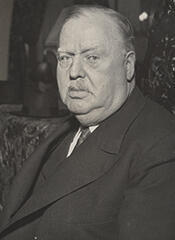
Here you will find contact information for Representative James McAndrews, including email address, phone number, and mailing address.
| Name | James McAndrews |
| Position | Representative |
| State | Illinois |
| District | 9 |
| Party | Democratic |
| Status | Former Representative |
| Term Start | December 2, 1901 |
| Term End | January 3, 1941 |
| Terms Served | 9 |
| Born | October 22, 1862 |
| Gender | Male |
| Bioguide ID | M000296 |
About Representative James McAndrews
James McAndrews (October 22, 1862 – August 31, 1942) was a Democratic member of the United States House of Representatives from Illinois whose service in Congress, spanning nine terms between 1901 and 1941, coincided with major transformations in American political and economic life. Born in Woonsocket, Providence County, Rhode Island, he attended the common schools there, receiving a basic formal education typical of the period. Little is recorded about his family background or early employment, but his formative years in New England preceded a move that would define his public career.
As a young man, McAndrews moved to Chicago, Illinois, a rapidly growing industrial and commercial center in the late nineteenth century. In Chicago he engaged in business pursuits, participating in the city’s expanding economic life. His experience in the private sector led to his appointment as building commissioner of Chicago, a position that placed him at the intersection of urban development, construction oversight, and municipal regulation. This role provided him with administrative experience and public visibility, and it helped establish his reputation in local Democratic politics at a time when Chicago was emerging as a major urban stronghold for the party.
McAndrews entered national politics as a Democrat and was first elected to the Fifty-seventh Congress, taking office on March 4, 1901, as a Representative from Illinois. He was reelected to the Fifty-eighth Congress and served continuously in this initial period from March 4, 1901, to March 3, 1905. During these early years in the House of Representatives, he participated in the legislative process at the dawn of the Progressive Era, representing the interests of his Illinois constituents as the nation confronted issues of industrial regulation, labor conditions, and urban growth. After two consecutive terms, he left Congress at the close of the Fifty-eighth Congress.
After several years out of federal office, McAndrews returned to the House when he was elected to the Sixty-third Congress and subsequently reelected to the three succeeding Congresses, serving from March 4, 1913, to March 3, 1921. This second, longer period of service placed him in Congress during the presidencies of Woodrow Wilson and the momentous years of World War I. As a member of the House of Representatives in this era, he took part in debates and votes on wartime measures, domestic mobilization, and postwar readjustment, again acting as a Democratic representative of an increasingly important urban constituency in Illinois. His legislative career during these years reflected the broader Democratic agenda of progressive reform and international engagement.
McAndrews’s continuous service ended when he was an unsuccessful candidate for reelection in 1920 to the Sixty-seventh Congress. Following this defeat, he resumed his business activities in Chicago, returning to the private sector that had first launched his public career. He remained active in political life, however, and sought to reenter Congress as a Democrat. In 1932, amid the economic turmoil of the Great Depression and the electoral realignment that brought Franklin D. Roosevelt to the presidency, he was an unsuccessful candidate for election to the Seventy-third Congress, temporarily halting his efforts to regain a seat in the House.
Persevering in his political ambitions, McAndrews was again elected to Congress as a Democrat and returned to national office in the mid-1930s. He won election to the Seventy-fourth, Seventy-fifth, and Seventy-sixth Congresses, serving from January 3, 1935, to January 3, 1941. In this third and final phase of his congressional career, he served during the New Deal era, a period marked by extensive federal legislation addressing economic recovery, social welfare, and financial reform. His tenure during these years placed him among the Democratic majority that shaped the federal response to the Great Depression, and he continued to represent the interests of his Illinois constituents in a time of profound national change. He was an unsuccessful candidate for reelection in 1940 to the Seventy-seventh Congress, concluding four decades of intermittent service in the House.
James McAndrews’s congressional career, encompassing nine terms between 1901 and 1941, unfolded across some of the most significant periods in modern American history, including the Progressive Era, World War I, the interwar years, and the New Deal. Throughout these years he participated in the democratic process as a member of the House of Representatives, contributing to the legislative work of the nation and maintaining close ties to the urban, industrial constituency of Illinois that repeatedly returned him to office. After leaving Congress for the final time, he remained in Chicago, where he had long been rooted both professionally and politically.
McAndrews died in Chicago, Illinois, on August 31, 1942. He was interred in Calvary Cemetery in Evanston, Illinois, a resting place for many of the region’s prominent Catholic and civic figures. His long, if intermittent, career in public service reflected the trajectory of a turn-of-the-century urban Democrat who rose from local administrative office to repeated terms in the national legislature, representing Illinois during four distinct eras of American political development.