Representative James Patrick McGranery
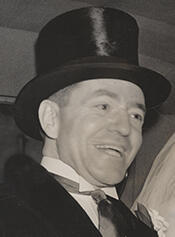
Here you will find contact information for Representative James Patrick McGranery, including email address, phone number, and mailing address.
| Name | James Patrick McGranery |
| Position | Representative |
| State | Pennsylvania |
| District | 2 |
| Party | Democratic |
| Status | Former Representative |
| Term Start | January 5, 1937 |
| Term End | January 3, 1945 |
| Terms Served | 4 |
| Born | July 8, 1895 |
| Gender | Male |
| Bioguide ID | M000454 |
About Representative James Patrick McGranery
James Patrick McGranery (July 8, 1895 – December 23, 1962) was a United States representative from Pennsylvania, a United States district judge of the United States District Court for the Eastern District of Pennsylvania, and Attorney General of the United States. A member of the Democratic Party, he served four terms in the United States House of Representatives from 1937 to 1945, representing his Pennsylvania constituents during a period marked by the Great Depression, the New Deal, and the Second World War.
McGranery was born on July 8, 1895, in Philadelphia, Pennsylvania. He was raised in that city and educated in its parochial and public schools. Coming of age in the early twentieth century, he entered the workforce before pursuing higher education, gaining practical experience that would later inform his public service. His early years in Philadelphia exposed him to the concerns of working- and middle-class families in an industrial urban environment, shaping his later political outlook.
McGranery studied law in Philadelphia, attending Temple University Law School (now Temple University Beasley School of Law), where he received his legal education while working to support himself. He was admitted to the bar and entered private practice in Philadelphia, building a career as an attorney. His legal training and practice provided the foundation for his later roles in public office, both legislative and judicial, and established his reputation within Pennsylvania’s Democratic Party.
McGranery’s national public career began with his election as a Democrat to the United States House of Representatives, where he served from 1937 to 1945. During these four terms in Congress, he participated in the legislative process at a time of profound national transformation, including the later years of the New Deal and the nation’s mobilization for World War II. As a member of the House of Representatives, he represented the interests of his Pennsylvania constituents, engaged in debates over domestic economic recovery, social welfare, and wartime policy, and contributed to the formulation of federal legislation in this critical era of American history.
After leaving Congress in 1945, McGranery continued his public service in the federal government. He served in legal and administrative capacities in Washington, D.C., and his experience as both a legislator and a lawyer led to his appointment to the federal bench. He became a United States district judge of the United States District Court for the Eastern District of Pennsylvania, where he presided over a wide range of federal civil and criminal matters. His judicial service further solidified his standing as a prominent legal figure and prepared him for higher executive responsibilities within the Department of Justice.
McGranery reached the pinnacle of his federal career when he was appointed Attorney General of the United States. He served as Attorney General from May 27, 1952, to January 20, 1953, during the administration of President Harry S. Truman. His tenure coincided with the final months of the Truman presidency and the height of Cold War tensions and domestic concerns over communism. In 1952, acting in his capacity as Attorney General, McGranery revoked the re-entry permit of actor and filmmaker Charlie Chaplin while Chaplin was voluntarily abroad, following concerns raised about Chaplin’s alleged communist sympathies. Under immigration law, Chaplin would have been required to answer questions regarding “moral turpitude” in order to re-enter the United States; rather than submit to this process, Chaplin chose to remain abroad for twenty years, making the episode one of the most notable and controversial actions of McGranery’s tenure.
Following the conclusion of his service as Attorney General on January 20, 1953, McGranery returned to private life. In 1954, he resumed the private practice of law in Washington, D.C., where he continued to work as an attorney until his death. Drawing on his extensive experience in Congress, on the federal bench, and in the Department of Justice, he remained engaged in legal and public affairs in the nation’s capital. James Patrick McGranery died on December 23, 1962, leaving a record of service that spanned the legislative, judicial, and executive branches of the federal government during some of the most consequential decades of the twentieth century.