Senator James Howard McGrath
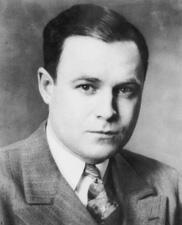
Here you will find contact information for Senator James Howard McGrath, including email address, phone number, and mailing address.
| Name | James Howard McGrath |
| Position | Senator |
| State | Rhode Island |
| Party | Democratic |
| Status | Former Representative |
| Term Start | January 3, 1947 |
| Term End | August 23, 1949 |
| Terms Served | 1 |
| Born | November 28, 1903 |
| Gender | Male |
| Bioguide ID | M000456 |
About Senator James Howard McGrath
James Howard McGrath (November 28, 1903 – September 2, 1966) was an American politician and attorney from Rhode Island who held a succession of prominent state and federal offices in the mid‑twentieth century. A member of the Democratic Party, he served as United States Attorney for the District of Rhode Island, governor of Rhode Island, Solicitor General of the United States, United States Senator from Rhode Island, chairman of the Democratic National Committee, and Attorney General of the United States. McGrath’s service in the United States Senate, from 1947 to 1949, occurred during a significant period in American history, as he participated in the legislative process and represented the interests of his Rhode Island constituents in the post–World War II era.
McGrath was born in Woonsocket, Rhode Island, on November 28, 1903, the son of James J. McGrath and Ida E. May. He was educated in Rhode Island Catholic schools, graduating from La Salle Academy in Providence in 1922. He then attended Providence College before pursuing legal studies at Boston University School of Law, from which he graduated in 1929. On November 28, 1929, he married Estelle A. Cadorette; the couple later adopted a son, David. Early in his professional life, in addition to his legal work, McGrath developed interests in the real estate, insurance, and banking industries, which helped establish his connections in Rhode Island civic and political circles.
From 1930 to 1934, McGrath served as city solicitor of Central Falls, Rhode Island, marking his entry into public office and municipal law. His performance in that role led to his appointment as United States Attorney for the District of Rhode Island, a position he held from 1934 to 1940. As U.S. Attorney, he represented the federal government in civil and criminal matters in the state during the New Deal era, enhancing his reputation as an able Democratic lawyer and public servant. These years laid the groundwork for his rapid rise in state politics and his eventual transition to higher executive and national offices.
In 1940 McGrath was elected governor of Rhode Island, taking office in January 1941 and serving until 1945. As governor, he pursued an active reform agenda, reorganizing the state’s juvenile court system and sponsoring the creation of a workers’ compensation fund and a labor relations board to address labor‑management issues in a wartime economy. He presided over a limited‑purpose state constitutional convention that convened at the Rhode Island College of Education auditorium in Providence on March 28, 1944. The convention, with 200 delegates and Governor McGrath serving as president and William A. Needham of Providence as secretary, was called to amend the state constitution to eliminate voter registration requirements for members of the armed forces, merchant marines, and persons absent from the state performing services connected with military operations. The proposed amendment was submitted to the voters at a special election on April 11, 1944, and passed overwhelmingly, with 7,122 votes in favor and 119 against. McGrath resigned in the middle of his third term as governor in 1945 to accept appointment by President Harry S. Truman as Solicitor General of the United States, a post he held from 1945 to 1946.
McGrath’s national prominence increased with his service as Solicitor General, after which he returned to electoral politics. In the 1946 elections he was elected as a Democrat to the United States Senate from Rhode Island, joining the Eightieth Congress, which met from January 3, 1947, to January 3, 1949. His term coincided with a shift in congressional control, as the opposition Republican Party had just replaced Democratic majorities in both houses. During his one term in the Senate, McGrath contributed to the legislative process on a range of domestic and postwar issues. He opposed efforts to reduce wartime economic controls and to cut taxes, arguing instead that federal revenues should be used to strengthen Social Security, establish national health insurance, and expand educational opportunities. In foreign policy matters, he was an early and vocal supporter of Zionism; in March 1946 he addressed a rally of approximately 20,000 participants at Madison Square Garden in New York City protesting Britain’s reversal of its pro‑Zionist policies in Mandatory Palestine, declaring that the “time has come for the Jewish Nation to reclaim Palestine.” After Democrats regained control of Congress in the 1948 elections, McGrath briefly served as chairman of the Senate Committee on the District of Columbia in the Eighty‑first Congress, though his Senate service itself concluded with the end of his term in 1949.
While still a senator, McGrath assumed a major party leadership role as chairman of the Democratic National Committee (DNC), serving from 1947 to 1949. In that capacity he managed President Truman’s 1948 reelection campaign, which defied widespread expectations of a Republican victory. McGrath’s stewardship of the national party organization was notable for his efforts to broaden the Democratic coalition. He integrated the staff of the Democratic national headquarters, a move that alienated some white Southern Democrats but helped win crucial support from Black voters in key states. His work at the DNC further solidified his standing with Truman and positioned him for appointment to one of the highest legal offices in the federal government.
On August 24, 1949, President Truman appointed McGrath Attorney General of the United States. As head of the Department of Justice, he oversaw federal law enforcement and legal policy during a period marked by Cold War tensions and growing concern over corruption in government. His tenure ended abruptly amid a controversy over an internal corruption investigation. Special Assistant Attorney General Newbold Morris had been tasked with investigating alleged misconduct and requested the personal financial records of officials who might have received gifts under the scope of the inquiry. According to one account, after a meeting of the Joint Chiefs of Staff at Truman’s “Little White House” in Key West, the Secretary of the Navy and other officials threatened to resign if compelled to comply with Morris’s sweeping request. Under pressure, McGrath concluded that the demand was excessive and that the department should focus on prospective reforms rather than exhaustive review of past conduct. When McGrath refused to cooperate fully with the investigation initiated within his own department, Truman, facing intense political pressure, asked for and received his resignation on April 3, 1952. An alternative account of these events, corroborated by a letter from Truman to McGrath that later hung in the hallway of McGrath’s summer home in Narragansett, Rhode Island, emphasized the political bind in which the president found himself and the difficult choices surrounding the investigation.
After leaving the Justice Department, McGrath returned to private law practice, dividing his time between Washington, D.C., and Providence. He remained active in Rhode Island Democratic politics and, in 1960, sought to return to the Senate as a candidate to succeed retiring Senator Theodore Francis Green. In a closely watched Democratic primary that also included former governor Dennis J. Roberts, McGrath was defeated by Claiborne Pell, ending his bid for elective office. He continued his legal and consulting work and retained influence as a party elder and adviser. His long public career, stretching from municipal service in Central Falls to the highest legal office in the nation, left a visible legacy in his home state; a bust of Senator McGrath stands outside the House chamber in the Rhode Island State House.
McGrath died of a heart attack in Narragansett, Rhode Island, on September 2, 1966, at the age of 62. He was interred at St. Francis Cemetery in Pawtucket, Rhode Island. His life and career, encompassing service as governor, senator, national party chairman, Solicitor General, and Attorney General, have since been the subject of scholarly study, highlighting his role in mid‑century Democratic politics, his commitment to social welfare and civil rights initiatives, and the controversies that marked the end of his tenure in federal office.