Representative James Iver McKay
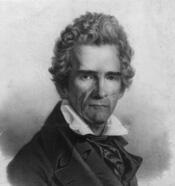
Here you will find contact information for Representative James Iver McKay, including email address, phone number, and mailing address.
| Name | James Iver McKay |
| Position | Representative |
| State | North Carolina |
| District | 7 |
| Party | Democratic |
| Status | Former Representative |
| Term Start | December 5, 1831 |
| Term End | March 3, 1849 |
| Terms Served | 9 |
| Gender | Male |
| Bioguide ID | M000489 |
About Representative James Iver McKay
James Iver McKay (July 17, 1792 – September 14, 1853) was an American lawyer and Democratic politician who served nine consecutive terms as a member of the United States House of Representatives from North Carolina from 1831 to 1849. Over the course of his long tenure in Congress, he became a prominent figure in national legislative affairs and played a significant role in shaping mid-19th-century federal policy, particularly in matters of finance and tariffs.
McKay was born on July 17, 1792, near Elizabethtown in Bladen County, North Carolina. Little is recorded about his early family life, but he pursued classical studies in his youth, reflecting the educational path of many aspiring professionals of his era. After completing his preparatory education, he studied law, was admitted to the bar, and commenced practice in North Carolina, establishing himself in the legal profession before entering public life.
McKay’s political career began at the state level. He served multiple terms in the North Carolina General Assembly, sitting in that body in 1815–1819, 1822, 1826, and 1830. His legislative service coincided with a period of political realignment in the United States, and he emerged as a supporter of the Jacksonian movement. In addition to his work in the state legislature, he was appointed United States attorney for the district of North Carolina on March 6, 1817, a position that underscored his standing as a lawyer and public official and provided him with experience in federal legal affairs.
In 1831, McKay was elected to the United States House of Representatives, beginning a congressional career that would span from the 22nd through the 30th Congresses, ending in 1849. He was first elected as a Jacksonian to the 22nd, 23rd, and 24th Congresses (1831–1837), and, following the consolidation of Jacksonian forces into the Democratic Party, he was elected as a Democrat to the 25th through 30th Congresses (1837–1849). Representing North Carolina in the House of Representatives, McKay participated actively in the democratic process and consistently advocated for the interests of his constituents during a significant and often turbulent period in American history.
During his nine terms in Congress, McKay rose to positions of considerable influence. He served as chairman of several key House committees: the Committee on Military Affairs during the 25th Congress, the Committee on the Post Office and Post Roads during the 26th Congress, and the Committee on Expenditures in the Department of War during the 27th Congress. His most prominent role came as chairman of the powerful Ways and Means Committee in the 28th and 29th Congresses, where he was centrally involved in shaping federal fiscal and tariff policy. As a member of the Democratic Party, he contributed to the legislative process on issues ranging from military organization and postal infrastructure to government spending and national revenue.
McKay’s most notable legislative achievement was his sponsorship of the Walker Tariff of 1846, a landmark measure that substantially reduced tariff rates and reflected the Democratic Party’s commitment to lower tariffs and revenue-based trade policy. He was also responsible for introducing the Coinage Act of 1849 on the House floor, legislation that successfully passed and formed part of the evolving framework of the nation’s monetary system. His prominence within the party was further reflected in his status as the favorite son of the North Carolina delegation for the vice-presidential nomination at the 1848 Democratic National Convention, although he did not ultimately receive the nomination.
After leaving Congress in 1849, McKay returned to private life in North Carolina. He remained a figure of note in state and regional affairs, his long congressional service marking him as one of the more experienced Democratic leaders of his generation. A slaveowner throughout his adult life, he was unapologetic in his support of the institution of slavery, a stance consistent with many Southern politicians of his era. Nonetheless, his will contained an unusual provision directing that approximately 30 to 40 of his enslaved people be placed under the supervision of the American Colonization Society, an organization dedicated to the relocation of freed African Americans to colonies in Africa, particularly Liberia.
James Iver McKay died in Goldsboro, North Carolina, on September 14, 1853. His career, spanning state and federal service from the early republic through the antebellum period, reflected both the opportunities and contradictions of American political life in the first half of the nineteenth century, and his long tenure in the House of Representatives secured him a lasting place in the congressional history of North Carolina.