Representative James McLachlan
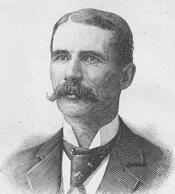
Here you will find contact information for Representative James McLachlan, including email address, phone number, and mailing address.
| Name | James McLachlan |
| Position | Representative |
| State | California |
| District | 7 |
| Party | Republican |
| Status | Former Representative |
| Term Start | December 2, 1895 |
| Term End | March 3, 1911 |
| Terms Served | 6 |
| Born | August 1, 1852 |
| Gender | Male |
| Bioguide ID | M000532 |
About Representative James McLachlan
James McLachlan was an American politician who served as a Representative from California in the United States Congress from 1895 to 1911. Born in 1852, he became a prominent member of the Republican Party and contributed to the legislative process during six terms in office. His congressional career unfolded during a significant period in American history, as the nation experienced rapid industrialization, social change, and the emergence of the United States as a growing international power.
Little is recorded in the provided sources about McLachlan’s early life and education, but his rise to national office suggests a background of professional and civic engagement that prepared him for public service. Coming of age in the post–Civil War era, he would have been shaped by Reconstruction, westward expansion, and the development of California as a major state within the Union. By the time he entered Congress, California was transitioning from its frontier origins to a more complex economy centered on agriculture, resource extraction, transportation, and urban growth, all of which framed the issues he confronted as a legislator.
McLachlan’s election to the United States House of Representatives in 1895 placed him at the center of national debates over tariffs, monetary policy, and the regulation of interstate commerce. As a Republican, he aligned with a party that generally favored protective tariffs, support for business and industry, and a strong national government role in fostering economic development. Serving six terms, he participated in the democratic process by introducing, debating, and voting on legislation that affected both his California constituents and the broader nation. His tenure spanned the administrations of Presidents Grover Cleveland, William McKinley, Theodore Roosevelt, and William Howard Taft, a period marked by the Spanish–American War, the beginnings of American overseas expansion, and the early stirrings of the Progressive Era.
During his years in the House of Representatives, McLachlan represented the interests of his California district at a time when the state’s population and political influence were steadily increasing. Issues likely before him included federal support for infrastructure such as railroads and harbors, water and land policy in the arid West, and the regulation of growing corporate power. As a member of Congress, he took part in the institutional work of committees and floor deliberations, helping to shape federal policy in ways that reflected both national priorities and the particular needs of his region. His repeated reelection over six terms indicates sustained support from his constituents and a recognized role in advancing their concerns in Washington.
McLachlan’s congressional service concluded in 1911, bringing to a close more than a decade and a half of continuous involvement in federal lawmaking. His departure from Congress coincided with a period of intensifying reform movements, including efforts to address political corruption, labor conditions, and corporate influence, developments that built on many of the economic and social trends present during his years in office. Although the available sources do not detail his activities after leaving Congress, his long life, extending until 1940, meant that he witnessed the First World War, the Great Depression, and the early stages of the Second World War, events that transformed the nation whose policies he had helped to shape in an earlier era.
James McLachlan died in 1940, closing a life that spanned from the immediate aftermath of the Civil War into the modern age. Remembered primarily as a U.S. Representative from California and a Republican legislator who served six terms between 1895 and 1911, he occupies a place in the broader historical record of public officials who guided the United States through a formative period of economic growth, political realignment, and expanding global influence. His career is distinct from that of several other public figures bearing the same name, including James McLachlan, an Australian Senator from South Australia; James McLachlan Sr., a member of the South Australian House of Assembly; James McLachlan, a Victorian politician; J. B. McLachlan, a Canadian politician and labour leader; James Douglas McLachlan, a British wartime military attaché to Washington, D.C.; and others, underscoring the particular significance of James McLachlan’s role as an American congressman from California.