Representative James Gideon Monahan
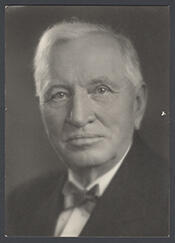
Here you will find contact information for Representative James Gideon Monahan, including email address, phone number, and mailing address.
| Name | James Gideon Monahan |
| Position | Representative |
| State | Wisconsin |
| District | 3 |
| Party | Republican |
| Status | Former Representative |
| Term Start | May 19, 1919 |
| Term End | March 3, 1921 |
| Terms Served | 1 |
| Born | January 12, 1855 |
| Gender | Male |
| Bioguide ID | M000849 |
About Representative James Gideon Monahan
James Gideon Monahan (January 12, 1855 – December 5, 1923) was an American lawyer, newspaper editor, and Republican politician who served as a U.S. Representative from Wisconsin from 1919 to 1921. A member of the Republican Party, he contributed to the legislative process during one term in the United States Congress, representing Wisconsin’s 3rd congressional district in the Sixty-sixth Congress.
Monahan was born at Willow Springs, near Darlington, Lafayette County, Wisconsin, on January 12, 1855. He attended the common schools of the area and completed his secondary education at Darlington High School, from which he graduated in 1875. After high school he pursued legal studies, reading law in the traditional manner of the period, and was admitted to the bar in 1878, beginning a professional career that would combine law, journalism, and public service.
Upon his admission to the bar, Monahan commenced the practice of law in Mineral Point, Wisconsin. In 1880 he returned to Darlington, where he established himself as an attorney and quickly became active in local affairs. That same year he was elected district attorney of Lafayette County, a position he held from 1880 to 1884. His legal and prosecutorial work during these years helped build his reputation within the county and the broader region.
In addition to his legal practice, Monahan developed a prominent career in journalism and party politics. From 1883 until 1919 he was the editor and owner of the Darlington Republican Journal, a local newspaper that provided him with a platform to influence public opinion and Republican Party affairs in southwestern Wisconsin. He served as a delegate to the Republican National Convention in 1888, reflecting his growing stature within the party. From 1900 to 1908 he held federal office as collector of internal revenue for the second Wisconsin district, administering federal tax laws during a period of expanding national government functions.
Monahan was also active in fraternal and civic organizations. He was a member of Evening Star Masonic Lodge No. 64, Free and Accepted Masons, in Wisconsin, and in 1898 he served as the Most Worshipful Grand Master of Masons in Wisconsin, the highest office in the state’s Masonic hierarchy. His Masonic leadership paralleled his public career and underscored his prominence in community and statewide affairs.
Monahan’s long engagement in law, journalism, and Republican politics culminated in his election to Congress. He was elected as a Republican to the Sixty-sixth Congress and served from March 4, 1919, to March 3, 1921, representing Wisconsin’s 3rd congressional district. His service in the House of Representatives occurred during a significant period in American history, immediately following World War I, when the nation was grappling with postwar readjustment, veterans’ issues, and shifting domestic and international policies. As a member of the House of Representatives, he participated in the democratic process and represented the interests of his constituents in southwestern Wisconsin. In 1920 he was an unsuccessful candidate for renomination to the Sixty-seventh Congress, bringing his brief congressional career to a close.
After leaving Congress, Monahan did not return to national office, and his later years were spent away from the center of federal political life. He died in Dubuque, Iowa, on December 5, 1923. His remains were returned to his longtime home community, and he was interred in Union Grove Cemetery in Darlington, Wisconsin, closing a life marked by service as a lawyer, editor, public official, and one-term member of the United States House of Representatives.