Representative James P. Moran
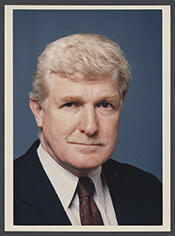
Here you will find contact information for Representative James P. Moran, including email address, phone number, and mailing address.
| Name | James P. Moran |
| Position | Representative |
| State | Virginia |
| District | 8 |
| Party | Democratic |
| Status | Former Representative |
| Term Start | January 3, 1991 |
| Term End | January 3, 2015 |
| Terms Served | 12 |
| Born | May 16, 1945 |
| Gender | Male |
| Bioguide ID | M000933 |
About Representative James P. Moran
James Patrick Moran Jr. (born May 16, 1945) is an American politician who represented Virginia’s 8th congressional district in the U.S. House of Representatives from January 3, 1991, to January 3, 2015, and served as mayor of Alexandria, Virginia, from 1985 until 1990. A member of the Democratic Party, he chaired the New Democrat Coalition from 1997 until 2001 and was also a member of the Congressional Progressive Caucus. Over 12 terms in Congress, he represented a Northern Virginia district that included the cities of Alexandria and Falls Church, all of Arlington County, and portions of Fairfax County, including parts of the Dulles Technology Corridor.
Moran was born in Buffalo, New York, the eldest of seven siblings in a Roman Catholic family of Irish descent. He was raised in Natick, Massachusetts, a suburb of Boston. His parents, Dorothy (née Dwyer) Moran and James Moran Sr., were staunch Roosevelt Democrats and supporters of the New Deal. His father, James Moran Sr., played professional football for the Boston Redskins in 1935 and 1936 and later worked as a probation officer. Moran attended Marian High School in Framingham, Massachusetts, where he developed the athletic interests that would carry into his college years. He is the brother of Brian Moran, who later became chairman of the Democratic Party of Virginia.
Moran attended the College of the Holy Cross in Worcester, Massachusetts, on an athletic scholarship, playing college football at the same institution where his father had been a football star in the early 1930s. He earned a Bachelor of Arts degree in economics in 1967. He then pursued graduate studies at Baruch College of the City University of New York from 1967 to 1968 before completing a Master of Public Administration at the University of Pittsburgh in 1970. In his early adulthood, he briefly followed in his father’s footsteps as an amateur boxer and, during a 1992 campaign, acknowledged that he had used marijuana in his early twenties.
After graduate school, Moran moved into the financial and public sectors. He first worked briefly as a stockbroker before relocating to the Washington, D.C., area. He joined the U.S. Department of Health, Education, and Welfare as a budget officer, serving there for five years. He then became a senior specialist in budgetary and fiscal policy at the Library of Congress, gaining experience in federal budgeting and appropriations. From 1976 to 1979, he served on the staff of the U.S. Senate Committee on Appropriations, further deepening his expertise in federal fiscal policy and the appropriations process that would later underpin his congressional career.
Moran entered elective office in local government in Alexandria, Virginia. In 1979, he was elected to the Alexandria City Council. From 1982 to 1984, he served as deputy mayor. In 1984, he resigned his city post as part of a nolo contendere plea bargain to a misdemeanor conflict-of-interest charge involving the use of political action committee funds for a tuxedo rental and Christmas cards; the expenditures were later judged by the Commonwealth’s Attorney to fit the definition of constituent services, and the courts subsequently erased the charge. In 1985, Moran was elected mayor of Alexandria, and he was reelected in 1988. He served as mayor until he resigned following his election to Congress in November 1990, overseeing a period of growth and development in the city.
Moran first won election to the U.S. House of Representatives in 1990, defeating five-term Republican incumbent Stan Parris in a hard-fought campaign that featured sharp exchanges over the Gulf War and social issues such as abortion. He was sworn into office in January 1991 as the representative for Virginia’s 8th congressional district. He was reelected repeatedly throughout the 1990s and 2000s, facing a series of Republican challengers, including Kyle McSlarrow in 1992 and 1994, Demaris H. Miller in 1998 and 2000, S. C. Tate in 2002, Lisa Marie Cheney in 2004, T. M. Odonoghue in 2006, Mark Ellmore in 2008, and Jay Patrick Murray in 2010 and again in 2012, as well as several independent and third-party candidates. Redistricting in the 1990s and after the 2000 census generally strengthened the Democratic tilt of his district by removing some Republican-leaning areas and later adding parts of Reston. In several cycles, he also faced primary challenges from within his own party, including Andrew M. Rosenberg in 2004 and Bruce Shuttleworth in 2012, but he prevailed by substantial margins.
During his congressional service, Moran became a prominent figure in both centrist and progressive Democratic circles. In the mid-1990s, he co-founded and later co-chaired the New Democrat Coalition, a group of Democratic lawmakers who advocated moderate positions on commerce, budgeting, and economic legislation while generally supporting liberal stances on social issues. He chaired the coalition from 1997 until 2001. At the same time, he joined the Congressional Progressive Caucus, the largest ideological caucus within the House Democratic Caucus, prior to the 111th Congress. He was active in numerous other caucuses, including the Animal Protection Caucus (as co-chair), the Sudan Caucus, the Sportsmen’s Caucus, the International Conservation Caucus, the Congressional Arts Caucus, the Congressional Bike Caucus, the Safe Climate Caucus, and the Crohn’s and Colitis Caucus (as co-chair). His committee assignments reflected his budget and policy background: he served on the powerful House Committee on Appropriations, including the Subcommittee on Defense and the Subcommittee on Interior, Environment, and Related Agencies, where he ultimately became ranking member.
Moran’s legislative and policy interests were closely tied to the needs of his Northern Virginia district, home to many federal employees, defense contractors, and information technology firms. He was recognized by the Information Technology Industry Council as High Technology Legislator of the Year and was inducted into the American Electronics Association Hall of Fame for his work in helping to avert the Year 2000 (Y2K) computer crisis and for his support of the IT industry and defense contractors in the region. As a member of the Appropriations Committee, he worked to secure federal funding for local transportation and infrastructure projects, most notably helping to authorize the replacement of the aging Woodrow Wilson Memorial Bridge between Alexandria, Virginia, and Prince George’s County, Maryland, a notorious bottleneck for regional commuters. He also cosponsored legislation in 2005 to provide the District of Columbia with a voting seat in the House of Representatives and to prohibit the slaughter of horses, though these measures did not become law.
Throughout his congressional tenure, Moran was frequently involved in high-profile national debates and occasionally in controversy. In 1995, he and Republican Representative Duke Cunningham of California had to be separated by Capitol Police after a shoving match on the House floor over President Bill Clinton’s decision to deploy U.S. troops to Bosnia; Moran later said that the two reconciled and remained on cordial terms. During the Monica Lewinsky scandal, he was one of only 31 House Democrats to support opening a formal impeachment inquiry into President Clinton, describing the episode as “too tawdry and tedious and embarrassing,” though he ultimately voted against impeachment, arguing that Clinton had not compromised national security. He proposed a resolution calling on Clinton to acknowledge a pattern of “dishonest and illegal conduct” surrounding the affair. In the realm of foreign policy and human rights, Moran was an outspoken critic of the Sudanese government’s actions in Darfur and later in the Nuba Mountains. On April 28, 2006, he was arrested, along with several colleagues, for disorderly conduct during a protest at the Sudanese embassy in Washington, D.C., and on March 16, 2012, he was again arrested outside the embassy during a demonstration against human rights abuses, an event that also involved actor George Clooney.
Moran took active positions on gun control, civil rights, and social policy. The day after the Virginia Tech massacre in 2007, he publicly urged reinstatement of the Federal Assault Weapons Ban and criticized the National Rifle Association and President George W. Bush for blocking gun control legislation, arguing that without reform similar shootings would recur “time and time again.” In February 2010, he spoke on the House floor in favor of repealing the “Don’t ask, don’t tell” policy, reading from a letter by a gay soldier and arguing that sexual orientation, like race, should not affect a person’s ability to serve honorably in the military. In May 2009, he introduced legislation to restrict broadcast advertisements for erectile dysfunction and male enhancement medications between 6 a.m. and 10 p.m., contending that such ads were indecent for children. That same year, he hosted a widely publicized town hall meeting on health care reform in Reston, Virginia, with former Vermont governor Howard Dean; the event was repeatedly interrupted by protesters, including anti-abortion activist Randall Terry, and became emblematic of the contentious town hall meetings held nationwide during the debate over the Affordable Care Act.
Moran’s public comments sometimes drew national attention and criticism. After the 2010 midterm elections, in an interview with the Arabic-language network Alhurra following President Barack Obama’s State of the Union Address, he stated that “a lot of people” in the United States did not want to be governed by an African American and likened the political backlash to Obama to the tensions that led to the Civil War, particularly in former slaveholding states. These remarks were widely reported and criticized by some commentators as inflammatory. In 2012, he was recognized by the bipartisan grassroots organization No Labels as a “Problem Solver” for his willingness to work across party lines. That same year, he joined fellow Virginia Representatives Gerry Connolly and Bobby Scott in requesting that Attorney General Eric Holder and the Department of Justice investigate allegations of voter registration fraud in Virginia after reports that a contractor for the Republican Party of Virginia had discarded completed registration forms.
Over the course of his congressional career, Moran occasionally appeared on national cable news programs, particularly on MSNBC shows such as “Hardball with Chris Matthews” and “The Ed Show,” where he discussed legislative issues and Democratic Party politics. In March 2010, he was named chairman of the House Interior and Environment Appropriations Subcommittee, succeeding Representative Norm Dicks of Washington. In that role, he oversaw appropriations for the Department of the Interior, the Bureau of Indian Affairs, the Environmental Protection Agency, the National Endowment for the Arts, and related agencies, emphasizing environmental protection and conservation of natural resources. After Democrats lost control of the House in the 2010 elections, he became the ranking member of that subcommittee.
Moran did not seek re-nomination in 2014 and retired from Congress in January 2015 after 24 years of service. He was succeeded by Democrat Don Beyer, a former lieutenant governor of Virginia. Of Irish descent and long active in Virginia Democratic politics, Moran’s family remained engaged in public life; his brother Brian Moran served as chairman of the Democratic Party of Virginia. Throughout his career, James P. Moran’s work in local and national office reflected a combination of fiscal expertise, regional advocacy for Northern Virginia’s technology and defense sectors, and engagement with contentious national debates on foreign policy, civil rights, and social issues.