Representative James Scott Negley
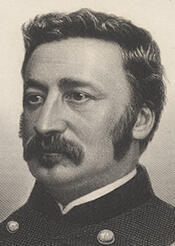
Here you will find contact information for Representative James Scott Negley, including email address, phone number, and mailing address.
| Name | James Scott Negley |
| Position | Representative |
| State | Pennsylvania |
| District | 22 |
| Party | Republican |
| Status | Former Representative |
| Term Start | March 4, 1869 |
| Term End | March 3, 1887 |
| Terms Served | 4 |
| Born | December 22, 1826 |
| Gender | Male |
| Bioguide ID | N000024 |
About Representative James Scott Negley
James Scott Negley (December 22, 1826 – August 7, 1901) was an American Civil War general, farmer, railroader, and U.S. Representative from Pennsylvania. Born in Pittsburgh, Pennsylvania, he came of age in a region that would become central to the nation’s industrial and transportation development, influences that later shaped his postwar career in agriculture and railroads. Little is recorded in standard references about his early formal education, but his subsequent military and political responsibilities indicate a solid grounding in the civic and practical affairs of mid-nineteenth-century Pennsylvania.
Negley’s public prominence began with the outbreak of the American Civil War. On April 19, 1861, he was appointed brigadier general in the Pennsylvania Militia, reflecting both his local standing and the urgent need for experienced leadership as the Union mobilized. He raised a brigade of Pennsylvania volunteers and served under Major General Robert Patterson in the Shenandoah Valley in 1861, participating in the early campaigns that sought to secure the border states and protect the approaches to Washington, D.C. His initial appointment as brigadier general expired on July 20, 1861, but his services were quickly deemed indispensable, and he was reappointed brigadier general of volunteers on October 1, 1861.
Following his reappointment, Negley was placed in command of the 7th Brigade in the Department of the Ohio. In this capacity he led a notable Union expedition, or raid, against Chattanooga during the Confederate Heartland Offensive. The operation, conducted deep in Confederate-held territory, was a successful demonstration of the Union Army’s ability to project force far behind enemy lines. This action enhanced Negley’s reputation as an aggressive and capable field commander and contributed to the broader Union strategy of pressuring Confederate communications and supply routes in the Western Theater.
Negley’s Civil War career reached its peak with his promotion on November 29, 1862, to major general of volunteers and his assumption of command of the 8th Division in the Army of the Ohio. His division was subsequently redesignated as the 2nd Division in Major General George H. Thomas’s Center Wing of the XIV Corps. In this role, Negley played a key role in the Union victory at the Battle of Stones River, fought from December 31, 1862, to January 2, 1863, near Murfreesboro, Tennessee. On the second day of fighting, he led a successful counterattack against the forces of Confederate Major General John C. Breckinridge on the Union left flank, helping to stabilize the line and secure a strategically important victory for the Union. He later commanded his division during the Tullahoma Campaign, which further weakened Confederate control of Middle Tennessee.
During the maneuvering that preceded the Battle of Chickamauga in September 1863, Negley’s division, advancing as part of Thomas’s corps, was nearly trapped in a cul-de-sac known as McLemore’s Cove. Command confusion within the Confederate Army of Tennessee allowed his troops to escape in what became known as the Battle of Davis’ Crossroads. At Chickamauga itself, his division became scattered during the intense fighting of the second day. In the aftermath of the Union defeat, Negley was relieved of command. Subsequent inquiries acquitted him of wrongdoing in connection with the battle, though later historical assessments have been critical of his conduct, suggesting that he became difficult to locate at crucial moments. Negley attributed his difficulties to prejudice against him by graduates of the United States Military Academy at West Point. When Ulysses S. Grant became general-in-chief in 1864, he considered restoring Negley to field command, but instead Negley served on several administrative boards. He resigned his commission in January 1865. During the war, his service was commemorated by the naming of Fort Negley in Nashville, Tennessee, in 1862, the largest stone inland fort constructed during the conflict.
After the Civil War, Negley returned to Pennsylvania and resumed civilian pursuits as a farmer and railroader, occupations that aligned with the rapid economic development of the postwar era. His prominence as a war-time general and his ties to Pittsburgh’s growing industrial and transportation interests helped propel him into political life. A member of the Republican Party, he was elected to the United States House of Representatives as a Representative from Pennsylvania. James Scott Negley served in Congress from 1869 to 1887, contributing to the legislative process during four terms in office and representing the interests of his constituents during a significant period in American history marked by Reconstruction, industrial expansion, and the consolidation of federal authority.
In the House of Representatives, Negley participated in the democratic process at a time when the nation was grappling with the political, economic, and social consequences of the Civil War. As a Republican, he aligned with the party that had led the Union war effort and was then shaping policies on veterans’ affairs, infrastructure, and national development. His background as a military officer and railroader informed his perspective on issues of defense, transportation, and economic growth, and he took part in deliberations that affected both his home state and the broader country during the late nineteenth century.
James Scott Negley lived out his later years in the closing decades of the nineteenth century, a period that saw the United States transformed into a major industrial power. He died on August 7, 1901. His career as a Civil War general, his role in key Western Theater campaigns such as Stones River and Chickamauga, his contributions as a farmer and railroader, and his service as a Republican U.S. Representative from Pennsylvania from 1869 to 1887 together mark him as a significant figure in the political and military history of his era.