Representative Jim Nussle
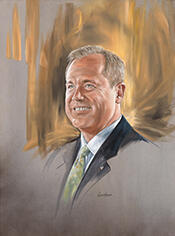
Here you will find contact information for Representative Jim Nussle, including email address, phone number, and mailing address.
| Name | Jim Nussle |
| Position | Representative |
| State | Iowa |
| District | 1 |
| Party | Republican |
| Status | Former Representative |
| Term Start | January 3, 1991 |
| Term End | January 3, 2007 |
| Terms Served | 8 |
| Born | June 27, 1960 |
| Gender | Male |
| Bioguide ID | N000172 |
About Representative Jim Nussle
James Allen Nussle (born June 27, 1960) is an American businessman and retired politician who served as a Republican member of the United States House of Representatives from Iowa from January 3, 1991, to January 3, 2007. Over eight terms in Congress, he represented what was initially Iowa’s 2nd congressional district and, following redistricting, the 1st congressional district, contributing to the legislative process during a significant period in American history. He later served as director of the Office of Management and Budget (OMB) under President George W. Bush from 2007 to 2009 and subsequently became a prominent executive in the financial services trade association sector, serving as president and chief executive officer of the Credit Union National Association from 2014 to 2024 and of its successor group, America’s Credit Unions, beginning in 2024.
Nussle was born in Des Moines, Iowa, and raised in the state whose politics would shape his career. After completing high school, he spent a period studying in Denmark, an experience that preceded his formal higher education and exposed him to international perspectives. He returned to the United States to attend Luther College in Decorah, Iowa, where he earned a Bachelor of Arts degree in 1983, majoring in international studies, political science, and economics. He then pursued legal studies at Drake University Law School in Des Moines, receiving his Juris Doctor degree in 1985.
Following his graduation from Drake University, Nussle entered public service at the local level. He was elected Delaware County attorney in Manchester, Iowa, serving as the county’s chief prosecutor. This role provided him with practical experience in law enforcement and local governance and helped establish his reputation within Iowa Republican circles. His work as county attorney laid the groundwork for his first bid for federal office at the beginning of the 1990s.
In 1990, when incumbent Republican Representative Tom Tauke of Iowa’s 2nd congressional district left his House seat to run for the U.S. Senate against Democrat Tom Harkin, Nussle sought to succeed him. Running as the Republican candidate, he faced Democrat Eric Tabor in the general election and won a narrow victory, 50 percent to 49.8 percent, earning a seat in the U.S. House of Representatives. He took office on January 3, 1991. Early in his congressional tenure, Nussle gained national attention during the House banking scandal when he delivered a floor speech wearing a paper bag over his head to protest what he termed the “shameful” ethical behavior associated with the controversy, a gesture that underscored his emphasis on fiscal and ethical accountability.
Redistricting after the 1990 census reshaped Iowa’s congressional map, and in 1992 Nussle’s district was merged with the 3rd congressional district represented by Democrat David R. Nagle. In a closely watched race, Nussle defeated Nagle, winning reelection by a margin of 51 percent to 49 percent. He again faced Nagle in 1994 and expanded his margin of victory to 56 percent to 43 percent. Over the next decade, Nussle continued to secure reelection in a district that leaned slightly Democratic at the presidential level. He defeated Donna Smith in 1996 by 51 percent to 48 percent, Rob Tully in 1998 by 55 percent to 44 percent, Donna Smith again in 2000 by 55 percent to 44 percent, Ann Hutchinson in 2002 by 57 percent to 43 percent, and Bill Gluba in 2004 by 55 percent to 44 percent. Following the 2000s round of redistricting, his district was renumbered as the 1st District and became more Democratic with the addition of much of Iowa’s share of the Quad Cities, yet he continued to win comfortably even as the district regularly supported Democratic presidential candidates.
Within the House, Nussle developed a reputation as a fiscal conservative and a key budget policymaker. His voting record was relatively conservative, reflected in a lifetime rating of 85 from the American Conservative Union. He supported restrictions on abortion and backed President George W. Bush’s tax cuts, positions consistent with mainstream Republican orthodoxy during his tenure. In 2001, Nussle became chairman of the House Budget Committee, the first Iowan to hold that position. As chairman, he played a central role in shaping federal budget priorities in the early 2000s, a period marked by tax policy debates, post–September 11 security spending, and growing concern over deficits. His prominence on budget issues drew national and international attention to his district, including from the ONE Campaign, the anti-poverty advocacy organization associated with Bono of the rock band U2, which targeted his district with billboard and radio advertisements highlighting global poverty and his influence over U.S. budget decisions. A 2005 remark by Nussle—“Everyone wants to get to heaven, but no one wants to die”—made in reference to opposition to proposed budget cuts, was later included in the 2006 World Almanac and Book of Facts as one of the notable quotes of 2005.
In 2005, Nussle turned his attention to statewide office. When Iowa Governor Tom Vilsack announced he would not seek a third term in 2006, potential candidates from both parties began exploring gubernatorial bids, and Nussle soon emerged as a leading Republican contender. On June 2, 2005, he formally announced his candidacy for governor of Iowa. His principal primary opponent, conservative activist Bob Vander Plaats, withdrew from the race to endorse Nussle and joined the ticket as his running mate for lieutenant governor. During the campaign, the Iowa Democratic Party filed an ethics complaint on February 21, 2006, alleging that Nussle had failed to report in-kind donations from his federal “Nussle for Congress Committee” to his gubernatorial campaign. On July 12, 2006, the Iowa Ethics and Campaign Disclosure Board unanimously voted to close the investigation, finding no probable cause to believe that any statute or rule within its jurisdiction had been violated. Nussle won the Republican primary on June 6, 2006, but in the general election on November 7, 2006, he lost by a wide margin to Democratic nominee and Iowa Secretary of State Chet Culver, receiving 44 percent of the vote to Culver’s 53 percent. As Nussle vacated his House seat to run for governor, a crowded field emerged to succeed him; the race ultimately came down to Democrat Bruce Braley and Republican Mike Whalen, with Braley winning the seat in the 2006 general election.
After his gubernatorial defeat, Nussle initially established his own consulting business and soon transitioned back into federal service. In 2007, President George W. Bush nominated him to serve as director of the Office of Management and Budget, succeeding Rob Portman. The Senate confirmed his nomination, and he was sworn in as OMB director on September 10, 2007. In this capacity, Nussle was the administration’s chief budget officer during the final years of the Bush presidency, a period that included the onset of the global financial crisis and intense debate over federal spending, deficits, and emergency economic measures. He remained in the post until the end of the Bush administration in January 2009.
Following his departure from government, Nussle moved fully into the private sector and advocacy work. In 2009 he founded the Nussle Group, a media and strategic consulting firm, drawing on his experience in federal budgeting, politics, and communications. In November 2010, he became president and chief operating officer of Growth Energy, a trade association representing ethanol producers and promoting biofuels and renewable energy policy. His leadership in that role reflected both his Midwestern agricultural roots and his long-standing interest in economic and energy issues. In September 2014, it was announced that Nussle would become president and chief executive officer of the Credit Union National Association (CUNA), a major trade group for credit unions across the United States. He led CUNA from 2014 to 2024 and then became president and chief executive officer of its successor organization, America’s Credit Unions, beginning in 2024, continuing his influence in financial services policy and cooperative finance.
In his later public statements, Nussle has reflected on the evolution of American politics and his own partisan affiliation. In 2021, in the aftermath of the January 6 United States Capitol attack, he announced that he would no longer affiliate with the Republican Party, distancing himself from the direction he believed the party had taken. By that time, his career had spanned local prosecution, eight terms in the U.S. House of Representatives, a cabinet-level role as director of the Office of Management and Budget, and senior leadership positions in national trade associations, marking him as a significant figure in late twentieth- and early twenty-first-century American public life.