Representative James L. Oberstar
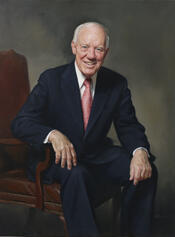
Here you will find contact information for Representative James L. Oberstar, including email address, phone number, and mailing address.
| Name | James L. Oberstar |
| Position | Representative |
| State | Minnesota |
| District | 8 |
| Party | Democratic |
| Status | Former Representative |
| Term Start | January 14, 1975 |
| Term End | January 3, 2011 |
| Terms Served | 18 |
| Born | September 10, 1934 |
| Gender | Male |
| Bioguide ID | O000006 |
About Representative James L. Oberstar
James Louis Oberstar (September 10, 1934 – May 3, 2014) was an American politician who served as a Representative from Minnesota in the United States Congress from January 3, 1975, to January 3, 2011. A member of the Democratic Party and of Minnesota’s Democratic–Farmer–Labor Party (DFL), he represented the state’s northeastern 8th congressional district, an Iron Range district that included Duluth, Brainerd, Grand Rapids, International Falls, and Hibbing. Over 18 terms in office, he became the longest-serving member of either house of Congress in Minnesota’s history and the longest-tenured Congressman from the state, playing a significant role in national transportation policy, labor issues, and a wide range of legislative debates.
Oberstar was born in Chisholm, Minnesota, where he maintained ownership of his original family home throughout his life. His father, Louis Oberstar, of German ancestry, was an iron ore miner and is noted as the first card-carrying member of the United Steelworkers on Minnesota’s Iron Range; Oberstar also had Slovenian ancestry. He graduated from Chisholm High School in 1952 and went on to the College of St. Thomas (now the University of St. Thomas) in St. Paul, Minnesota, receiving a Bachelor of Arts degree in 1956. He pursued graduate studies in Europe, earning a master’s degree in European Studies from the College of Europe in Bruges, Belgium, in 1957, and undertook further study at Université Laval in Sainte-Foy, Quebec, Canada, and at Georgetown University in Washington, D.C. This combination of Iron Range roots and international education shaped both his political outlook and his later specialization in transportation and international affairs.
Before entering elective office, Oberstar built a career in teaching and congressional staff work. He spent four years as a civilian language teacher with the United States Marine Corps, teaching English to Haitian military personnel and French to American Marine officers and noncommissioned officers. In 1963 he joined the staff of Representative John Blatnik, the longtime Democratic congressman from Minnesota’s 8th District, and served there for 12 years, rising to become Blatnik’s chief of staff. From 1971 to 1974 he was administrator of the House Committee on Public Works, the predecessor of the Transportation and Infrastructure Committee. During this period he helped create the Economic Development Administration in 1965, the only federal agency specifically devoted to the creation and retention of jobs in economically distressed American communities, reflecting his early commitment to economic development and job creation.
When John Blatnik chose not to seek a 15th term in 1974, he endorsed Oberstar as his successor. Oberstar won the election to the 94th Congress and took office on January 3, 1975, beginning a congressional career that would span the 94th through the 111th Congresses. He was reelected 16 times, often by wide margins; his lowest winning percentage was 59 percent in 1992, and thereafter until 2010 he did not receive less than 60 percent of the vote. In 2006 he defeated former U.S. Senator Rod Grams, a well-funded Republican challenger from the southwestern corner of the district, by more than 30 percentage points, carrying every county in the district. In 2008 he again won decisively, taking more than 67 percent of the vote against Republican businessman Michael Cummins. During that campaign he also appeared in a television advertisement supporting the reelection of Puerto Rico Governor Aníbal Acevedo Vilá, a fellow Democrat. In November 2010, in what was widely regarded as a major upset in a wave election year, Oberstar lost a close race to Republican and Tea Party–backed political newcomer Chip Cravaack, who defeated him by a margin of 4,407 votes and won a plurality of 48 percent of the vote.
Throughout his 36 years in the House of Representatives, Oberstar was most closely identified with transportation, infrastructure, and aviation policy. He served on the House Transportation and Infrastructure Committee for his entire tenure in Congress, having earlier administered its predecessor as a staff member. He became the committee’s ranking minority member in 1995 and chaired it from 2007 until his departure in 2011. An internationally recognized expert on aviation and aviation safety, he served on the President’s Commission on Aviation Security and Terrorism and was a strong supporter of the Duluth-based aircraft manufacturer Cirrus Aircraft, helping to bring the company to Minnesota from Baraboo, Wisconsin, in 1994. That same year he assisted in passing the General Aviation Revitalization Act, credited with reinvigorating the general aviation industry nationwide. In 2005 he authored, co-sponsored, and helped to pass the SAFETEA-LU Act, a $295 billion surface transportation program that funded highways, bridges, and public transportation, including subways, buses, and passenger ferries, and that created the Safe Routes to School program. An avid cyclist, he championed the development of cycling and hiking trails to promote active lifestyles and advocated at bicycling conferences, including the 2007 BikeWalk California conference, for transforming the U.S. transportation system “from a hydrocarbon-based system to a carbohydrate-based system.”
Oberstar’s legislative work extended well beyond transportation. He was House Democratic At-Large Whip, a member of the executive committee of the Democratic Study Group, and served on the International Relations Committee. He co-chaired the Great Lakes Task Force and the Congressional Travel and Tourism Caucus and was active in numerous caucuses, including the Bike Caucus; Caucus for Sustainable Development; Congressional Caucus on Global Road Safety; Congressional Human Rights Caucus; Congressional Steel Caucus; Medical Technology Caucus; Mississippi River Caucus; Native American Caucus; and Renewable Energy Caucus. Within days of the catastrophic collapse of the I‑35W Mississippi River bridge in Minneapolis in 2007, he introduced and secured passage of legislation appropriating $250 million to the Minnesota Department of Transportation to quickly build a replacement bridge. In 2004 he led opposition to the Commercial Space Launch Amendments Act, arguing that the bill did not sufficiently safeguard passenger and crew safety. In April 2006, along with Representative John Conyers and others, he joined as a plaintiff in Conyers v. Bush, challenging the constitutionality of the Deficit Reduction Act of 2005; the case was ultimately dismissed.
Ideologically, Oberstar was generally rated as a liberal Democrat on economic, labor, environmental, and social welfare issues, while maintaining a firmly anti-abortion stance. In the 109th Congress he was rated the third most liberal member of the Minnesota delegation, receiving a 13 percent rating from a conservative group and an 86 percent rating from a liberal group. He was a strong supporter of organized labor, receiving a 100 percent rating from the AFL–CIO, a 92 rating from the American Federation of Government Employees in 2009, and a 90 rating from Federally Employed Women that same year. He voted for multiple unemployment benefits extension bills in 2010 and supported three Employment Discrimination Law Amendments in 2009. He backed tax policies that included taxation of corporate earnings, gasoline, and cigarettes, and supported a tax plan that provided relief for working families, investment tax credits for small businesses, and aid to states, including incentives for transportation construction projects to spur immediate job creation. Americans for Fair Taxation gave him its lowest possible rating in 2008, and the National Taxpayers Union awarded him an “F.” He opposed major free trade agreements such as the North American Free Trade Agreement (NAFTA) and the Central American Free Trade Agreement (CAFTA), contending that they offered little economic opportunity for American workers and producers due to inadequate protections in the agreements.
On social policy, Oberstar was a prominent anti-abortion Democrat. He believed abortion should be permitted only in cases of rape, incest, or when the life of the mother was endangered. He co-chaired the Congressional Pro-Life Caucus with Republican Representative Chris Smith of New Jersey and sponsored multiple proposed constitutional amendments to enshrine a right-to-life provision and to prohibit abortion services except when the mother’s life was at risk. One of his earliest congressional achievements was drafting the text of what became the Hyde Amendment in 1976, prohibiting federal funding of abortion. Although the amendment was officially introduced by Representative Henry Hyde of Illinois, Oberstar formulated the language by hand on a slip of paper; because Hyde was a Republican and a member of the House Judiciary Committee, it was determined the measure would have a better chance of passage if he introduced it. Oberstar voted in 2003 to ban intact dilation and extraction, commonly known as “partial-birth abortion,” and attended the bill’s signing by President George W. Bush. He supported the National Right to Life Committee’s positions in 2005–2006, voted against embryonic stem cell research legislation in 2005 and 2007—one of only a small number of Democrats to do so—and backed legislation to move the Terri Schiavo case into federal court, appearing at a press conference with House Majority Leader Tom DeLay to urge its passage.
At the same time, Oberstar’s record on LGBT issues evolved over his tenure. He voted for the Defense of Marriage Act in 1996, along with many House Democrats, but in subsequent years he aligned more closely with LGBT advocacy organizations. The Human Rights Campaign gave him ratings of 86 percent, 88 percent, 69 percent, and 88 percent for the 108th through 111th Congresses. He voted in 2009 to make crimes motivated by discrimination based on sexual orientation or gender identity a federal hate crime and cosponsored a 2003 bill to prohibit employment discrimination on the basis of sexual orientation. He was also a strong supporter of education and anti-poverty initiatives, particularly the Head Start Program, which he regarded as one of the most successful federal anti-poverty programs ever created. He supported the American Association of University Women, earning perfect scores from AAUW and from the National Association of Elementary School Principals, and in the early 1980s he helped secure federal aid for the establishment of the Natural Resources Research Institute at the University of Minnesota Duluth to provide applied research and technology development for Minnesota’s natural resource–based economy.
Environmental and energy policy formed another important part of Oberstar’s record. He received a 100 percent rating from Environment America and the League of Conservation Voters in 2009 and a 100 rating from the American Wind Energy Association in 2006. He voted for the Energy and Environmental Law Amendments in 2009, which aimed to establish a program to regulate greenhouse gas emissions, and supported legislation that created “cash for clunkers”–style trade-in vouchers for fuel-efficient cars, offering a $3,500 credit for trading in an older vehicle for one that achieved at least four more miles per gallon, in order to encourage the purchase of more fuel-efficient automobiles. Despite his generally pro-environment voting record, he broke with many Democrats by voting in favor of allowing oil drilling in the Arctic National Wildlife Refuge (ANWR), reflecting a willingness at times to diverge from party orthodoxy.
Oberstar’s congressional service occurred during a significant period in American history, encompassing the end of the Vietnam War era, the Cold War’s conclusion, and the post–September 11 focus on security and infrastructure. As a member of the House of Representatives, he participated in the democratic process and represented the interests of his Iron Range and northeastern Minnesota constituents while exerting national influence on transportation, labor, and social policy. In 2009 he received the Tony Jannus Award for distinguished leadership in commercial aviation, recognizing his long-standing contributions to aviation safety and policy.
In his personal life, Oberstar married Jo Garlick, with whom he had four children; she died in 1991. He later married Jean Kurth. The couple resided in Potomac, Maryland, while also maintaining Oberstar’s boyhood home in Chisholm, Minnesota. After leaving Congress in 2011, his public service and legacy were honored in several ways. In May 2011, a Great Lakes ore carrier of the Interlake Steamship Company, typically transporting taconite pellets from Duluth, Silver Bay, and Marquette to steel mills near Detroit, Cleveland, and Chicago, was renamed the MV Honorable James L. Oberstar. On June 19, 2012, he was made a Commander in the French Ordre national du Mérite. In October 2015, the new passenger terminal at Duluth International Airport, for which he had helped secure funding prior to its 2013 opening, was named in his honor, and a sculpture of him was unveiled at the terminal. In 2016 he was posthumously inducted into the Minnesota Aviation Hall of Fame. James L. Oberstar died at his home in Potomac on May 3, 2014, at the age of 79.