Representative James Edward O’Hara
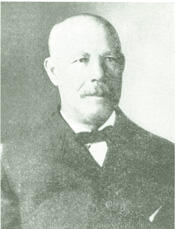
Here you will find contact information for Representative James Edward O’Hara, including email address, phone number, and mailing address.
| Name | James Edward O’Hara |
| Position | Representative |
| State | North Carolina |
| District | 2 |
| Party | Republican |
| Status | Former Representative |
| Term Start | December 3, 1883 |
| Term End | March 3, 1887 |
| Terms Served | 2 |
| Born | February 26, 1844 |
| Gender | Male |
| Bioguide ID | O000054 |
About Representative James Edward O’Hara
James Edward O’Hara (February 26, 1844 – September 15, 1905) was an American politician, attorney, and Republican member of the United States House of Representatives from North Carolina, serving from March 4, 1883, to March 3, 1887. Elected in 1882 from North Carolina’s 2nd congressional district, he was the second African American to represent the state in Congress and the first to be elected after the end of the Reconstruction era. His congressional service, encompassing the Forty-eighth and Forty-ninth Congresses, took place during a critical period in American history marked by the retrenchment of Reconstruction gains and the rise of Jim Crow in the South.
O’Hara was born in New York City to parents of mixed-race West Indian and Irish ancestry and was raised in the West Indies. As a young man, following the American Civil War, he traveled to the southern United States with missionaries from the African Methodist Episcopal Zion Church, an independent Black denomination. Working with these religious missionaries, he helped freedmen establish independent lives and new congregations in the postwar South. He settled in North Carolina, where he initially worked as a teacher, including a position in Goldsboro, and became increasingly involved in efforts to build Black institutions and political power in the Reconstruction-era state.
O’Hara’s early political career developed rapidly in the late 1860s. In 1868 he served as a delegate and a clerk to the North Carolina state constitutional convention that drafted a new state constitution, and in the same year he was elected as a Republican to the North Carolina House of Representatives, serving from 1868 to 1869. He represented Halifax County, a jurisdiction in the northeastern part of the state that, along with nearby counties, had a Black majority and would later be encompassed within the 2nd congressional district. He was again a delegate to the state constitutional convention of 1875, representing Halifax County during a period when Democrats sought to roll back Reconstruction-era reforms. In 1873, O’Hara passed the North Carolina bar and began a law practice, and that same year he was elected chairman of the Halifax County board of commissioners, a position he held for four years. By the mid-1870s, the region’s major population center, New Bern, had become a Black-majority city as many African Americans migrated from rural areas to towns and cities to build communities more independent of white control.
O’Hara repeatedly sought a seat in Congress from the 2nd District before finally securing election. In 1878 he ran for Congress and initially appeared to have won, but his white Democratic opponent, William H. “Buck” Kitchin, was ultimately declared the victor after many of O’Hara’s votes were discarded by corrupt public officials. The New York Times denounced the contest as “pure Democratic villainy,” noting reports that Democrats had telegraphed instructions that if O’Hara’s majority in Edgecombe County fell below 1,000 votes, Kitchin would be declared the winner. O’Hara contested the result, but his efforts were hampered when his house burned down under suspicious circumstances, destroying key evidence, and his legal challenges failed. His 1878 campaign was further clouded by accusations of bigamy and questions about his citizenship. Opponents claimed that his two marriages rendered him ineligible and that he was not a United States citizen, citing Wayne County records from November 1867 that listed him as a native of the Virgin Islands. O’Hara denied the bigamy charge, asserting that he had obtained a legal divorce from his first wife without her knowledge, and he maintained that he had taken preliminary steps toward naturalization before learning that he had in fact been born in New York City. The Republican executive committee refused to accept his explanations, removed him as their nominee, and called a second convention less than three weeks before the election, ultimately nominating James H. Harris, a white candidate. O’Hara nevertheless remained in the race and, by contemporary accounts, won the election before the manipulation of the vote count. He ran again unsuccessfully in 1880, continuing his long struggle to secure federal office.
In 1882, O’Hara was elected as a Republican to the United States House of Representatives from North Carolina’s 2nd congressional district, which had a Black majority. He took his seat in the Forty-eighth Congress on March 4, 1883, and was reelected to the Forty-ninth Congress, serving until March 3, 1887. During his two terms in Congress, he was known for making concise but pointed speeches and for his persistent advocacy on behalf of African American civil and political rights. He served on the Committee on Mines and Mining, the Committee on Expenditures on Public Buildings, and the Committee on Invalid Pensions, participating actively in the legislative process and representing the interests of his constituents during a period of intensifying racial discrimination in the South.
O’Hara’s legislative record reflected his commitment to racial equality and economic justice. He proposed a constitutional amendment to require equal accommodations for African Americans on public transportation and introduced legislation to reinstate the protections of the Civil Rights Act of 1875, which had been weakened by Supreme Court decisions. He played a role in shaping the Interstate Commerce Act of 1887, arguing that Congress had the authority to regulate passenger cars as well as freight traffic. Although he was unable to secure language mandating integrated passenger seating on interstate railroads—Congress left a loophole that permitted segregated seating despite federal oversight—his efforts highlighted the constitutional basis for federal regulation of civil rights in interstate travel. In 1887, he successfully amended an appropriations bill for the District of Columbia, then administered directly by Congress, to require that male and female teachers performing the same work with the same qualifications receive equal pay. During this period, teachers of both races in the District were paid on an equal basis under this provision. He also sought compensation for freedmen who had lost savings in the collapse of the Freedmen’s Savings and Trust Company, though this initiative did not succeed. Among the 139 Republicans in the House at the time, O’Hara was the only member to vote against the Edmunds–Tucker Act of 1887, reflecting his independent judgment on controversial federal legislation.
O’Hara’s congressional career ended amid intraparty conflict. In the 1886 election, Republican infighting in the 2nd District split the vote between O’Hara and another Republican candidate, enabling Democrat Furnifold M. Simmons to win the seat by a plurality and enter the Fiftieth Congress. O’Hara ran again for Congress in 1888 but was unsuccessful. His defeat and the subsequent political developments in North Carolina occurred against the backdrop of a broader rollback of Black political participation. In 1900, the Democrat-dominated state legislature adopted a constitutional suffrage amendment that effectively disfranchised most African American voters through restrictive registration requirements, a condition that persisted until the mid-1960s, when federal civil rights legislation restored and enforced voting rights protections.
In his personal life, O’Hara married Ann Maria Harris, age twenty-two, in New Bern on March 16, 1864. Two years later he moved to Goldsboro to accept a teaching position, but Ann refused to relocate with him, even after becoming pregnant. Their relationship deteriorated; O’Hara ceased contact with her, and she moved to Boston, changed her surname to “Cowan,” and raised their child there. It is unclear whether O’Hara ever saw the child. After Ann left, O’Hara met Elizabeth Eleanor “Libby” Harris, from a prominent family in Oberlin, Ohio, who had moved South after the Civil War to teach freedmen. They married on July 14, 1869. The circumstances of his first marriage later formed the basis of the bigamy accusations raised during his 1878 congressional campaign, which he denied, insisting that he had obtained a legal divorce from Ann. James and Elizabeth O’Hara had a son, Raphael, who earned a law degree from Shaw University in 1895 and joined his father in his New Bern law practice. Raphael became known as the first second-generation Black lawyer in North Carolina and practiced law for nearly fifty years.
After leaving Congress, O’Hara resumed the practice of law in New Bern, working in partnership with his son and remaining a respected figure in the city’s African American professional community. A Roman Catholic, he lived in New Bern until his death there on September 15, 1905, at the age of sixty-one. His wife, Elizabeth Eleanor O’Hara, died on January 30, 1930, at the age of eighty, and their son Raphael O’Hara died on October 30, 1952, also at the age of eighty, extending the family’s legal and civic legacy in North Carolina well into the twentieth century.