Representative James Lawrence Orr
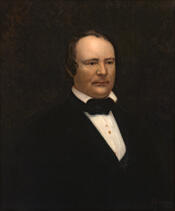
Here you will find contact information for Representative James Lawrence Orr, including email address, phone number, and mailing address.
| Name | James Lawrence Orr |
| Position | Representative |
| State | South Carolina |
| District | 5 |
| Party | Democratic |
| Status | Former Representative |
| Term Start | December 3, 1849 |
| Term End | March 3, 1859 |
| Terms Served | 5 |
| Born | May 12, 1822 |
| Gender | Male |
| Bioguide ID | O000104 |
About Representative James Lawrence Orr
James Lawrence Orr (May 12, 1822 – May 5, 1873) was an American diplomat and politician who served as a Representative from South Carolina in the United States Congress from 1849 to 1859, the 22nd Speaker of the United States House of Representatives from 1857 to 1859, the 73rd governor of South Carolina from 1865 to 1868, and later as United States Minister to Russia. A member of the Democratic Party, he played a prominent and often controversial role in the politics of South Carolina and the nation in the decades surrounding the Civil War.
Orr was born on May 12, 1822, at Craytonville, Anderson District, South Carolina. Little is recorded in these sources about his early childhood, but he came of age in the upcountry region of the state during a period of intensifying sectional conflict over slavery and states’ rights. He pursued higher education at the University of Virginia, from which he graduated in 1841. After completing his studies, he read law and became an attorney, establishing himself in the legal profession in South Carolina. In 1843 he married Mary Jane Marshall; the couple had seven children, and his growing family life paralleled his rapid ascent in public affairs.
Orr entered national politics as a Democrat and was elected to the United States House of Representatives from South Carolina, serving five consecutive terms from 1849 to 1859. His decade in Congress coincided with a significant period in American history marked by intensifying disputes over slavery, territorial expansion, and the balance of power between North and South. As a member of the House of Representatives, he participated actively in the legislative process and represented the interests of his South Carolina constituents. Within the Democratic Party he became an influential advocate of states’ rights and a defender of the institution of slavery, using his position to assist those who promoted its continuation. Census and related records indicate that Orr owned at least fourteen enslaved people in 1850 and purchased at least five more before 1860, underscoring his personal and economic investment in the slave system.
Orr’s prominence in Congress culminated in his election as the 22nd Speaker of the United States House of Representatives, a position he held from 1857 to 1859. As Speaker, he presided over a deeply divided House during the final years of the 1850s, when sectional tensions were approaching a breaking point. Although he foresaw the grave consequences that would follow South Carolina’s decision to attempt secession from the Union, he remained loyal to his state and its political course while also seeking to protect his own financial interests. In 1860 he served as president of the South Carolina Democratic convention, which endorsed him for the Democratic presidential nomination, reflecting his stature within both state and national Democratic circles.
As South Carolina moved toward secession, Orr was selected as one of three commissioners sent to Washington, D.C., to negotiate with federal authorities over the transfer of federal property to South Carolina. The failure of these negotiations, particularly regarding Fort Sumter in Charleston Harbor, directly preceded and helped precipitate the bombardment of Fort Sumter and the formal outbreak of the American Civil War. After the war began, Orr organized and commanded a unit known as Orr’s Regiment of South Carolina Rifles. Although the regiment initially saw little action under his direct command, it continued to bear his name after his resignation in 1862 and went on to fight in several of the most prominent battles of the Army of Northern Virginia.
In 1862 Orr left field command and entered the political leadership of the Confederacy as a member of the Confederate States Senate. There he served as chairman of the influential Foreign Affairs and Rules committees, positions that placed him at the center of Confederate legislative and diplomatic strategy. In the Confederate Senate he remained a strong proponent of states’ rights, consistent with his long-standing political philosophy. His wartime service in both military and legislative roles reinforced his reputation as one of South Carolina’s leading public figures.
With the collapse of the Confederacy in 1865, Orr transitioned into a role in Reconstruction-era politics. That same year he was elected governor of South Carolina, serving as the state’s 73rd governor from 1865 until the adoption of a new state constitution in 1868. His governorship occurred during the turbulent early years of Reconstruction, when South Carolina confronted the end of slavery, federal military oversight, and the reorganization of its political institutions. Orr’s administration navigated the complex process of reestablishing civil government and adjusting to the new constitutional and social order imposed after the war, though these sources do not detail specific policies he pursued.
In a gesture of post–Civil War reconciliation, President Ulysses S. Grant appointed Orr as United States Minister to Russia in 1872. This diplomatic posting marked his return to federal service under the restored Union government and symbolized an effort to reintegrate former Confederate leaders into national life. Orr traveled to St. Petersburg, Russia, to assume his duties, but he died there on May 5, 1873, shortly after his arrival and before he could make a significant impact in the role. His body was returned to South Carolina, and he was interred in the First Presbyterian Church Cemetery in Anderson, South Carolina.
Orr’s legacy has remained visible in the physical and symbolic landscape of American government. A posthumous portrait of him by painter Esther Edmonds became part of the art collection of the United States Capitol. For many years it was displayed in the Speaker’s Lobby outside the House Chamber, reflecting his historical role as Speaker of the House. On June 18, 2020, however, Speaker of the House Nancy Pelosi ordered the removal of Orr’s portrait from public display, along with those of other former Speakers associated with the Confederacy, as part of a broader reassessment of how such figures are commemorated in the Capitol.