Senator James Willis Patterson
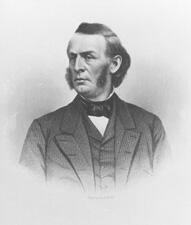
Here you will find contact information for Senator James Willis Patterson, including email address, phone number, and mailing address.
| Name | James Willis Patterson |
| Position | Senator |
| State | New Hampshire |
| Party | Republican |
| Status | Former Representative |
| Term Start | December 7, 1863 |
| Term End | March 3, 1873 |
| Terms Served | 3 |
| Born | July 2, 1823 |
| Gender | Male |
| Bioguide ID | P000120 |
About Senator James Willis Patterson
James Willis Patterson (July 2, 1823 – May 4, 1893) was an American politician, educator, and a United States representative and senator from New Hampshire. A member of the Republican Party, he served in the United States Congress during a significant period in American history, holding office in the House of Representatives from 1863 to 1867 and in the Senate from 1867 to 1873. Over three terms in Congress, he participated actively in the legislative process and represented the interests of his New Hampshire constituents during and after the Civil War.
Patterson was born on July 2, 1823, in Henniker, Merrimack County, New Hampshire, the son of William and Frances M. Shepard Patterson. He pursued classical studies in his youth and enrolled at Dartmouth College in Hanover, New Hampshire, from which he graduated in 1848. After college he moved into the field of education, becoming principal of Woodstock Academy in Woodstock, Connecticut, a position he held for two years. He then attended the Theological Seminary at New Haven, Connecticut, where he pursued further studies and read law, reflecting a broad intellectual formation that combined theology, law, and the liberal arts.
In 1854 Patterson returned to Dartmouth College as a member of the faculty. He served there as a professor of mathematics, astronomy, and meteorology from 1854 to 1865, a period in which he built a reputation as a scholar and teacher. His academic work coincided with increasing involvement in public affairs in New Hampshire. Patterson married Sarah Parker Wilder, and the couple had two children, George Willis Patterson and Arthur Hubert Patterson, establishing a family life in parallel with his growing public and academic responsibilities.
Patterson entered elective office as a member of the New Hampshire House of Representatives in 1862, marking his formal entry into political life. The following year he moved onto the national stage. Elected as a Republican to the Thirty-eighth and Thirty-ninth Congresses, he served as a United States representative from New Hampshire’s third congressional district from March 4, 1863, to March 3, 1867. His service in the House coincided with the latter years of the Civil War and the beginning of Reconstruction, a time when New Hampshire’s representatives were engaged in questions of Union preservation, wartime policy, and the initial framework for postwar governance.
In 1867 Patterson advanced to the United States Senate. He was elected as a Republican and served as a senator from New Hampshire from March 4, 1867, to March 3, 1873. During his Senate tenure he continued to contribute to the legislative process at a critical juncture in national history, participating in debates over Reconstruction, civil rights, and the reorganization of the postwar South. He served as chairman of the Committee on Enrolled Bills during the Forty-first Congress and was a member of the Committee on the District of Columbia during the Forty-first and Forty-second Congresses. In these roles he helped oversee the formal enrollment of legislation and took part in shaping policy for the federal district, including public education initiatives.
Patterson’s Senate career was overshadowed in its final years by his involvement in the Crédit Mobilier scandal, one of the major federal political scandals of the era. On September 4, 1872, the New York Sun reported that Patterson, along with a number of other prominent politicians, had been implicated in alleged bribery connected with the Union Pacific Railroad and the Crédit Mobilier of America construction company. In response, the House of Representatives created the Poland Committee to investigate these accusations. By December 1872 the committee had reported that several high-ranking Republican officials were involved in the scandal. On February 4, 1873, Patterson attempted to persuade the Senate to appoint a specific committee to consider his case. The subsequent investigation found that Patterson had given Crédit Mobilier figure Oakes Ames $7,000 to invest on his behalf; Patterson claimed that, because Ames had provided no written receipt, he was unaware that he owned any Crédit Mobilier stock. A report to the Senate concluded that Patterson had given false testimony to both the House and Senate committees, and by that time both chambers were recommending that he be expelled. His Senate term, however, expired on March 3, 1873, before Congress could take further action.
After leaving the Senate, Patterson remained active in public and educational affairs. He served as a regent of the Smithsonian Institution, reflecting his continued engagement with national cultural and scientific institutions. He returned to state politics as a member of the New Hampshire House of Representatives in 1877 and 1878. From 1881 to 1893 he held the office of state superintendent of public instruction, overseeing New Hampshire’s public school system and advocating for improvements in education. He also served as president of the American Institute of Instruction, a professional organization devoted to the advancement of educational practice, underscoring his long-standing commitment to schooling and pedagogy.
Patterson’s influence extended to the nation’s capital through his work on education for African American students in Washington, D.C. The Patterson School, later merged with the Garnett School in 1929 and eventually known as Shaw Middle School at Garnett-Patterson, was named in his honor because he sponsored legislation creating a public school system for Black students in the District of Columbia. This institution, which operated for many decades before its closure in 2013, reflected his role in shaping educational policy for the District during his service on the Committee on the District of Columbia.
James Willis Patterson died in Hanover, Grafton County, New Hampshire, on May 4, 1893, at the age of 69 years, 306 days. He was interred in the Dartmouth College Cemetery in Hanover, symbolizing his enduring association with the institution where he had studied, taught, and maintained close ties throughout his life.