Representative James Monroe Pendleton
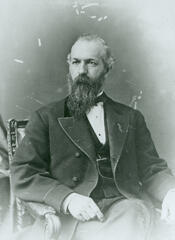
Here you will find contact information for Representative James Monroe Pendleton, including email address, phone number, and mailing address.
| Name | James Monroe Pendleton |
| Position | Representative |
| State | Rhode Island |
| District | 2 |
| Party | Republican |
| Status | Former Representative |
| Term Start | March 4, 1871 |
| Term End | March 3, 1875 |
| Terms Served | 2 |
| Born | January 10, 1822 |
| Gender | Male |
| Bioguide ID | P000204 |
About Representative James Monroe Pendleton
James Monroe Pendleton (January 10, 1822 – February 16, 1889) was a U.S. Representative from Rhode Island and a member of the Republican Party who served in the United States Congress from 1871 to 1875. His congressional tenure encompassed two terms in the House of Representatives during a significant period in American history, when the nation was grappling with the political, economic, and social consequences of the Civil War and Reconstruction. As a Representative, he participated actively in the legislative process and worked to represent the interests of his Rhode Island constituents within the broader national debates of the era.
Pendleton’s early life and formative years preceded the Civil War generation of political leaders, placing him among those whose public careers were shaped by the antebellum conflicts over union, industry, and expansion. Born on January 10, 1822, he came of age in a period of rapid change in New England, as Rhode Island and the surrounding region were transformed by industrialization, maritime commerce, and evolving political institutions. These developments provided the backdrop for his later engagement in public affairs and his alignment with the Republican Party, which emerged in the 1850s as a major force in national politics.
Although detailed records of Pendleton’s formal education are limited, his subsequent public service indicates that he was well prepared to navigate the complex legal, economic, and constitutional issues that came before Congress in the post–Civil War period. Like many nineteenth-century legislators, he likely combined practical experience, self-directed study, and participation in local civic life to build the knowledge and reputation that would support his entry into national office. His eventual election to Congress suggests that he had established himself as a respected figure within Rhode Island’s political and community networks.
Pendleton’s career reached its national prominence with his election as a Representative from Rhode Island to the United States House of Representatives. A Republican, he was elected to serve in Congress beginning in 1871 and remained in office through 1875, completing two consecutive terms. During these years, which corresponded to the Forty-second and Forty-third Congresses, he took part in deliberations over Reconstruction policy, federal-state relations, economic recovery, and the continuing integration of formerly seceded states into the political life of the Union. His role in the House placed him at the center of the democratic process, where he contributed to shaping legislation and policy at a time when the federal government was redefining its responsibilities to citizens and states alike.
As a member of the House of Representatives, Pendleton’s responsibilities included attending sessions of Congress, serving on committees, and responding to the needs and concerns of his Rhode Island constituents. He represented a state with a strong industrial base and maritime tradition, and his work in Congress would have been informed by the interests of manufacturers, workers, merchants, and coastal communities. Within the framework of Republican Party priorities—such as support for economic development, protection of civil rights, and preservation of the Union—he participated in the ongoing effort to stabilize the nation after the upheavals of war.
After leaving Congress in 1875, Pendleton’s public life continued to be shaped by the legacy of his service during Reconstruction. Although specific details of his later professional activities are not extensively documented, his experience as a two-term Representative placed him among the cohort of nineteenth-century legislators who helped guide the United States through a difficult transition from civil conflict to peacetime governance. His later years were spent away from the national spotlight, but his congressional record remained part of Rhode Island’s political history and the broader narrative of postwar American governance.
James Monroe Pendleton died on February 16, 1889. His life spanned from the early decades of the nineteenth century through the Gilded Age, a period marked by profound transformation in American political, economic, and social life. As a Republican Representative from Rhode Island who served from 1871 to 1875, he contributed to the legislative work of Congress at a critical juncture in the nation’s development and participated in the evolving democratic process that defined the United States in the years following the Civil War.