Representative J. J. Pickle
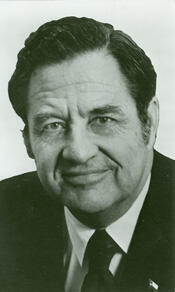
Here you will find contact information for Representative J. J. Pickle, including email address, phone number, and mailing address.
| Name | J. J. Pickle |
| Position | Representative |
| State | Texas |
| District | 10 |
| Party | Democratic |
| Status | Former Representative |
| Term Start | January 9, 1963 |
| Term End | January 3, 1995 |
| Terms Served | 16 |
| Born | October 11, 1913 |
| Gender | Male |
| Bioguide ID | P000328 |
About Representative J. J. Pickle
James Jarrell “Jake” Pickle (October 11, 1913 – June 18, 2005) was a Democratic member of the United States House of Representatives from Texas, serving 16 terms from 1963 to 1995. Representing the 10th congressional district of Texas, based in Austin, he contributed to the legislative process during a significant period in American history, rising to become one of the senior Democrats on the powerful House Ways and Means Committee and playing a key role in major national policy, particularly Social Security reform.
Pickle was born in Roscoe, Nolan County, Texas, on October 11, 1913, and was brought up in Big Spring, Texas. He acquired his lifelong nickname “Jake” as a small child, after portraying a mischievous character named Jake in a family play when he was four years old. Raised in West Texas, he attended the public schools in Big Spring. As a youth he was active in the Boy Scouts of America, achieving the rank of Eagle Scout and later receiving the Distinguished Eagle Scout Award, an honor reserved for Eagle Scouts who have distinguished themselves in their careers and communities.
After completing his early education, Pickle enrolled at the University of Texas at Austin, where he emerged as a prominent student leader. He received his Bachelor of Arts degree from the university, and during his college years he was a member of the 1934 Southwest Conference championship swimming team. As a senior in 1937 he was elected student body president, reflecting his early aptitude for leadership and politics. He was also a member of the Friar Society, one of the university’s most prestigious honorary organizations, which recognized his scholarship, leadership, and service.
Pickle’s political career was shaped early by his association with future national leaders from Texas. He was introduced by future governor John Connally to then-Representative Lyndon B. Johnson, who became his political mentor. Pickle worked on Johnson’s 1940 re-election campaign to the U.S. House of Representatives and assisted Lady Bird Johnson in running Johnson’s congressional office, gaining firsthand experience in constituent service and legislative operations. When the United States entered World War II, Pickle joined the U.S. Navy in 1942 and served as a gunnery officer. He was stationed on the cruisers USS St. Louis and USS Miami in the Pacific theater and survived three torpedo attacks during his naval service. After the war ended, he returned to Texas and, together with Lyndon B. Johnson and John Connally, helped found radio station KVET in Austin. He then spent about a decade in the advertising business, further establishing his ties to the Austin community and the Texas business and political worlds. In 1957 he joined the Democratic Election Executive Committee of Texas, deepening his involvement in state party affairs.
Before leaving for World War II, Pickle married Ella Nora “Sugar” Critz in 1942. The couple had one daughter, Peggy Pickle. Ella Nora Critz died in 1952, leaving Pickle a widower with a young child. In 1960 he married Beryl Bolton McCarroll. His daughter Peggy remained closely connected to his public and civic legacy; in later years she made contributions to the University of Texas at Austin on her father’s behalf, and in 1997 she co-authored with him a book titled “Jake,” which included a foreword by former Texas governor Ann Richards.
Pickle entered Congress through a special election. A member of the Democratic Party, he was elected to the 88th Congress to fill the vacancy caused by the resignation of U.S. Representative Homer Thornberry, who had been appointed a U.S. District Judge. Taking office in 1963, Pickle represented the 10th congressional district of Texas, the Austin-based district that Lyndon B. Johnson had represented from 1937 to 1949. He was reelected 15 times, serving continuously until his retirement at the conclusion of the 103rd Congress in January 1995. Over his 16 terms in office, he participated actively in the democratic process and represented the interests of his constituents during a transformative era that included the civil rights movement, the Great Society, the Vietnam War, and the end of the Cold War. His campaign trademark was a small “squeaky pickle” rubber toy that he handed out to people he met at parades and public events, a lighthearted symbol that made him widely recognizable in his district.
During his long tenure in the House of Representatives, Pickle rose through the ranks to become the third-ranking Democrat on the House Ways and Means Committee, one of the most influential committees in Congress with jurisdiction over taxation, Social Security, and many federal programs. He distinguished himself as a moderate Southern Democrat who supported landmark civil rights legislation. He voted in favor of the Civil Rights Act of 1964, the Voting Rights Act of 1965, and the Civil Rights Act of 1968, and he was one of only eight Southern Representatives to support the Civil Rights Act of 1964, a vote that carried political risk in his region at the time. In the early 1980s, as concerns mounted about the long-term solvency of Social Security, Pickle played a key role in crafting and passing major Social Security reform legislation in 1983. The reforms increased the payroll tax rate, gradually raised the full retirement age to 67, and subjected some Social Security benefits to federal income taxation. Pickle regarded this bipartisan legislation, which helped stabilize the Social Security system, as his greatest legislative accomplishment.
In addition to his national legislative work, Pickle was a strong advocate for higher education and economic development in his home district. He was instrumental in steering federal research funds to the University of Texas at Austin, and in recognition of his efforts, the university named the J. J. Pickle Research Campus in his honor. He played a significant role in shaping the growth and infrastructure of Austin, most notably by helping to relocate the city’s main airport from Robert Mueller Municipal Airport to what became Austin–Bergstrom International Airport. He was also a key figure in bringing high-technology research consortia, including SEMATECH (Semiconductor Manufacturing Technology) and the Microelectronics and Computer Technology Corporation (MCC), to Austin, helping to lay the foundation for the city’s emergence as a major technology center.
In his later years, Pickle faced serious health challenges. He was diagnosed with prostate cancer in 1991 while still serving in Congress, and a decade later, in 2001, he was diagnosed with lymphoma. After leaving office in 1995, he remained a respected figure in Texas public life and continued to be associated with civic and educational causes, particularly those connected to the University of Texas and to public service. James Jarrell “Jake” Pickle died at his home in Austin, Texas, on June 18, 2005, of complications from his cancers. He was interred at the Texas State Cemetery in Austin, a resting place reserved for many of the state’s most prominent figures. In 2007, the Texas Legislature unanimously approved a resolution designating the State Highway 130 Toll Road, running from Georgetown to Seguin, as “Pickle Parkway” in his honor, commemorating his decades of service to his district, his state, and the nation.