Representative James Nelson Pidcock
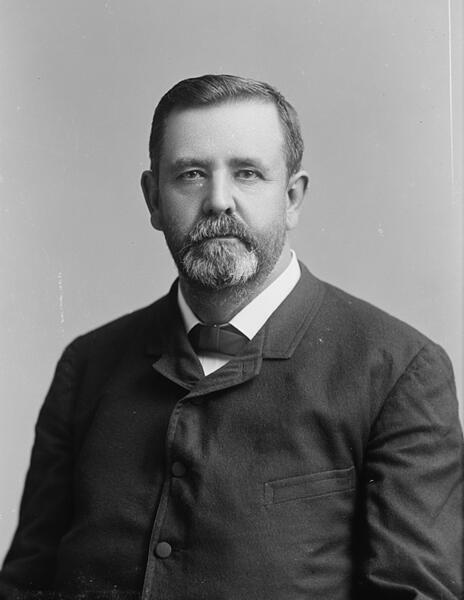
Here you will find contact information for Representative James Nelson Pidcock, including email address, phone number, and mailing address.
| Name | James Nelson Pidcock |
| Position | Representative |
| State | New Jersey |
| District | 4 |
| Party | Democratic |
| Status | Former Representative |
| Term Start | December 7, 1885 |
| Term End | March 3, 1889 |
| Terms Served | 2 |
| Born | February 8, 1836 |
| Gender | Male |
| Bioguide ID | P000331 |
About Representative James Nelson Pidcock
James Nelson Pidcock (February 8, 1836 – December 17, 1899) was an American Democratic Party politician who represented New Jersey’s 4th congressional district in the United States House of Representatives for two terms from 1885 to 1889. He served as a Representative from New Jersey in the United States Congress during a significant period in American history, contributing to the legislative process and participating in the democratic governance of the nation.
Pidcock was born on February 8, 1836, in Whitehouse Station, Hunterdon County, New Jersey. He was educated in the local district schools and later attended Lebanon Grammar School in Lebanon, New Jersey. His early life in rural Hunterdon County, combined with his formal schooling, provided the foundation for his later work in engineering, agriculture, and public service.
From 1850 to 1857, Pidcock worked in civil engineering, gaining practical experience in infrastructure and development at a relatively young age. After 1857, he turned to agricultural pursuits and became a dealer in livestock, establishing himself as a farmer and businessman. His engagement in agriculture and livestock dealing connected him closely with the economic life of his region and helped shape his understanding of the interests of rural constituents he would later represent.
Pidcock’s formal political career began at the state level. In 1873, he ran for a seat in the New Jersey Senate but was unsuccessful in that initial attempt. He remained active in public affairs, and from 1877 to 1880 he served as a member of the New Jersey Senate from Hunterdon County. His role in the state legislature marked his emergence as a significant Democratic figure in New Jersey politics and prepared him for national office.
A committed Democrat, Pidcock was chosen as a delegate to the Democratic National Conventions in 1884 and 1888, participating in the selection of his party’s presidential nominees and contributing to the formation of national party policy. He was elected as a Democrat to the Forty-ninth and Fiftieth Congresses, representing New Jersey’s 4th congressional district in the United States House of Representatives from March 4, 1885, to March 3, 1889. During these two terms in office, he represented the interests of his constituents and took part in the legislative process at a time of significant economic and political change in the post–Civil War era. He was not a candidate for renomination in 1888, thus concluding his congressional service after four years.
After leaving Congress, Pidcock resumed his agricultural pursuits in New Jersey, continuing his work as a farmer and orchardist. He became particularly known for growing peaches, reflecting his continued investment in the state’s agricultural development. Beyond farming, he expanded his business interests into transportation and timber. He was involved in the construction of the Georgia Northern Railroad in southern Georgia, where he owned large timber tracts, and played a role in the economic development of that region. In New Jersey, he helped organize the Rockaway Valley Railroad and served as its president, further demonstrating his engagement with railroad expansion and regional commerce.
Pidcock also held important responsibilities in public institutional governance. From 1891 to 1896, he served as president of the board of managers of the New Jersey State Hospital for the Insane, overseeing the administration of mental health care at a time when such institutions were central to state social services. His leadership in this role reflected his continued commitment to public service beyond elective office.
In his personal life, Pidcock married twice and was the father of six children. He was a cousin of Alvah A. Clark, who also served as a Democratic member of Congress from New Jersey, indicating a family connection to public life and politics. James Nelson Pidcock died on December 17, 1899, at his home in Whitehouse Station, New Jersey. He was interred in Elmwood Cemetery in Lebanon, New Jersey, closing a life marked by service in state and national government, engagement in agriculture and railroad development, and leadership in public institutions.