Representative James Protus Pigott
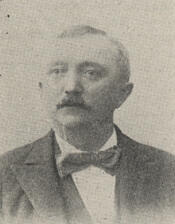
Here you will find contact information for Representative James Protus Pigott, including email address, phone number, and mailing address.
| Name | James Protus Pigott |
| Position | Representative |
| State | Connecticut |
| District | 2 |
| Party | Democratic |
| Status | Former Representative |
| Term Start | August 7, 1893 |
| Term End | March 3, 1895 |
| Terms Served | 1 |
| Born | September 11, 1852 |
| Gender | Male |
| Bioguide ID | P000344 |
About Representative James Protus Pigott
James Protus Pigott (September 11, 1852 – July 1, 1919) was an American lawyer and Democratic politician who served one term as a U.S. Representative from Connecticut from 1893 to 1895. Over the course of his career he combined legal practice with public service, ultimately representing his state in the United States Congress during a significant period in American political and economic history.
Pigott was born on September 11, 1852. Details of his early family life and upbringing are sparse in the surviving public record, but his later professional achievements indicate that he received a solid preparatory education that enabled him to pursue advanced study. Coming of age in the post–Civil War era, he was part of a generation that entered public life as the United States was undergoing rapid industrialization and political realignment.
Pursuing higher education, Pigott studied at Yale University in New Haven, Connecticut, where he received a rigorous academic training that prepared him for the legal profession. His association with Yale later led to his inclusion in the university’s Obituary Record of Yale Graduates for 1919–1920, reflecting the institution’s recognition of his professional and public contributions. Following his university studies, he read law and was admitted to the bar, beginning a legal career that would form the foundation of his later political work.
As a lawyer, Pigott established himself in Connecticut, practicing in an era when the state was transitioning from its earlier mercantile and manufacturing base into a more complex industrial economy. His legal work brought him into contact with the issues of commerce, property, and local governance that were central to Connecticut’s development in the late nineteenth century. Through his practice and civic engagement, he became active in Democratic Party politics, aligning himself with a political organization that, in New England, often represented urban interests and immigrant communities during a time of shifting party coalitions.
Pigott’s growing prominence in legal and political circles led to his election as a Democrat to the United States House of Representatives. He served as a Representative from Connecticut in the Fifty-third Congress from 1893 to 1895, completing one term in office. His tenure coincided with the administration of President Grover Cleveland and with the economic turmoil of the Panic of 1893, a major financial crisis that shaped the national legislative agenda. As a member of the House of Representatives, James Protus Pigott participated in the democratic process, contributed to the legislative work of the chamber, and represented the interests of his Connecticut constituents at a time when debates over tariffs, currency policy, and economic recovery dominated congressional deliberations.
During his congressional service, Pigott was part of a Democratic majority that grappled with contentious issues such as the repeal of the Sherman Silver Purchase Act and efforts to reform the tariff system. While the detailed record of his individual floor speeches and committee assignments is limited in the surviving summaries, his role as a voting member of the House placed him within the broader national effort to respond to economic distress and to balance regional and party interests. His single term reflected both the competitive nature of Connecticut politics and the volatility of public sentiment during the economic downturn of the mid-1890s.
After leaving Congress in 1895, Pigott returned to private life and resumed his legal career in Connecticut. He continued to be regarded as a respected member of the bar and remained identified with the Democratic Party and with the civic affairs of his community. His post-congressional years were spent in professional practice and in the quieter forms of public engagement typical of former members of the House who did not seek or hold further national office.
James Protus Pigott died on July 1, 1919. His death was noted in the Obituary Record of Yale Graduates for 1919–1920, underscoring his status as both an alumnus of Yale University and a former member of the United States Congress. Remembered as an American lawyer and politician who served his state during a challenging period in the nation’s economic and political life, he occupies a place in the historical record as a Democratic Representative from Connecticut who contributed to the legislative process during his one term in office.