Senator James Lawrence Pugh
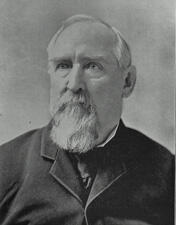
Here you will find contact information for Senator James Lawrence Pugh, including email address, phone number, and mailing address.
| Name | James Lawrence Pugh |
| Position | Senator |
| State | Alabama |
| Party | Democratic |
| Status | Former Representative |
| Term Start | December 5, 1859 |
| Term End | March 3, 1897 |
| Terms Served | 4 |
| Born | December 12, 1820 |
| Gender | Male |
| Bioguide ID | P000561 |
About Senator James Lawrence Pugh
James Lawrence Pugh (December 12, 1820 – March 9, 1907) was an American politician and attorney who served as a United States senator from Alabama from 1880 to 1897, a member of the United States House of Representatives from 1859 to 1861, and a representative in both the First and Second Confederate Congresses during the American Civil War. A member of the Democratic Party, he contributed to the legislative process over multiple terms in office and represented Alabama during a significant and turbulent period in American history.
Pugh was born in Burke County, Georgia, on December 12, 1820. In 1824 he moved with his family to Alabama, where he was raised and spent the remainder of his life. He received a collegiate education and then read law under John Gill Shorter, who would later serve as governor of Alabama. Pugh was admitted to the bar in 1841 and began the practice of law in Eufaula, Alabama, establishing himself as a prominent attorney in the region.
Active in Democratic politics from an early stage in his career, Pugh served as a presidential elector in 1848 and again in 1856. He was elected as a Democrat to the United States House of Representatives from Alabama’s 2nd Congressional District and served from December 5, 1859, until January 21, 1861. He retired from the House upon the secession of Alabama from the Union, aligning his political course with that of his state as it joined the Confederacy.
During the Civil War, Pugh first served in the Confederate States Army, where contemporary biographical sources record him as having served as a private. He was subsequently elected as the representative from Alabama’s 8th District to both the First Confederate Congress and the Second Confederate Congress, serving from February 22, 1862, until the collapse of the Confederacy in 1865. In the Confederate legislature he served on the House Committee on Military Affairs throughout both Congresses and became known as a prominent critic of Confederate President Jefferson Davis, particularly on questions of military policy and executive authority.
After the war, Pugh returned to his law practice in Alabama as the state and region underwent Reconstruction. Upon the restoration of his citizenship, he quickly reemerged as an influential Democratic leader. He served as president of the Alabama Democratic state convention in 1874, played a role as a delegate to the state constitutional convention of 1875, and again served as a presidential elector in 1876, reflecting his continued prominence in party affairs and state politics.
Pugh entered the United States Senate following the death of Senator George S. Houston. Elected to fill the resulting vacancy, he took his seat on November 24, 1880. He was subsequently reelected twice, serving continuously until March 4, 1897. Over these four terms in Congress—first in the House before the Civil War and later in the Senate during the post-Reconstruction and Gilded Age eras—Pugh participated in the democratic process and represented the interests of his Alabama constituents. As a Democratic senator, he was involved in debates over issues such as federal economic policy, the lingering effects of Reconstruction, and questions of states’ rights and race in the postwar South. At the close of his final term he lost renomination and left the Senate in 1897, ending nearly four decades of intermittent federal legislative service.
In his later years, Pugh lived in Alabama, where he remained a respected elder statesman of the Democratic Party and the legal profession. He died on March 9, 1907. His long public career, spanning antebellum politics, the Civil War and Confederate government, Reconstruction, and the late nineteenth-century United States Senate, made him a significant figure in the political history of Alabama and the broader South.