Representative James Michael Quigley
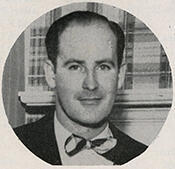
Here you will find contact information for Representative James Michael Quigley, including email address, phone number, and mailing address.
| Name | James Michael Quigley |
| Position | Representative |
| State | Pennsylvania |
| District | 19 |
| Party | Democratic |
| Status | Former Representative |
| Term Start | January 5, 1955 |
| Term End | January 3, 1961 |
| Terms Served | 2 |
| Born | March 30, 1918 |
| Gender | Male |
| Bioguide ID | Q000012 |
About Representative James Michael Quigley
James Michael Quigley (March 30, 1918 – December 15, 2011) was an American lawyer, World War II veteran, and Democratic politician who served two nonconsecutive terms as a United States Representative from Pennsylvania from 1955 to 1957 and from 1959 to 1961. His service in Congress occurred during a significant period in American history, and as a member of the House of Representatives he participated in the legislative process and represented the interests of his Pennsylvania constituents.
Quigley was born on March 30, 1918, in Mount Carmel, Northumberland County, Pennsylvania. He was educated in the region and went on to attend Villanova University, from which he graduated in 1939. He then pursued legal studies at the Dickinson School of Law in Carlisle, Pennsylvania, earning his law degree in 1942. Shortly thereafter, he was admitted to the bar and began preparing for a career in law that would later intersect with public service and national politics.
During World War II, Quigley served in the United States Navy from 1943 to 1946. He was assigned as a communications officer on the destroyer USS Hart (DD-594). In that capacity, he took part in major Pacific Theater operations, including the Philippines campaign of 1944–1945 and the Battle of Okinawa. Following the end of hostilities after V-J Day, he continued his naval service with the occupation forces in Korea and China, gaining experience in international and military affairs that would inform his later public career.
After his discharge from the Navy, Quigley returned to Pennsylvania and resumed the practice of law in Harrisburg. Establishing himself as an attorney, he became active in Democratic Party politics. He was an unsuccessful Democratic candidate for election to the U.S. House of Representatives in 1950, but the campaign helped raise his profile within the party and among voters in his district. He continued his legal work while remaining engaged in public affairs and party activities.
Quigley was elected as a Democrat to the 84th United States Congress and served his first term in the House of Representatives from January 3, 1955, to January 3, 1957. After losing his bid for reelection in the 1956 United States House election, he remained in public service. In 1957 he became administrative assistant to U.S. Senator Joseph S. Clark of Pennsylvania, gaining experience in the upper chamber of Congress and in federal legislative operations. In 1958 he was appointed assistant attorney general for Pennsylvania, further solidifying his credentials in law and government.
In the 1958 United States House election, Quigley was again elected to Congress and served in the 86th United States Congress from January 3, 1959, to January 3, 1961. Over the course of his two nonconsecutive terms, from 1955 to 1957 and from 1959 to 1961, he contributed to the legislative process during a period marked by Cold War tensions and the early stages of the civil rights era. A member of the Democratic Party, he worked to represent the interests of his Pennsylvania constituents. He was an unsuccessful candidate for reelection in the 1960 United States House election, losing to Republican George A. Goodling.
Following his congressional service, Quigley continued his career in the federal executive branch. On February 24, 1961, he was appointed Assistant Secretary of Health, Education, and Welfare for Federal and State matters, a position he held until January 1966. In this role he was involved in coordinating federal and state responsibilities in health, education, and welfare programs during a time of expanding federal social policy. In January 1966 he was appointed Commissioner of the Federal Water Pollution Control Administration, serving until January 1968 and participating in the early development of federal water pollution control efforts that preceded the creation of the Environmental Protection Agency.
After leaving federal service, Quigley entered the private sector while maintaining a connection to public policy through industry and regulatory issues. He worked as vice president of United States Plywood-Champion Papers, Inc., from 1968 to 1986, a period during which environmental regulation, industrial standards, and federal oversight of natural resources and manufacturing were evolving rapidly. His combined experience in law, government, and business positioned him as a figure at the intersection of public and private interests.
Quigley married Genevieve Morgan Quigley, and the couple had six children. Their son, James M. Quigley, M.D., predeceased them in 2006, while five daughters survived him. James Michael Quigley died on December 15, 2011, in Washington, D.C. He was interred at Gate of Heaven Cemetery in Silver Spring, Maryland, closing a life that spanned military service in World War II, legal practice, congressional representation, high-level federal administration, and corporate leadership.