Representative James Daniel Richardson
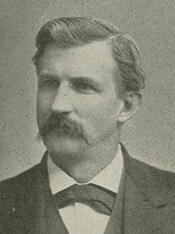
Here you will find contact information for Representative James Daniel Richardson, including email address, phone number, and mailing address.
| Name | James Daniel Richardson |
| Position | Representative |
| State | Tennessee |
| District | 5 |
| Party | Democratic |
| Status | Former Representative |
| Term Start | December 7, 1885 |
| Term End | March 3, 1905 |
| Terms Served | 10 |
| Born | March 10, 1843 |
| Gender | Male |
| Bioguide ID | R000222 |
About Representative James Daniel Richardson
James Daniel Richardson (March 10, 1843 – July 24, 1914) was an American politician, lawyer, and author who represented Tennessee’s 5th congressional district in the United States House of Representatives from March 4, 1885, to March 3, 1905. A member of the Democratic Party, he served ten consecutive terms in Congress and emerged as one of the earliest U.S. House Minority Leaders, holding that leadership position from 1899 to 1903 during the Fifty-sixth and Fifty-seventh Congresses. His long tenure in public life spanned the Civil War, Reconstruction, and the turn of the twentieth century, and included significant contributions to both Tennessee state politics and national legislative affairs.
Richardson was born in Rutherford County, Tennessee, on March 10, 1843, the son of John Watkins Richardson and Augusta M. Starnes Richardson. He attended local country schools and later enrolled at Franklin College near Nashville, Tennessee. His formal education was interrupted by the outbreak of the American Civil War, which drew him into military service before he could complete his college studies. On January 18, 1865, he married Alabama Pippen; the couple had five children: Annie Augusta, Ida Lee, James Daniel, Allie Sue, and John Watkins.
During the Civil War, Richardson entered the Confederate States Army before graduating from college and served nearly four years in uniform. For the first year of his service he was a private, and for the remaining three years he served as a first lieutenant and adjutant of the 45th Tennessee Infantry Regiment. His wartime experience, spent largely in staff and administrative roles as adjutant, helped shape his later aptitude for organization, leadership, and parliamentary procedure, qualities that would become evident in his legislative and Masonic careers.
After the war, Richardson turned to the study of law. He was admitted to the bar and commenced legal practice on January 1, 1867, in Murfreesboro, Tennessee. Establishing himself as a lawyer in his home region, he quickly entered public life. He was elected to the Tennessee House of Representatives, serving from 1871 to 1873, and then to the Tennessee Senate, where he served from 1873 to 1875. His rising prominence within the Democratic Party was reflected in his selection as a delegate to the Democratic National Conventions of 1876, 1896, and 1900. At the 1900 Democratic National Convention he served as permanent chairman, presiding over the proceedings and underscoring his status as a leading party figure at the national level.
Elected as a Democrat to the Forty-ninth Congress and to the nine succeeding Congresses, Richardson represented Tennessee’s 5th congressional district in the U.S. House of Representatives from March 4, 1885, to March 3, 1905. His twenty years in Congress coincided with a significant period in American history marked by industrial expansion, debates over monetary policy, and the nation’s emergence on the world stage. As a member of the House of Representatives, James Daniel Richardson participated actively in the legislative process, represented the interests of his Tennessee constituents, and contributed to the broader work of the Democratic Party in Congress. From 1899 to 1903 he served as one of the earliest House Minority Leaders, helping to organize and articulate the Democratic response to the Republican majority during the Fifty-sixth and Fifty-seventh Congresses.
In addition to his legislative duties, Richardson played a notable role in preserving and organizing the documentary record of the federal government. Pursuant to an act of Congress approved on August 20, 1894, he was charged with compiling the “Messages and Papers of the Presidents,” a multi-volume work that assembled every significant document from the federal government from the administration of George Washington through the second administration of Grover Cleveland, with additional material from the administration of William McKinley. This compilation became an important reference work for scholars, legislators, and the public, and it stands as one of Richardson’s most enduring contributions to American political literature.
Parallel to his political and legal career, Richardson was deeply involved in Freemasonry. He was raised a Master Mason in Mt. Moriah Lodge No. 18 in Murfreesboro on October 12, 1867. His leadership within the fraternity advanced rapidly; he was elected Grand Master of the Grand Lodge of Tennessee in 1873. On the national and international Masonic stage, he became the eleventh Sovereign Grand Commander of the Scottish Rite’s Supreme Council for the Southern Jurisdiction of the United States, holding that office from 1900 until his death in 1914. He also served as the Provincial Grand Master of the Royal Order of Scotland from 1903 to 1914, further cementing his reputation as a prominent Masonic leader.
James Daniel Richardson died on July 24, 1914, in Murfreesboro, Tennessee, at the age of 71. He was interred at Evergreen Cemetery in Murfreesboro. His life encompassed service as a Confederate officer, Tennessee legislator, long-serving U.S. Representative, early House Minority Leader, compiler of presidential papers, and high-ranking Masonic official, reflecting a career that bridged state and national politics, public service, and fraternal leadership during a transformative era in American history.