Senator Jim Sasser
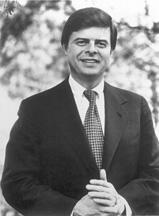
Here you will find contact information for Senator Jim Sasser, including email address, phone number, and mailing address.
| Name | Jim Sasser |
| Position | Senator |
| State | Tennessee |
| Party | Democratic |
| Status | Former Representative |
| Term Start | January 4, 1977 |
| Term End | January 3, 1995 |
| Terms Served | 9 |
| Born | September 30, 1936 |
| Gender | Male |
| Bioguide ID | S000068 |
About Senator Jim Sasser
James Ralph Sasser (September 30, 1936 – September 10, 2024) was an American politician, diplomat, and attorney from Tennessee. A member of the Democratic Party, he served three terms as a United States Senator from Tennessee from January 3, 1977, to January 3, 1995, during which time he became Chairman of the United States Senate Committee on the Budget and a key figure in federal budget negotiations. From 1996 to 1999, during the administration of President Bill Clinton, he served as United States Ambassador to the People’s Republic of China. To date, he is the most recent Democrat to have represented Tennessee in the U.S. Senate.
Sasser was born in Memphis, Tennessee, on September 30, 1936, and grew up in Nashville, where he attended the city’s public schools. He graduated from Hillsboro High School in 1954. He attended the University of Tennessee from 1954 to 1955, where he joined the Lambda chapter of the Kappa Sigma fraternity, before transferring to Vanderbilt University. He received his undergraduate degree from Vanderbilt in 1958 and went on to earn a law degree from Vanderbilt University Law School in 1961. That same year he was admitted to the Tennessee Bar and began practicing law in Nashville, establishing himself in private practice as an attorney. From 1957 to 1963, overlapping his college and early professional years, he served in the United States Marine Corps Reserve.
Before seeking office in his own right, Sasser was a longtime Democratic activist in Tennessee politics. He managed the unsuccessful 1970 reelection campaign of U.S. Senator Albert Gore Sr., a contest in which Gore was defeated by Republican Bill Brock, in part over Gore’s opposition to the Vietnam War. A lawyer by trade, Sasser remained active in party affairs and built a reputation as an effective organizer and strategist within Tennessee Democratic circles. His family’s political involvement continued into the next generation; his son, Gray Sasser, also became an attorney and later served as chair of the Tennessee Democratic Party. In 1962, Sasser married Mary Gorman, with whom he had two children.
Sasser sought elective office himself in 1976, when he ran for the Democratic nomination for the United States Senate seat held by Senator Bill Brock. In a competitive primary, he defeated several notable opponents, including Nashville entrepreneur and attorney John Jay Hooker, who was then still regarded as a serious contender because of his strong personality, intermittent wealth, and connections to the Seigenthaler family, which controlled The Tennessean newspaper. In the 1976 Democratic primary, Sasser received 44 percent of the vote, compared with 31 percent for Hooker, 10 percent for Harry Sadler, and 8 percent for David Bolin. After securing the nomination, Sasser focused his general-election campaign on Brock’s record, emphasizing the incumbent’s ties to former President Richard Nixon and highlighting Brock’s use of provisions in the federal income tax code that had allowed him, despite considerable wealth and income, to pay less than $2,000 in federal income tax in the previous year. Sasser argued that Brock had paid less in taxes than many Tennesseans of far more modest means. The campaign was aided significantly by the efforts of former Senator Gore, who remained popular among many Democrats. In the November 1976 general election, Sasser defeated Brock by a margin of 52 percent to 47 percent, beginning a Senate career that would span three terms.
During his tenure in the United States Senate from 1977 to 1995, Sasser represented Tennessee through a period of substantial political and economic change. He participated in the legislative process on a wide range of issues and became particularly influential in matters of fiscal policy. He won reelection in 1982, turning back a serious challenge from five-term Republican U.S. Representative Robin Beard; Sasser prevailed in that general election with 62 percent of the vote to Beard’s 38 percent. His strong showing in 1982 contributed to the perception of his political strength, and in 1988 he faced a relatively weak Republican opponent, Bill Andersen, a largely unknown candidate whose underfunded, essentially token campaign never posed a significant threat. Sasser was reelected to a third term that year by a margin of 65 percent to 35 percent. Over the course of his Senate service, he consistently aligned with Democratic priorities while representing the interests of his Tennessee constituents.
Sasser’s influence in the Senate grew markedly in the late 1980s. Following the retirement of Senator Lawton Chiles of Florida in 1989, Sasser became Chairman of the United States Senate Committee on the Budget. In that capacity he emerged as a key ally of Senate Majority Leader George J. Mitchell of Maine and played a central role in major budget negotiations. He helped negotiate the 1990 budget summit agreement with President George H. W. Bush, a landmark deficit-reduction package that combined spending restraints with revenue measures. In 1993, Sasser was instrumental in engineering passage of President Bill Clinton’s first budget, which aimed to reduce the federal deficit by approximately $500 billion over ten years and passed Congress without any Republican votes. These efforts enhanced his standing within the Democratic caucus, and as Majority Leader Mitchell prepared to retire, Sasser was widely viewed as a leading contender for a top leadership position in the Senate had he secured a fourth term.
The 1994 election cycle, however, brought an abrupt end to Sasser’s Senate career. His bid for reelection coincided with growing discontent among many Tennessee voters over the first two years of the Clinton administration, including controversy surrounding the administration’s proposed national health-care plan, led by First Lady Hillary Rodham Clinton, and the enactment of the Federal Assault Weapons Ban. The Republican Party nominated Dr. Bill Frist, a Nashville heart-transplant surgeon and political newcomer from one of the city’s most prominent and affluent medical families. Although Frist had no prior electoral experience and had not voted until he was 36, his family’s name recognition and financial resources enabled him to mount a well-funded challenge. His campaign also benefited from the simultaneous, high-profile Senate campaign of actor and attorney Fred Thompson for Tennessee’s other Senate seat, vacated when Al Gore resigned in 1993 to become Vice President of the United States. Frist gained visibility in the reflected attention surrounding Thompson’s race and improved his own campaigning skills over the course of the contest. Sasser, by contrast, was often portrayed as lacking charisma; some Nashville radio commentators went so far as to mock him as fit only to win “a Kermit the Frog lookalike contest.” In one of the most notable upsets of the November 1994 elections—a year marked by significant Republican gains nationally—Frist defeated Sasser by 56 percent to 42 percent, a margin of 211,062 votes. Sasser and Pennsylvania Senator Harris Wofford were the only incumbent U.S. senators to lose reelection that year. As of 2024, Sasser remains the last Democrat to have represented Tennessee in the United States Senate.
Following his departure from the Senate, Sasser was appointed United States Ambassador to the People’s Republic of China by President Bill Clinton and served in that post from 1996 to 1999. His ambassadorship coincided with a complex period in U.S.–China relations, marked by allegations of nuclear espionage and a campaign finance controversy involving claims of efforts by Chinese interests to influence U.S. domestic politics. Sasser again came to public attention in 1999 when the U.S. Embassy in Beijing, where he was stationed, was besieged by demonstrators after U.S. warplanes mistakenly bombed the Chinese embassy in Belgrade during the North Atlantic Treaty Organization’s intervention in the Kosovo War. He remained at his post through the crisis, and shortly after the siege ended he retired from his ambassadorship and returned to the United States. His retirement from the diplomatic service had been planned prior to the embassy protests and was not a direct result of those events.
In his later years, Sasser remained professionally active as a lawyer, consultant, and educator. After leaving his post in Beijing, he worked as a consultant in both Tennessee and Washington, D.C., advising on governmental and international matters. He lectured at George Washington University and later joined the faculty of the University of North Carolina at Chapel Hill as a professor, sharing his experience in law, politics, and foreign policy with students. He also remained engaged with public affairs and Democratic Party politics, while his papers and official records were preserved in the James R. Sasser Papers collection at Vanderbilt University. Sasser died from a heart attack at his home in Chapel Hill, North Carolina, on September 10, 2024, at the age of 87, twenty days before what would have been his 88th birthday.