Representative James Seccombe
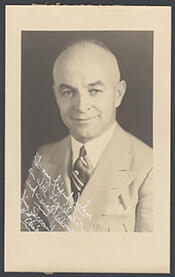
Here you will find contact information for Representative James Seccombe, including email address, phone number, and mailing address.
| Name | James Seccombe |
| Position | Representative |
| State | Ohio |
| District | 16 |
| Party | Republican |
| Status | Former Representative |
| Term Start | January 3, 1939 |
| Term End | January 3, 1941 |
| Terms Served | 1 |
| Born | February 12, 1893 |
| Gender | Male |
| Bioguide ID | S000218 |
About Representative James Seccombe
James Seccombe (February 12, 1893 – August 23, 1970) was a United States Representative from Ohio who served one term in Congress from 1939 to 1941. A member of the Republican Party, he represented his constituents during a significant period in American history on the eve of the United States’ entry into the Second World War, contributing to the legislative process during his single term in office.
Seccombe was born in Mineral City, Tuscarawas County, Ohio, on February 12, 1893. He attended the public schools in Mineral City and, after his family moved in 1906, in Canton, Ohio. Growing up in an industrial region of the state, he was exposed early to the concerns of working-class communities that would later shape his public service. His relocation to Canton placed him in one of Ohio’s important manufacturing centers, where he would spend the rest of his life and build his political career.
Before entering public office, Seccombe worked in industry and pursued technical training. From 1913 to 1932 he was employed in various factories as a machinist and foreman, gaining firsthand experience with industrial production and labor conditions. Seeking to advance his technical knowledge, he attended the Y.M.C.A. night school of automobile engineering in 1930 and 1931, reflecting his engagement with the rapidly developing automotive and mechanical fields that were central to Ohio’s economy in the early twentieth century.
During the First World War, Seccombe served in the United States Army, entering military service on July 17, 1917. He served overseas during the conflict and remained on active duty until his discharge on April 10, 1919. His wartime service placed him among the generation of veterans whose experiences abroad informed their later civic and political engagement, and it contributed to his public standing in Canton and the wider region.
Seccombe’s formal political career began at the municipal level in Canton. He was a member of the Canton City Council from 1928 to 1933, during which time he served successively as vice president, president, and mayor of the council. He became increasingly active in Republican Party affairs and was a delegate to the Republican State conventions held in Canton, Ohio, in 1932, 1934, and 1936. In 1935 he was elected mayor of Canton, a position he held until his resignation in December 1938. His tenure as mayor coincided with the later years of the Great Depression, when local governments faced substantial economic and social challenges.
Building on his municipal and party experience, Seccombe was elected as a Republican to the Seventy-sixth Congress, serving in the U.S. House of Representatives from January 3, 1939, to January 3, 1941. As a Representative from Ohio, he participated in the democratic process and represented the interests of his constituents during a period marked by the final phase of the New Deal and mounting international tensions in Europe and Asia. Although he sought to continue his service, he was an unsuccessful candidate for reelection in 1940 to the Seventy-seventh Congress, bringing his congressional career to a close after one term.
After leaving Congress, Seccombe remained active in public service at the state and local levels. He served as a state tax examiner in Canton, Ohio, in 1941 and 1942, contributing to the administration of Ohio’s tax laws during the early years of the Second World War. Beginning in 1942, he became director of the Stark County Board of Elections, a position he held from 1942 until 1970. In this capacity he oversaw the conduct of elections in one of Ohio’s key counties for nearly three decades and played a significant role in safeguarding the integrity of the electoral process. His expertise in election administration was recognized statewide when he served as president of the Ohio Association of Election Officials in 1959.
James Seccombe died in Canton, Ohio, on August 23, 1970. He was buried in North Lawn Cemetery in Canton. His long career, spanning industrial work, military service, municipal leadership, a term in the United States House of Representatives, and many years in election administration, reflected sustained engagement with public life in Ohio across the first seven decades of the twentieth century.