Senator James Fowler Simmons
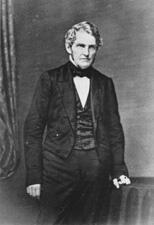
Here you will find contact information for Senator James Fowler Simmons, including email address, phone number, and mailing address.
| Name | James Fowler Simmons |
| Position | Senator |
| State | Rhode Island |
| Party | Republican |
| Status | Former Representative |
| Term Start | May 31, 1841 |
| Term End | March 3, 1863 |
| Terms Served | 2 |
| Born | September 10, 1795 |
| Gender | Male |
| Bioguide ID | S000417 |
About Senator James Fowler Simmons
James Fowler Simmons (September 10, 1795 – July 10, 1864) was an American businessman and politician from Rhode Island who twice served as a United States senator, first as a Whig and then as a Republican. A manufacturer by background, he represented Rhode Island in the Senate from March 4, 1841, to March 3, 1847, and again from March 4, 1857, through the first year of the American Civil War, resigning on September 5, 1862. He is notable for having had the Senate formally consider expelling him for corruption during his second term.
Simmons was born on a farm near Little Compton, Rhode Island, on September 10, 1795. He attended a private school in Newport, receiving a basic formal education that prepared him for commercial and industrial pursuits rather than a professional career in law or the learned professions. In 1812 he moved to Providence, Rhode Island, where he was employed in various manufacturing concerns in both Rhode Island and neighboring Massachusetts. These early experiences in the textile and related industries acquainted him with the emerging industrial economy of New England and laid the foundation for his later prominence as a manufacturer and advocate for industrial interests.
By 1822 Simmons had engaged independently in the manufacture of yarn at Simmonsville, a manufacturing village he helped develop in what is now the Thornton section of Johnston, Rhode Island. He moved to Johnston in 1827, where he resumed and expanded the manufacture of yarns and also engaged in agricultural pursuits, combining farming with textile production. His residence in Johnston, located on Atwood Avenue, became a local landmark and still stands as a reminder of his role in the town’s early industrial growth. Through these activities he established himself as a leading figure in the community and gained the economic and social standing that facilitated his entry into public life.
Simmons began his political career in the Rhode Island House of Representatives, where he served from 1828 to 1841. During these thirteen years in the state legislature, he represented the interests of a growing industrial constituency and participated in debates over economic development, infrastructure, and the evolving political landscape of Rhode Island in the Jacksonian era. His long tenure in the state House provided him with legislative experience and a statewide reputation that positioned him for higher office.
In 1841 Simmons was elected as a Whig to the United States Senate from Rhode Island, commencing his first term on March 4, 1841, and serving until March 3, 1847. During this period he was chairman of the Senate Committee on Manufactures in the Twenty-seventh and Twenty-eighth Congresses and a member of the Committee on Printing in those same Congresses. In these roles he contributed to the legislative process on issues central to the Whig program, including protective tariffs and support for American industry, and he represented the interests of his manufacturing constituents in Rhode Island. His service in Congress occurred during a significant period in American history marked by economic fluctuation, debates over banking and tariffs, and the early intensification of sectional tensions.
After running unsuccessfully for reelection in 1846, Simmons left the Senate at the close of his term in 1847 and returned to Johnston, where he resumed his former manufacturing and agricultural pursuits. He remained active in public affairs and sought to return to the Senate, but he was an unsuccessful candidate in 1850. During this interval out of federal office, he continued to be identified with the industrial and commercial interests of his state as the national party system shifted from the Whig-Democrat alignment toward the emerging Republican coalition.
Simmons reentered national politics in the 1850s as the Whig Party disintegrated and the Republican Party rose to prominence on an antislavery and pro-Union platform. In 1856 he was again elected to the United States Senate, this time as a Republican, and he took his seat on March 4, 1857. His second term extended into the early years of the American Civil War. During the Thirty-seventh Congress he served as chairman of the Committee on Patents and the Patent Office, a position that reflected both his manufacturing background and the importance of technological innovation to the Union war effort and to the broader industrial economy. As a Republican senator during this critical period, he participated in the legislative work of sustaining the Union and managing wartime policy while continuing to represent Rhode Island’s industrial interests.
Simmons’s second Senate career was overshadowed by a major corruption controversy. On July 12, 1862, Senator Joseph A. Wright of Indiana submitted a resolution calling for Simmons’s expulsion from the Senate. Wright stated that Secretary of War Edwin M. Stanton had accused Simmons of securing a contract for two Rhode Island rifle manufacturers in exchange for a fee of $20,000 in promissory notes. In response to the broader concerns raised by such conduct, Congress passed a law barring members of Congress from accepting fees for services before agencies of the United States government. On July 14, 1862, the Senate Judiciary Committee issued a report finding Simmons’s conduct “entirely inexcusable” but concluding that to punish him under the new statute would constitute an ex post facto violation, since his actions had occurred before the law was enacted. The Committee therefore left it to the Senate to decide what action, if any, to take. The Senate adjourned three days later without acting on the case. Before the Senate could reconvene in December and again take up the question of his possible expulsion, Simmons resigned his seat on September 5, 1862, thus ending his congressional service amid scandal.
After his resignation from the Senate, Simmons returned once more to his earlier pursuits in manufacturing and agriculture in Johnston. He lived quietly in Rhode Island during the final years of the Civil War era, no longer holding public office but remaining identified with the industrial community he had helped to develop. James Fowler Simmons died in Johnston on July 10, 1864. He was buried at North End Cemetery in Providence, Rhode Island, closing the career of a figure who had been both a significant representative of his state’s manufacturing interests in Congress and a central actor in one of the notable corruption controversies in the history of the United States Senate.