Representative James William Stokes
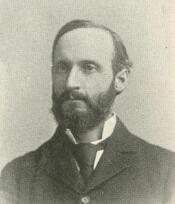
Here you will find contact information for Representative James William Stokes, including email address, phone number, and mailing address.
| Name | James William Stokes |
| Position | Representative |
| State | South Carolina |
| District | 7 |
| Party | Democratic |
| Status | Former Representative |
| Term Start | December 2, 1895 |
| Term End | March 3, 1903 |
| Terms Served | 4 |
| Born | December 12, 1853 |
| Gender | Male |
| Bioguide ID | S000947 |
About Representative James William Stokes
James William Stokes (December 12, 1853 – July 6, 1901) was a Democratic U.S. Representative from South Carolina who served in the United States Congress from 1895 to 1901, contributing to the legislative process during four terms in office. His congressional career unfolded during a significant period in American history marked by the end of Reconstruction, the entrenchment of Jim Crow laws, and the political realignment of the South into a one-party Democratic stronghold.
Stokes was born near Orangeburg, Orangeburg County, South Carolina, where he attended the local common schools. He pursued higher education at Washington and Lee University in Lexington, Virginia, from which he was graduated in 1876. Following his graduation, he returned to South Carolina and taught school for twelve years, reflecting an early commitment to education and public service in his home state.
After more than a decade in teaching, Stokes undertook professional training in medicine. He was graduated in medicine from Vanderbilt University in Nashville, Tennessee, adding a formal medical education to his background. Despite this qualification, he did not pursue a long-term medical practice; instead, by 1889 he had turned his attention to agricultural pursuits. His work as a farmer and his engagement with agrarian issues led to his election as president of the State Farmers’ Alliance, a prominent organization in the late nineteenth century that advocated for the interests of farmers and rural communities amid economic hardship and political change.
Stokes’s prominence in agricultural and Democratic Party circles propelled him into state politics. He was elected to the South Carolina Senate in 1890, where he participated in shaping state legislation during a period of intense debate over race, suffrage, and economic policy. In 1892 he further advanced his political profile by serving as a delegate to the Democratic National Convention, aligning himself with the national Democratic Party at a time when Southern Democrats were consolidating their control over regional politics.
In 1892 Stokes sought election to the U.S. House of Representatives but was defeated by the African-American Republican George W. Murray for a seat in the Fifty-third Congress. He ran again in 1894 and was successful, presenting his credentials as a Democratic Member-elect to the Fifty-fourth Congress. He served from March 4, 1895, until June 1, 1896, when his seat was declared vacant following a contested election. During this same period, in 1895, South Carolina ratified a new state constitution that effectively disfranchised Black voters through mechanisms such as literacy tests and poll taxes. This constitutional change helped transform South Carolina into a one-party Democratic state, where electoral contests were largely decided in the Democratic primaries, a situation that persisted until the passage of federal civil rights legislation in the 1960s.
Stokes was subsequently elected as a Democrat in a special election to fill the vacancy created by the contest over his seat, returning to Congress later in 1896. He was re-elected as a Democrat to the Fifty-fifth, Fifty-sixth, and Fifty-seventh Congresses, and in total he served continuously from November 3, 1896, until his death. Throughout these terms, he represented the interests of his South Carolina constituents in the House of Representatives, participating in the democratic process at the federal level during an era of rapid industrialization, agrarian unrest, and the solidification of segregationist policies in the South.
James William Stokes died in office in Orangeburg, South Carolina, on July 6, 1901. His death brought an end to a career that had spanned education, medicine, agriculture, state politics, and national legislative service. He was interred in Sunnyside Cemetery in Orangeburg, leaving a legacy closely tied to the political and social transformations of South Carolina and the broader South at the turn of the twentieth century.