Representative James H. Torrens
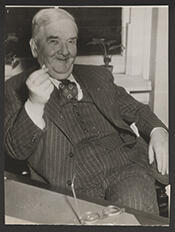
Here you will find contact information for Representative James H. Torrens, including email address, phone number, and mailing address.
| Name | James H. Torrens |
| Position | Representative |
| State | New York |
| District | 21 |
| Party | Democratic |
| Status | Former Representative |
| Term Start | January 6, 1943 |
| Term End | January 3, 1947 |
| Terms Served | 2 |
| Born | September 12, 1874 |
| Gender | Male |
| Bioguide ID | T000315 |
About Representative James H. Torrens
James H. Torrens (September 12, 1874 – April 5, 1952) was an American politician who served as a U.S. Representative from New York and was a prominent Tammany Hall political figure in the first half of the twentieth century. A member of the Democratic Party, he represented his New York district in the United States Congress from 1943 to 1947, contributing to the legislative process during two terms in office and participating actively in the democratic governance of a nation at war and in the early postwar period.
Torrens was born in New York City on September 12, 1874. He was educated in the city’s public schools, an upbringing that rooted him in the urban, working- and middle-class communities he would later represent. Little is recorded about his early family life, but his education in New York’s public system and lifelong residence in the city placed him squarely within the social and political milieu that produced many of Tammany Hall’s leaders and operatives.
Before entering elective office, Torrens pursued a business career in New York’s manufacturing sector. He was for many years vice president and treasurer of the D. Emil Klein Company, a cigar manufacturing firm. His work in this industry connected him to the city’s commercial life and to the concerns of both employers and workers in a period when manufacturing and organized labor were central to New York’s economy. In the early 1930s, he expanded his civic involvement by serving as vice president and general director of the Washington Heights Chamber of Commerce, a role that further established him as a community leader and advocate for local business interests during the difficult years of the Great Depression.
Torrens’s political career was closely intertwined with Tammany Hall, the powerful Democratic organization that dominated much of New York City politics. As a member of Tammany Hall, he rose to become the Democratic leader of New York’s “old” 21st congressional district, a district that corresponded roughly to what is today the 16th congressional district and encompassed Washington Heights and parts of Harlem and the Bronx. He held this party leadership position from 1933 to 1947, exercising considerable influence over local political organization, patronage, and candidate selection at a time when Tammany Hall remained a central force in city and state politics.
Torrens entered national office during World War II. In a special election held on February 29, 1944, he was elected as a Democrat and American Labor Party candidate to the Seventy-eighth Congress to fill the vacancy caused by the resignation of Representative Joseph A. Gavagan. Although he did not initially covet a congressional career, he agreed to run at the specific urging of President Franklin D. Roosevelt, who regarded Torrens as the strongest candidate to hold the seat for the Democratic Party in a politically sensitive district. Torrens’s service in Congress, which is recorded as spanning from 1943 to 1947, thus coincided with a significant period in American history, encompassing the final years of World War II and the beginning of the postwar transition.
Following his special-election victory, Torrens secured a full term in the general election of November 1944. He served in the House of Representatives through the remainder of the Seventy-eighth Congress and the entirety of the Seventy-ninth Congress, with his term concluding on January 3, 1947. During these two terms, he participated in the legislative process and represented the interests of his New York constituents in a Congress preoccupied with wartime mobilization, veterans’ issues, and the early contours of postwar domestic and foreign policy. He chose not to run for reelection in 1946, thereby ending his brief but notable tenure in national office. He was succeeded in the House of Representatives by Jacob Javits, who would later become a prominent Republican senator from New York.
After leaving Congress, Torrens remained associated with the political and social circles that had defined his public life, though he did not return to elective office. He continued to be remembered as a Tammany Hall stalwart and a figure closely identified with the Washington Heights community and the broader Democratic organization in Manhattan. His long years in party leadership and his wartime service in Congress marked him as a transitional figure between the heyday of Tammany Hall and the evolving political landscape of postwar New York.
James H. Torrens died at St. Elizabeth’s Hospital in New York City on April 5, 1952. He was interred at Gate of Heaven Cemetery in Hawthorne, New York, a burial place that also holds several of his contemporaries and acquaintances, including Babe Ruth, James Cagney, and James Farley. His career, spanning business, local civic leadership, party organization, and congressional service, reflected the intertwined worlds of urban commerce and machine politics that shaped New York City in the first half of the twentieth century.