Representative James A. Traficant Jr.
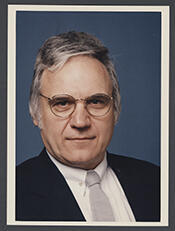
Here you will find contact information for Representative James A. Traficant Jr., including email address, phone number, and mailing address.
| Name | James A. Traficant Jr. |
| Position | Representative |
| State | Ohio |
| District | 17 |
| Party | Democratic |
| Status | Former Representative |
| Term Start | January 3, 1985 |
| Term End | July 24, 2002 |
| Terms Served | 9 |
| Born | May 8, 1941 |
| Gender | Male |
| Bioguide ID | T000350 |
About Representative James A. Traficant Jr.
James Anthony Traficant Jr. (May 8, 1941 – September 27, 2014) was an American politician who served as a Democratic member of the United States House of Representatives from Ohio from 1985 to 2002. A staunch economic populist known for his flamboyant personality, he represented Ohio’s 17th congressional district, which centered on his hometown of Youngstown and included parts of three counties in northeast Ohio’s Mahoning Valley. Over nine consecutive terms in Congress, he contributed to the legislative process and represented the interests of his constituents during a significant period in late twentieth-century and early twenty-first-century American political history.
Traficant was born into a working-class Catholic family in Youngstown, Ohio, the son of Agnes (née Farkas) and James Anthony Traficant. He was of mostly Italian and Hungarian ancestry and grew up amid the industrial, steel-centered economy of the Mahoning Valley, an environment that later shaped his economic populism and advocacy for blue-collar workers. He graduated from Cardinal Mooney High School in Youngstown in 1959. An accomplished athlete, he attended the University of Pittsburgh, where he played quarterback for the Pitt Panthers football team; among his teammates was future Pro Football Hall of Famer Mike Ditka. In 1963 he received a B.S. in education from the University of Pittsburgh. That same year he was drafted in the twentieth round (276th overall) of the National Football League draft by the Pittsburgh Steelers and tried out for both the Steelers and the Oakland Raiders of the American Football League, but he did not play professional football.
Continuing his education while building a career in public service, Traficant earned an M.S. in educational administration from the University of Pittsburgh in 1973 and a second master’s degree in counseling from Youngstown State University in 1976. Early in his professional life he worked in community and social-service roles in the Youngstown area. He served as consumer finance director for the Youngstown Community Action Program, and he taught courses on drug and alcohol dependency and recovery at Youngstown State University and Kent State University. He also lectured on drug and alcohol abuse for colleges and government agencies outside Ohio and taught at the Ohio Peace Officer Training Academy. From 1971 to 1981 he was executive director of the Mahoning County Drug Program, gaining regional prominence for his work in substance-abuse prevention and rehabilitation.
In 1981 Traficant was elected Sheriff of Mahoning County, a position he held until 1985. As sheriff he gained national attention by refusing to execute foreclosure orders on several unemployed homeowners during a period of severe economic decline following the closures and relocations of steel and steel-associated businesses in the Youngstown area. This defiance endeared him to many local residents who were facing job losses and home foreclosures. His tenure as sheriff was also marked by legal controversy. In 1983 he was charged in federal court with racketeering for allegedly accepting bribes. Representing himself, he argued that he had accepted the money as part of a personal undercover investigation into corruption. He was acquitted and became the only person to win a Racketeer Influenced and Corrupt Organizations Act (RICO) case while acting as his own attorney. The publicity from the RICO trial significantly increased his visibility and helped launch his congressional career.
In 1984 Traficant was elected to the U.S. House of Representatives as a Democrat from Ohio’s 17th District, defeating three-term Republican incumbent Lyle Williams. He took office on January 3, 1985, and was subsequently reelected eight times, serving nine terms until 2002, generally without serious opposition. During his years in Congress, he was known for his idiosyncratic and often theatrical style on the House floor, delivering short, rambling, and sometimes crude speeches that frequently attacked free trade policies and the Internal Revenue Service. He typically ended his remarks with the phrase “beam me up,” a reference to the television series Star Trek. He also became widely recognized for his flamboyant fashion sense, including cowboy boots, polyester suits, and a distinctive toupee.
Substantively, Traficant was an economic populist and a strong advocate for manufacturing and “Buy American” provisions in federal spending bills. He was a supporter of immigration reduction and was best known legislatively for proposals that constrained certain enforcement activities by the Internal Revenue Service against delinquent taxpayers. Over time, particularly after Republicans gained control of the House in 1995, he increasingly voted with Republicans on key issues despite remaining a registered Democrat. On abortion, he aligned closely with the National Right to Life Committee, voting with its position 95 percent of the time in the 105th Congress and 100 percent of the time in the 106th and 107th Congresses. Nonetheless, he broke with many conservatives by voting against all four articles of impeachment against President Bill Clinton. In 2001, after he voted for Republican Dennis Hastert for Speaker of the House, House Democrats stripped him of his seniority and denied him committee assignments; Republicans also declined to seat him on any committees, making him the first rank-and-file House member in more than a century to serve without a single committee assignment.
Traficant was involved in several high-profile and controversial causes during his congressional tenure. He championed the case of John Demjanjuk, a Ukrainian-born autoworker from Seven Hills, Ohio, who had been convicted in Israel and sentenced to death as the Nazi concentration camp guard known as “Ivan the Terrible.” For nearly a decade, Traficant, along with commentator Pat Buchanan, argued that Demjanjuk had been denied a fair trial and was a victim of mistaken identity. In 1993 the Supreme Court of Israel overturned Demjanjuk’s conviction on the basis of reasonable doubt. Demjanjuk was later deported to Germany in 2009 and convicted there as an accessory to murder, though he died before his appeal could be heard. Traficant also took up the case of former Nazi and NASA scientist Arthur Rudolph, brought to the United States under Operation Paperclip. Following Buchanan’s recommendation to reconsider Rudolph’s denaturalization, Traficant addressed the Friends of Arthur Rudolph in Huntsville, Alabama, arguing that Rudolph’s loss of citizenship was the result of a “powerful Jewish lobby” influencing Congress and that it violated Rudolph’s civil rights. He introduced a resolution in Congress calling for an investigation into the Office of Special Investigations’ handling of Rudolph’s case and planned to meet Rudolph at Niagara Falls in 1990, though Rudolph was arrested by immigration officials in Toronto before the meeting could occur. In addition, Traficant twice asked the FBI to investigate the missing-person case of Philip Taylor Kramer, a musician and engineer whose family he knew; the FBI opened a case and assisted local authorities, while Traficant’s office conducted its own inquiries.
Traficant’s congressional career ended amid serious federal corruption charges. On May 4, 2001, he was indicted on multiple counts, including taking campaign funds for personal use. Once again he chose to represent himself, contending that the prosecution was part of a longstanding vendetta against him dating back to his 1983 RICO case. After a two-month trial, on April 11, 2002, he was convicted on ten felony counts, including bribery, racketeering, tax evasion, filing false tax returns, and forcing his congressional staff to perform personal chores at his Ohio farm and his houseboat in Washington, D.C. On July 24, 2002, the House of Representatives voted to expel him, 420–1, with nine members voting “present” and four not voting; Representative Gary Condit cast the lone vote against expulsion. He was the first member expelled from the House since Michael Myers in 1980 following the Abscam scandal. On July 30, 2002, U.S. District Judge Lesley Wells sentenced Traficant to eight years in prison and fined him $150,000. He entered the Federal Correctional Institution, Allenwood Low, on August 6, 2002, under Bureau of Prisons ID number 31213-060, and ultimately served a seven-year sentence.
While incarcerated, Traficant spent his first seventeen months at Allenwood and claimed he was placed in solitary confinement shortly after arrival for “incitement to riot” after telling a guard, “People can’t hear you. Speak up.” During his seven years in prison, he refused all visitors, explaining that he did not want anyone to see him in those circumstances. He nonetheless attracted support from some controversial figures, including neo-Nazi David Duke, who urged visitors to his website to contribute to a personal fund for Traficant and posted a letter from him alleging that the Department of Justice had targeted him for, among other reasons, his defense of Demjanjuk. In that letter, Traficant claimed to possess information about incidents such as Waco, Ruby Ridge, Pan Am Flight 103, the disappearance of Jimmy Hoffa, and the assassination of President John F. Kennedy, which he suggested he might reveal in the future. Author Michael Collins Piper, who wrote “Target: Traficant, The Untold Story” and helped circulate the letter, later stated that material he had written about Traficant was widely recirculated online and denied that Traficant had any direct connection to Duke.
Despite his incarceration, Traficant remained a political figure in his home district. In 2002, while still imprisoned at Allenwood, he ran as an independent candidate for his former House seat, receiving 28,045 votes, or about 15 percent of the total, in a race won by his former aide, Democrat Tim Ryan. He was among the few individuals in U.S. history to seek federal office while incarcerated. Traficant was released from prison on September 2, 2009, at age 68, and was placed on three years of supervised release. Four days later, on September 6, 2009, approximately 1,200 supporters welcomed him home at a banquet that featured an Elvis Presley impersonator and a Traficant lookalike contest, with attendees wearing “Welcome home Jimbo” T-shirts. At the event he sharply criticized the FBI, the IRS, and what he described as an overreaching federal government, and he stated that he was considering another run for Congress.
In the years following his release, Traficant reentered public life on a limited scale. In November 2009 he wrote a column in the American Free Press continuing his defense of John Demjanjuk. In January 2010 he signed a three-month, part-time contract as a weekend talk radio host for Cleveland news/talk station WTAM, with the agreement allowing him to leave if he chose to run for office. He appeared as a guest speaker at a Tea Party protest in Columbiana, Ohio, reflecting his continued appeal among some anti-establishment and populist constituencies. In September 2010 he was certified to run again for his old congressional seat, campaigning on a platform that included repeal of the Sixteenth Amendment to the United States Constitution, which authorizes the federal income tax. In that election he again faced Tim Ryan and received 30,556 votes, or about 16 percent, losing decisively to his former aide.
In his final years, Traficant remained active in advocacy and organizing. In July 2014 he launched Project Freedom USA, a grassroots campaign aimed, among other goals, at pressuring Congress to abolish the IRS and “divorce” the Federal Reserve, consistent with his long-standing criticism of federal taxation and monetary policy. He continued to live on the farm in Green Township (near Greenford) in Mahoning County, Ohio, which he had purchased in 1987. On September 23, 2014, he was seriously injured in an accident at that farm when a tractor he was driving into a pole barn flipped over and pinned him underneath. He was taken first to Salem Regional Medical Center in Salem, Ohio, and then airlifted to St. Elizabeth’s Health Center in Youngstown. On the evening of September 24 his wife reported that he was sedated and “not doing well.” Supporters, including Jim Condit Jr., a Constitution Party congressional candidate and close associate who had been traveling with Traficant to promote Project Freedom USA, circulated updates, including a September 26 text message stating that life-support machines had been disconnected that afternoon but that Traficant was still breathing and that “thousands are praying.”
James A. Traficant died on September 27, 2014, at age 73, at a hospice in Poland, Ohio, from injuries sustained in the accident. By September 29 his family had held a private funeral and buried him in an undisclosed location, announcing that there would be no public funeral. A subsequent medical investigation determined that he had not suffered a heart attack or seizure before the accident and was not under the influence of drugs or alcohol. The forensic pathologist concluded that the cause of death was positional asphyxiation, finding that Traficant had been unable to breathe because of the weight of the overturned tractor pressing on him.