Senator James Fisher Trotter
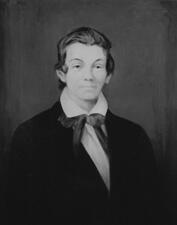
Here you will find contact information for Senator James Fisher Trotter, including email address, phone number, and mailing address.
| Name | James Fisher Trotter |
| Position | Senator |
| State | Mississippi |
| Party | Democratic |
| Status | Former Representative |
| Term Start | January 1, 1838 |
| Term End | March 3, 1839 |
| Terms Served | 1 |
| Born | November 5, 1802 |
| Gender | Male |
| Bioguide ID | T000380 |
About Senator James Fisher Trotter
James Fisher Trotter (November 5, 1802 – March 9, 1866) was a United States senator from Mississippi and a member of the Democratic Party who served one term in Congress during a significant period in American history. Over the course of his public life he held a series of important legislative, judicial, and academic positions in Mississippi, contributing to the development of the state’s legal and political institutions while representing the interests of his constituents at both the state and national levels.
Trotter was born on November 5, 1802, in Brunswick County, Virginia. In his youth he moved with his family to eastern Tennessee, where he attended private schools. He pursued the study of law and was admitted to the bar in 1820, beginning a legal career that would underpin his later service in public office. His early training and admission to practice at a relatively young age positioned him for rapid advancement in the legal profession on the expanding southern frontier.
In 1823, Trotter commenced the practice of law in Hamilton, Mississippi, then a developing community in the state. Like many members of the antebellum southern political class, he owned slaves, a fact that reflected and reinforced the social and economic order of Mississippi during this period. His legal work and growing prominence in the community led to his election to the Mississippi House of Representatives, where he served from 1827 to 1829. He then advanced to the Mississippi Senate, serving there from 1829 to 1833, gaining legislative experience and establishing himself as an influential Democratic leader in state politics.
Trotter’s legislative service was followed by a series of judicial appointments. In 1833 he became a judge of the circuit court of Mississippi, presiding over a wide range of civil and criminal matters at a time when the state’s legal system was still taking shape. His judicial reputation and party affiliation later contributed to his selection for higher office at the federal level, as Mississippi’s leaders turned to him to fill a vacancy in the United States Senate.
As a member of the Senate, Trotter participated in the democratic process and represented the interests of his Mississippi constituents during a turbulent era in national affairs. He was appointed as a Democrat to the U.S. Senate to fill the vacancy caused by the resignation of Senator John Black and served from January 22 to July 10, 1838, when he resigned. His service in Congress, which has sometimes been broadly described as occurring from 1837 to 1839, took place in the aftermath of the Panic of 1837 and amid debates over banking, federal power, and the expansion of slavery, issues of particular importance to Mississippi and the broader South. During this one term in office, he contributed to the legislative process as part of the Democratic majority.
After leaving the Senate, Trotter returned to judicial service in Mississippi. From 1839 to 1842 he served as a judge of the Mississippi Supreme Court, initially appointed to fill the vacancy created by the resignation of Justice Daniel W. Wright and then elected in 1839 to a six-year term. He resigned from the court in 1842 and moved to Holly Springs, Mississippi, where he resumed the practice of law. His work in Holly Springs further solidified his standing as a leading legal figure in the northern part of the state.
In the later stages of his career, Trotter continued to combine judicial and academic roles. He served as vice chancellor of the northern district of Mississippi from 1855 to 1857, exercising important equity jurisdiction in that region. From 1860 to 1862 he was a professor of law at the University of Mississippi, contributing to the training of a new generation of lawyers on the eve of and during the early years of the Civil War. In 1866 he was appointed circuit judge once again and served in that capacity until his death later that year.
James Fisher Trotter died on March 9, 1866, in Holly Springs, Mississippi, while still in judicial office. He was buried in Hillcrest Cemetery in Holly Springs. His long career as legislator, judge, senator, and legal educator reflected the trajectory of many antebellum southern Democrats, and his service in Congress and in Mississippi’s courts left a lasting imprint on the state’s political and legal history.