Representative James Boyd Utt
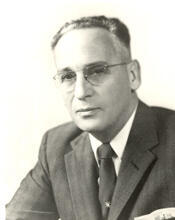
Here you will find contact information for Representative James Boyd Utt, including email address, phone number, and mailing address.
| Name | James Boyd Utt |
| Position | Representative |
| State | California |
| District | 35 |
| Party | Republican |
| Status | Former Representative |
| Term Start | January 3, 1953 |
| Term End | January 3, 1971 |
| Terms Served | 9 |
| Born | March 11, 1899 |
| Gender | Male |
| Bioguide ID | U000034 |
About Representative James Boyd Utt
James Boyd Utt (March 11, 1899 – March 1, 1970) was an American lawyer and politician who represented California in the United States House of Representatives from 1953 until his death in 1970. A Republican from Orange County, California, he served nine consecutive terms in Congress and was known as one of the most right‑wing members of the House during his tenure. Over nearly two decades in Washington, he participated in the legislative process during a significant period in American history, representing the interests of his constituents while advancing a strongly conservative agenda.
Utt was born in Tustin, Orange County, California, on March 11, 1899. He attended local public schools and later enrolled at Santa Ana Junior College. Before entering public office, he worked in the region’s citrus industry, including employment in citrus processing, reflecting the agricultural character of Orange County in the early twentieth century. His early professional experiences in this sector helped root his political base in the rapidly developing communities of Southern California.
Utt’s formal higher education was completed relatively late in life. In 1946, at the age of forty‑seven, he graduated from the University of Southern California Law School. He was admitted to the bar the following year and began practicing law in Santa Ana. His legal career, combined with his earlier work in taxation and public administration, provided a foundation for his later legislative work, particularly on fiscal and regulatory matters.
Utt’s political career began at the state level. He served in the California State Assembly from 1933 to 1937, representing his Orange County constituency during the New Deal era. Concurrently and subsequently, he developed expertise in tax administration, serving as an inheritance tax appraiser in the California state controller’s office from 1936 to 1952. This long tenure in the controller’s office gave him practical experience in state finance and taxation policy that he would later draw upon in Congress.
In 1952, Utt was first elected to the 83rd Congress as a Republican from California. In that initial race he polled 106,972 votes (63 percent) against Democrat Lionel Van Deerlin, who received 62,779 votes (37 percent). His district quickly became a safe Republican seat, and he faced no serious challengers in subsequent elections. In the heavily Democratic year of 1958, he won reelection with 152,855 votes (58 percent) to Democrat T. R. Boyett’s 109,794 votes (42 percent). In 1962, when Richard M. Nixon lost the California governorship to Democrat Edmund G. “Pat” Brown, Sr., Utt nonetheless secured reelection with 133,737 votes (68.5 percent) to Democrat Burton Shamsky’s 61,393 votes (31.5 percent). In the wake of Barry Goldwater’s landslide presidential defeat in 1964, he still polled about 65 percent of the vote in his district. His strongest showing came in 1966, when Ronald W. Reagan was elected governor; Utt received 73.1 percent of the vote. In 1968, the year Richard Nixon was elected president, he again drew a commanding share, winning 72.5 percent. His 1968 victory proved to be his last election, as he died in office before completing the 1969–1971 term. He was succeeded in California’s 35th Congressional District by fellow conservative Republican John G. Schmitz.
Throughout his congressional service from 1953 to 1970, Utt was identified with the far right wing of the Republican Party. He opposed federal welfare programs, likening them to a “child molester who offers candy before his evil act,” and consistently resisted expansions of the federal government’s social role. On civil rights legislation, he voted against the Civil Rights Acts of 1960, 1964, and 1968, and against the Voting Rights Act of 1965; he did not vote on the Civil Rights Act of 1957 and abstained from voting on the 24th Amendment to the U.S. Constitution, which abolished the poll tax in federal elections. He was a strong supporter of Senator Barry Goldwater’s 1964 presidential campaign, aligning himself with Goldwater’s conservative challenge within the Republican Party. Utt criticized Attorney General Robert F. Kennedy’s handling of Mississippi Governor Ross Barnett as “vicious” and described the civil rights policies of the Kennedy and Johnson administrations as “Hitlerite.”
Utt also became known for his embrace of conspiracy theories and his outspoken positions on cultural and foreign policy issues. In 1963, he claimed that “a large contingent of barefooted Africans” might be training in Georgia as part of a United Nations military exercise to take over the United States, and he suggested that African Americans might be training in Cuba to invade the country. He believed that the Beatles’ music caused artificial neurosis in young people and frequently spoke favorably of the John Birch Society, even though he was not a member, criticizing Richard Nixon’s denunciations of the organization as ridiculous. During his time in Congress he sponsored bills that would outlaw the federal income tax and sought to prevent the deportation of Andrija Artuković, a far‑right Croatian figure. He expressed opposition to statehood for Hawaii, citing concerns about the Territory’s racial and religious composition, and opposed interracial sex and sex education. A staunch supporter of the Vietnam War, he reportedly told his grandson James that he would rather see him dead and buried in Vietnam than have him hold opposing political views; his grandson disagreed with Utt’s stance on the war. In 1966, journalist Drew Pearson reported that Utt was among four members of Congress who received the “Statesman of the Republic” award from the Liberty Lobby for their “right‑wing activities.”
James Boyd Utt died on March 1, 1970, at Bethesda Naval Hospital in Maryland, ten days short of his seventy‑first birthday. He had suffered a heart attack while attending church and did not recover. His death brought to a close seventeen years of continuous service in the House of Representatives. Utt was interred at Santa Ana Cemetery in Santa Ana, California. His passing placed him among the members of the United States Congress who died in office in the mid‑twentieth century, and memorial services and tributes in his honor were later published by the Government Printing Office in 1970.