Representative James Edward Van Zandt
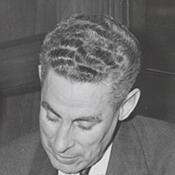
Here you will find contact information for Representative James Edward Van Zandt, including email address, phone number, and mailing address.
| Name | James Edward Van Zandt |
| Position | Representative |
| State | Pennsylvania |
| District | 20 |
| Party | Republican |
| Status | Former Representative |
| Term Start | January 3, 1939 |
| Term End | January 3, 1963 |
| Terms Served | 11 |
| Born | December 18, 1898 |
| Gender | Male |
| Bioguide ID | V000069 |
About Representative James Edward Van Zandt
James Edward Van Zandt (December 18, 1898 – January 6, 1986) was an American Republican Party politician who represented Altoona, Pennsylvania, as a Representative from Pennsylvania in the United States Congress for eleven consecutive terms from 1939 to 1963. A prominent member of the Republican Party, he contributed to the legislative process during a significant period in American history, participating in the democratic process and representing the interests of his constituents through the Great Depression, World War II, the early Cold War, and the civil rights era.
Van Zandt was born in Altoona, Blair County, Pennsylvania, where he spent his early years; his maternal grandparents were Irish immigrants, a heritage that informed his connection to the large immigrant and working-class communities of his district. He attended the public schools of Altoona before entering military service as a young man. In 1917, during World War I, he enlisted as an apprentice seaman in the United States Navy and served for two years on active duty. After the war, he continued his association with the sea services as a member of the United States Naval Reserve from 1919 to 1943, rising to the rank of lieutenant. His early military experience and reserve service laid the groundwork for his later prominence in veterans’ affairs and national defense policy.
Following World War I, Van Zandt became deeply involved in veterans’ organizations, most notably the Veterans of Foreign Wars (VFW). In December 1933 he toured the country with retired Marine Corps Major General Smedley Butler to recruit members for the VFW, helping to expand the organization’s national profile during the interwar period. He served as national commander of the Veterans of Foreign Wars from 1934 to 1936, gaining national recognition as a spokesman for veterans’ rights and benefits. During this time he also became associated with the exposure of the so‑called “Business Plot” against President Franklin D. Roosevelt; he later corroborated Butler’s testimony, stating that “agents of Wall Street” had attempted to recruit him for a planned coup shortly after Butler warned him about their activities.
Van Zandt’s prominence in veterans’ affairs and his Republican affiliation led to his election to Congress. In 1938 he was elected as a Republican to the Seventy‑sixth, Seventy‑seventh, and Seventy‑eighth Congresses, and he took his seat on January 3, 1939. His initial period of congressional service lasted until September 24, 1943, when he resigned to reenter active military service during World War II. Even while serving in the House of Representatives, he was called to active duty in September 1941 and served until January 1942 with the Pacific Fleet and on escort convoy duty in the North Atlantic, reflecting his dual commitment to legislative service and national defense.
In September 1943, after resigning from Congress, Van Zandt reentered the Navy as a lieutenant commander and was assigned to duty in the Pacific theater during World War II. He served there until 1946, when he was discharged with the rank of captain. His continued involvement with the Naval Reserve after the war culminated in his retirement as a rear admiral in the United States Naval Reserve in 1959, underscoring a military career that paralleled and reinforced his legislative work on defense and veterans’ issues.
Returning to politics after the war, Van Zandt was elected to the Eightieth and to the seven succeeding Congresses, resuming his service in the U.S. House of Representatives and serving continuously until 1963. During this extended tenure, he became particularly active on defense matters as a member of the House Armed Services Committee. He gained national attention when he delivered an impassioned speech on the House floor leveling charges against Secretary of Defense Louis A. Johnson and Secretary of the Air Force Stuart Symington regarding the procurement of the B‑36 bomber. His speech helped bring into public view the “Revolt of the Admirals,” a major civil–military controversy over defense policy and strategic priorities. The charges he advanced were later traced to a bogus document prepared by Cedric Worth, special assistant to Under Secretary of the Navy Dan Kimball, and on June 9, 1948, the House Armed Services Committee voted to investigate the matter.
Van Zandt also played a direct role in a dramatic episode of congressional history. On March 1, 1954, during the armed attack on the House of Representatives by Puerto Rican nationalists, he tackled and disarmed one of the shooters on the floor of the House, helping to protect his colleagues and restore order. In legislative matters, he aligned himself with moderate civil rights measures of the era. He voted in favor of the Civil Rights Act of 1957 and the Civil Rights Act of 1960, as well as the Twenty‑fourth Amendment to the United States Constitution, which abolished the poll tax in federal elections, reflecting support for incremental federal action to expand voting rights.
In 1962, after more than two decades in the House, Van Zandt sought higher office and became the Republican nominee for the United States Senate from Pennsylvania. He unsuccessfully challenged incumbent Democratic Senator Joseph S. Clark Jr., who won re‑election to a second term by a narrow 51 to 49 percent margin. Van Zandt’s defeat in that race ended his congressional career in January 1963, concluding eleven terms in the House of Representatives during which he had been a consistent Republican voice on defense, veterans’ affairs, and national security, while also participating in key legislative debates of mid‑twentieth‑century America.
After leaving Congress, Van Zandt continued in public service at the state level. He served as a Special Representative of the Governor of Pennsylvania until 1971, advising on matters that drew upon his extensive experience in federal government and military affairs. In his later years he remained a respected figure among veterans and former colleagues. James Edward Van Zandt died on January 6, 1986. In recognition of his long military and congressional service, he was interred at Arlington National Cemetery.