Senator James David Walker
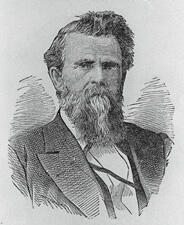
Here you will find contact information for Senator James David Walker, including email address, phone number, and mailing address.
| Name | James David Walker |
| Position | Senator |
| State | Arkansas |
| Party | Democratic |
| Status | Former Representative |
| Term Start | March 18, 1879 |
| Term End | March 3, 1885 |
| Terms Served | 1 |
| Born | December 13, 1830 |
| Gender | Male |
| Bioguide ID | W000057 |
About Senator James David Walker
James David Walker (December 13, 1830 – October 17, 1906) was an attorney and Democratic Party politician from Arkansas who represented the state in the United States Senate from 1879 to 1885. A member of a politically prominent family, he was the nephew of Finis McLean, who served Kentucky in the U.S. House of Representatives, and John McLean, who represented Illinois in both the U.S. House and Senate. During his single term in the Senate, Walker participated in the legislative process at a pivotal time in American history, representing the interests of his Arkansas constituents in the post-Reconstruction era.
Walker was born on December 13, 1830, in Logan County, Kentucky. He moved with his family to Arkansas in his youth, settling in Fayetteville, Washington County. Growing up in a region that was still on the American frontier, he was influenced both by his family’s established political connections and by the developing legal and political institutions of the Southwest. He pursued an education suited to a legal career, studying law in Arkansas and preparing for admission to the bar at a time when formal legal education was often obtained through apprenticeship and independent study rather than through law schools.
After completing his legal studies, Walker was admitted to the bar and began practicing law in Fayetteville, Arkansas. He built a reputation as an attorney in the years before and after the Civil War, working within a legal system that was undergoing rapid change as Arkansas moved from a slaveholding state through secession, war, and Reconstruction. His professional standing and family connections helped establish him as a figure of influence in Arkansas legal and political circles, and he became identified with the Democratic Party as it reasserted control in the state following the end of federal military oversight.
Walker’s prominence as a lawyer and Democrat led to his election to the United States Senate by the Arkansas legislature, and he took office on March 4, 1879. He served one full term, leaving office on March 3, 1885. His tenure coincided with the broader national transition from Reconstruction to what became known as the Gilded Age, a period marked by economic expansion, sectional reconciliation on terms largely favorable to the former Confederacy, and the entrenchment of Democratic dominance in much of the South. As a senator, Walker contributed to the legislative process and participated in debates and votes on issues affecting Arkansas and the nation, including questions of federal spending, internal improvements, and the evolving relationship between the federal government and the states. Throughout his service, he acted as a representative of Arkansas’s interests in the upper chamber of Congress and as a voice for the Democratic Party’s priorities in that era.
After completing his term in the Senate in 1885, Walker returned to Arkansas and resumed his legal and civic activities. He remained a respected elder figure in state Democratic politics and in the legal community, his career reflecting the trajectory of many Southern Democratic leaders who navigated the upheavals of war, Reconstruction, and the reestablishment of local control. James David Walker died on October 17, 1906, closing a life that spanned from the antebellum period through the dawn of the twentieth century and that included service at the highest legislative level of the federal government.