Senator James Walter Wall
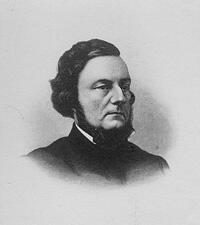
Here you will find contact information for Senator James Walter Wall, including email address, phone number, and mailing address.
| Name | James Walter Wall |
| Position | Senator |
| State | New Jersey |
| Party | Democratic |
| Status | Former Representative |
| Term Start | December 7, 1863 |
| Term End | December 31, 1863 |
| Terms Served | 1 |
| Born | May 26, 1820 |
| Gender | Male |
| Bioguide ID | W000072 |
About Senator James Walter Wall
James Walter Wall (May 26, 1820 – June 9, 1872) was an American politician, lawyer, author, and newspaper editor who served as a United States Senator from New Jersey in 1863. A member of the Democratic Party and a prominent leader of the Peace movement during the American Civil War, he was the son of Garret Dorset Wall, who had also represented New Jersey in the United States Senate. Wall’s brief tenure in Congress occurred during a significant period in American history, and he participated in the legislative process as a senator during one term in office, representing the interests of his New Jersey constituents.
Wall was born in Trenton, New Jersey, on May 26, 1820. He received his early education through private tutoring in Flushing, Queens, New York. He then attended the College of New Jersey (now Princeton University), from which he graduated in 1838. After completing his collegiate studies, Wall read law and was admitted to the bar in 1841. He commenced the practice of law in Trenton and also served as a commissioner in bankruptcy, establishing himself in the legal profession in his native state.
In 1847, Wall moved from Trenton to Burlington, New Jersey, where he continued his legal practice and entered local public life. He was elected mayor of Burlington in 1850, marking his first significant elective office. That same year he was nominated for the Democratic nomination for Congress, but he declined to run. He later sought federal office as a Democratic candidate for election to the Thirty-fourth Congress in 1854, but was unsuccessful. During this period he also developed a literary reputation, publishing in 1856 his travel book “Foreign Etchings or Outline Sketches of The Old World’s Pleasant Places.” The work later drew criticism when it was shown that entire pages describing Italy had been taken without attribution from Hamilton Geale’s 1849 volume “Notes of a Two Years’ Residence in Italy,” leading to Wall’s reputation as a shameless literary plagiarist.
By the late 1850s and early 1860s, Wall had become increasingly active in national Democratic politics. He supported Southern-leaning Democrat John C. Breckinridge in the presidential election of 1860. During the early years of the Civil War, he became involved in the editorial direction of the New York Daily News, a strongly antiwar “peace organ” that opposed many of the Lincoln administration’s wartime policies. The federal government suppressed the newspaper in August 1861. Wall’s outspoken views and “secession proclivities,” as his critics described them, led to his arrest; on September 12, 1861, The New York Times reported that he had been taken into custody, amid rumors in Trenton that further arrests might follow. He was confined for several weeks as a political prisoner at Fort Lafayette in New York Harbor, along with others including George L. Bowne and Pierce Butler, the latter known for his marriage to actress and writer Frances (“Fanny”) Kemble.
Wall was released from Fort Lafayette after pledging allegiance to the Union, but he remained a sharp critic of what he regarded as arbitrary wartime measures. He wrote a widely noted letter to the editor, later published by The New York Times on the first anniversary of the Pratt Street Riot, in which he denounced despotism and defended constitutional liberty. Referring to the presence of Secretary of War Simon Cameron—who had ordered his arrest—at the bar of the Continental Hotel in Philadelphia, Wall asserted that “there, if the great principles of constitutional liberty are not a delusion and a snare, and our boasted freedom a sham, may yet be found a place of refuge for liberty against despotism—the oppressed from the oppressor.” His writings during this period, including “The Constitution: Originating in Compromise, It Can Only Be Preserved by Adhering to Its Spirit, and Observing Its Every Obligation” (1862), articulated his view that the Union could only be maintained by strict fidelity to constitutional principles and compromise.
Wall’s prominence as a Peace Democrat and his established standing in New Jersey politics led to his selection for the United States Senate during the Civil War. Following the death of Senator John Renshaw Thomson, the New Jersey legislature elected Wall as a Democrat to fill the resulting vacancy. He served in the United States Senate from January 14 to March 3, 1863. His service, though brief, placed him at the center of national debates over civil liberties, wartime powers, and the conduct of the war. A member of the Democratic Party, he contributed to the legislative process during this single term in office and formally represented New Jersey during a critical phase of the conflict. He was an unsuccessful candidate for reelection and left the Senate at the close of the Thirty-seventh Congress.
After his short tenure in Congress, Wall returned to Burlington and resumed the practice of law. He also continued his literary and political writing, publishing “Speeches for the Times by Hon. James W. Wall, of New Jersey” in 1864, which collected his addresses and further elaborated his Peace Democrat views. In addition to his legal work, he remained engaged in public discourse through these writings and through his ongoing involvement in Democratic Party affairs. His post-Senate years reflected a combination of professional legal activity and continued advocacy of the constitutional and political principles that had defined his wartime stance.
In 1869, Wall moved from Burlington to Elizabeth, New Jersey, where he lived during the final years of his life. He died there on June 9, 1872, at the age of 52. His remains were returned to Burlington, and he was interred in Saint Mary’s Episcopal Churchyard. Throughout his career—as attorney, mayor, editor, author, and United States Senator—James Walter Wall was a controversial yet significant figure in New Jersey and national politics, particularly remembered for his role in the Peace movement and his opposition to what he viewed as unconstitutional wartime encroachments on civil liberties.