Senator James Whitcomb
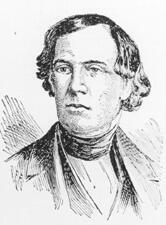
Here you will find contact information for Senator James Whitcomb, including email address, phone number, and mailing address.
| Name | James Whitcomb |
| Position | Senator |
| State | Indiana |
| Party | Democratic |
| Status | Former Representative |
| Term Start | December 3, 1849 |
| Term End | March 3, 1853 |
| Terms Served | 1 |
| Born | December 1, 1795 |
| Gender | Male |
| Bioguide ID | W000349 |
About Senator James Whitcomb
James Whitcomb (December 1, 1795 – October 4, 1852) was a United States senator from Indiana, the eighth governor of Indiana, and a prominent Democratic Party leader in the mid-nineteenth century. Serving in the United States Senate from 1849 to 1853, he completed one term in Congress and contributed to the legislative process during a significant period in American history. As governor during the Mexican–American War, he oversaw the formation and deployment of Indiana’s levies, guided the state through a severe fiscal crisis and effective bankruptcy, and led the movement to replace the state constitution, helping to institute a provision that prevented the government from taking further loans. By skillfully managing Indiana’s finances and public institutions, he came to be regarded as one of the most successful governors in the state’s early history.
Whitcomb was born in Rochester, Windsor County, Vermont, on December 1, 1795, the fourth of ten children of John W. Whitcomb and Lydia Parmenter Whitcomb. In 1806 his family moved west to Cincinnati, Ohio, where they farmed land on the frontier. As a boy he developed a strong love of reading, although his father often discouraged his literary interests, believing that manual labor offered a more reliable path to success. Whitcomb nonetheless pursued learning, teaching school in his youth and cultivating broad intellectual interests. He also developed a lifelong passion for music, mastering several instruments and becoming especially adept with the violin. Throughout his life he was known to dance, sing, and play for friends, and his refined tastes and “fastidious dress and elegant manners” later drew both admiration and criticism, with some contemporaries dismissing him as a fop.
Whitcomb attended Transylvania University in Lexington, Kentucky, where he studied law and absorbed many southern customs and social habits. After graduating in 1819, he moved to Fayette County, Kentucky, where he was admitted to the bar and began practicing law in March 1822. In 1824 he relocated to Bloomington, Indiana, then a small but growing community, and quickly established himself as a capable attorney. His legal skill and personal bearing earned him local respect, and Governor James B. Ray appointed him prosecuting attorney for Monroe County, a position he held from 1826 to 1829. In that role he gained regional prominence by successfully handling several high-profile cases, building the reputation that would underpin his later political career.
Whitcomb entered elective office in 1830 when he was chosen to serve in the Indiana Senate. Colleagues there noted his heavy use of tobacco and his near-constant cigar, but also his forceful views on public policy. He emerged as one of the most outspoken opponents of large-scale internal improvement schemes, and was one of only nine senators to speak against the ambitious Mammoth Internal Improvement Act. Although he initially resisted the measure, he ultimately voted for it after meeting with constituents who strongly urged him to support the program. His state-level work led to national responsibilities when President Andrew Jackson appointed him Commissioner of the General Land Office in Washington, D.C., a post he held from 1836 to 1841. In that capacity he oversaw surveys of large tracts of federal land in Iowa and Wisconsin and managed land disputes in the recently acquired Florida Territory. To better understand land treaties and related documents, he undertook the study of French and Spanish and became fluent in both languages. After resigning from the Land Office in 1841, he moved to Terre Haute, Indiana, where he resumed legal practice and began to position himself as a leading Democrat in the state.
By the early 1840s Indiana was struggling with the collapse of its internal improvement program and a crushing public debt. In 1843 Whitcomb authored a widely read pamphlet, “Facts for the People,” in which he argued against the federal government’s adoption of protective tariffs, reflecting his long-standing Democratic opposition to such measures. That same year he was nominated as the Democratic candidate for governor. The Whig Party, which had championed the internal improvement projects, was under heavy criticism during the administration of Governor Samuel Bigger after the program’s breakdown in 1841 and the loss of most of the state’s investment. Although the state had negotiated a partial bankruptcy by transferring public works to creditors in exchange for a reduction in outstanding debt, Indiana’s obligations remained unsustainably large. Whitcomb campaigned on financial reform and debt management, and he also benefited from a religious controversy: Bigger, a Presbyterian, had made disparaging remarks about Methodists, while Whitcomb himself was a Methodist. Whitcomb and his supporters highlighted Bigger’s comments, and Methodist clergy across the state denounced the incumbent from their pulpits. In the closely contested election, Whitcomb defeated Bigger by a vote of 60,784 to 58,721, with 1,683 votes going to Liberty Party candidate Elizur Demming—a swing of roughly 10,000 votes from the previous gubernatorial contest.
Assuming office as governor, Whitcomb found Indiana’s treasury empty and its credit badly damaged from the failed internal improvements of the 1830s. The preceding administration had reduced the state’s debt, but Indiana still owed about nine million dollars and could make little progress on repayment. During his first term Whitcomb pursued strict economy, advocating major spending cuts, including reductions in government employee wages. These austerity measures, combined with gradually improving state revenues, enabled the government to manage its obligations more effectively. He also supported the creation of important public institutions, including the Indiana School for the Deaf and an asylum for the mentally ill. Although enabling legislation passed, implementation and funding were delayed until the state’s financial crisis could be further alleviated. Running for a second term on the strength of his fiscal program and the improving outlook, Whitcomb won reelection, defeating Whig Joseph G. Marshall by a vote of 64,104 to 60,138, with 2,301 votes going to Liberty Party candidate Stephen Stevens.
Indiana’s finances again deteriorated in 1845, prompting renewed negotiations with creditors. Charles Butler, representing the state’s bondholders, arrived to arrange a second effective bankruptcy. Under the resulting agreement, embodied in the Butler Bill of 1847, the creditors accepted partial ownership of the Wabash and Erie Canal—the state’s only relatively successful public works project—in exchange for a substantial reduction of Indiana’s total debt to about four million dollars, three million of which stemmed from the internal improvement program. The creditors also agreed to refinance the remaining obligations at lower interest rates. Although debt service still consumed nearly half of the state budget, the burden had been reduced to a level that Indiana’s growing economy could sustain. Whitcomb’s leadership in these negotiations and his insistence on constitutional limits to state borrowing led him to champion a new state constitution. In 1848, with Democrats holding strong majorities in both houses of the General Assembly, he urged the legislature to call a constitutional convention to address judicial appointments, debt restrictions, and other structural reforms. He played an important role in the movement that culminated in the 1851 constitution, which included a provision prohibiting the state from contracting new debt except under limited circumstances.
Whitcomb’s tenure as governor was also marked by war and controversy. During his second term the United States declared war on Mexico, and Indiana was required to furnish troops for the Mexican–American War. The state’s militia system had largely lapsed after the decline of Native American conflicts, and the arsenal was nearly empty; the poorly equipped and irregularly trained forces were derisively known as the “cornstalk militia” because they drilled with cornstalks instead of rifles. With the legislature out of session, the treasury depleted, and the state’s credit in ruins, Whitcomb had no public funds to arm and equip the requested regiments. On May 26 he personally borrowed $10,000 on his own credit from the Madison branch of the Bank of Indiana to purchase arms, and the same day he appealed to other branches for similar loans. These efforts allowed Indiana to muster the five regiments requested by the federal government. When the General Assembly reconvened, it reimbursed Whitcomb and assumed his outstanding debts to the bank. His actions as a wartime governor later earned him commemoration in a bronze statue on Monument Circle in Indianapolis. At the same time, he provoked opposition by refusing to reappoint Indiana Supreme Court Justices John T. Sullivan and Charles Dewey, criticizing them for allowing the court’s docket to fall badly behind and arguing that younger men were needed to restore efficiency. His stance contributed to the push to change the method of judicial selection in the 1851 constitution, as legislators, frustrated with his refusal, sought mechanisms to limit executive control over judicial appointments.
Whitcomb’s personal life was marked by both prominence and tragedy. On March 24, 1846, he married Martha Ann Renick Hurts, a wealthy widow. The couple had a daughter, born July 1, 1847, but the pregnancy and childbirth were difficult, and Martha died sixteen days after the birth. Deeply affected, Whitcomb secluded himself for several days in mourning. Their daughter later married Terre Haute lawyer Claude Matthews, who was elected governor of Indiana in 1896, extending Whitcomb’s family connection to the state’s highest office. Beyond politics, Whitcomb was an active Freemason and became the first person in Indiana to be knighted as a Masonic Knights Templar on May 20, 1848. He organized a Masonic lodge that met in his home for several years, and he remained proud of his Masonic affiliations; the Raper Commandery No. 1, Knights Templar, was established in his residence before constructing a dedicated lodge. Reflecting on public life, he once counseled younger professionals to devote themselves first to serious study and to approach politics cautiously, remarking that “the life of a politician is not always reputable; it has so many elements of deceit and dishonesty that it is hard to follow it and keep clean one’s hands and soul.”
In 1848, before the end of his second gubernatorial term, Whitcomb was elected by the Indiana legislature to the United States Senate. A member of the Democratic Party, he resigned as governor and took his seat in the Senate in 1849, serving until his death in 1852. During his single term in Congress he represented Indiana’s interests in a period marked by sectional tensions and debates over economic policy, and he remained a staunch opponent of protective tariffs, consistent with his earlier writings and gubernatorial record. While in Washington, D.C., he also served for several years as vice president of the American Bible Society, a position he held until his death, reflecting his deep religious commitments and his longstanding support for Methodist and broader Protestant causes. His service in Congress occurred during a significant period in American history, and as a senator he participated in the democratic process and contributed to national legislative deliberations while maintaining close ties to his Indiana constituents.
Whitcomb’s health declined in the early 1850s as he developed kidney stones and related kidney disease. Seeking treatment, he traveled to New York City, where he died from the illness on October 4, 1852, while still in office as a United States senator. His remains were returned to Indianapolis and interred in Greenlawn Cemetery, where the state erected a monument over his grave. On July 27, 1892, his daughter arranged for his body to be exhumed and reburied at Crown Hill Cemetery, next to the grave of another prominent Indiana governor, Oliver P. Morton. In his will, Whitcomb left his extensive private library and part of his estate to the Methodist Indiana Asbury College, now DePauw University, and made a substantial bequest to the American Bible Society. His library later became the subject of local lore and was reputed by some patrons to be haunted. Whitcomb’s influence endured in Indiana political culture: the father of poet James Whitcomb Riley, a close friend of the governor, named his son in Whitcomb’s honor, and Whitcomb’s anti-tariff pamphlet “Facts for the People” was revived and circulated nationally during President Benjamin Harrison’s unsuccessful reelection campaign, when tariff policy again stood at the center of national debate. Although he was not universally popular and made many political enemies, Whitcomb was widely respected for his integrity, administrative skill, and decisive leadership during crisis, and he is remembered as one of Indiana’s most important and effective early governors.