Representative James Pleasant Woods
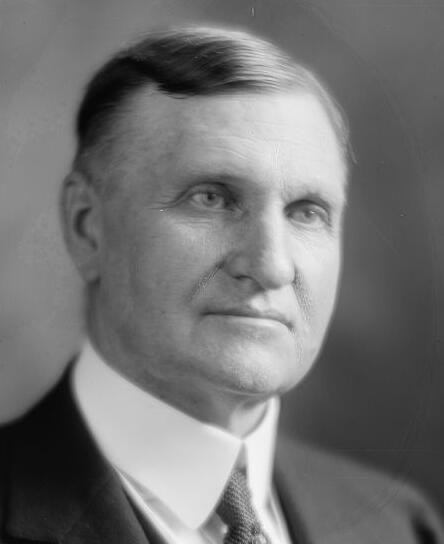
Here you will find contact information for Representative James Pleasant Woods, including email address, phone number, and mailing address.
| Name | James Pleasant Woods |
| Position | Representative |
| State | Virginia |
| District | 6 |
| Party | Democratic |
| Status | Former Representative |
| Term Start | April 2, 1917 |
| Term End | March 3, 1923 |
| Terms Served | 3 |
| Born | February 4, 1868 |
| Gender | Male |
| Bioguide ID | W000723 |
About Representative James Pleasant Woods
James Pleasant Woods (February 4, 1868 – July 7, 1948) was a Democratic U.S. Representative from Virginia who served three terms in the United States Congress between 1917 and 1923. His congressional service occurred during a significant period in American history, encompassing the final years of World War I and the early postwar era, during which he represented the interests of his Virginia constituents and contributed to the legislative process in the House of Representatives.
Woods was born near Roanoke, Virginia, on February 4, 1868. He attended the common schools in the area, receiving a basic education that prepared him for higher studies. He later enrolled at Roanoke College in Salem, Virginia, from which he graduated in 1892. During his time at Roanoke College, he distinguished himself as president of his class and was a member of the Phi Gamma Delta fraternity, reflecting both academic engagement and participation in collegiate life.
Following his graduation, Woods pursued legal studies at the University of Virginia in Charlottesville, where he studied law in 1892 and 1893. He was admitted to the bar in 1893 and commenced the practice of law in Roanoke, Virginia. His legal career quickly intersected with public service at the local level. From 1897 to 1898, he served as a member of the Roanoke City Council, and from 1898 to 1900 he held the office of mayor of Roanoke. These early municipal roles established his reputation as a civic leader and provided a foundation for his later state and national political activity.
Woods’s prominence in Virginia Democratic politics led to his election to Congress. A member of the Democratic Party, he was first elected to the U.S. House of Representatives in a special election to the Sixty-fifth Congress to fill a vacancy caused by the resignation of Carter Glass. In that 1918 special election he won decisively, receiving 88.24 percent of the vote and defeating Independent candidate F. S. Layne. He was subsequently elected to the Sixty-sixth Congress, again filling the vacancy related to Glass’s departure, and was reelected to the Sixty-seventh Congress. In the 1920 general election, he secured reelection with 58.97 percent of the vote, defeating Republican William Doak. Across these three terms, he served from February 25, 1919, to March 3, 1923, participating in the democratic process in the House of Representatives and representing his Virginia district during a transformative era in national affairs.
During his time in national politics, Woods also played a role in party activities beyond his congressional duties. He served as a delegate to the Democratic National Convention in 1920, underscoring his standing within the Democratic Party at both the state and national levels. In 1922, however, he was an unsuccessful candidate for renomination to Congress, which brought his formal congressional career to a close at the end of the Sixty-seventh Congress on March 3, 1923.
After leaving Congress, Woods resumed the practice of law in Roanoke, returning to the profession in which he had first established himself. In addition to his legal work, he devoted substantial time and energy to higher education in Virginia. He served as president and as a member of the board of trustees of Roanoke College for 31 years, playing a major role in the governance and development of his alma mater. He was also a member of the board of trustees of the Randolph-Macon system of colleges, contributing to the broader landscape of Methodist-related higher education in the state, and he served as rector of the board of visitors of the Virginia Polytechnic Institute, further extending his influence in Virginia’s educational institutions. In recognition of his long and distinguished association with Roanoke College, the institution conferred upon him an honorary Doctor of Laws (LL.D.) degree in 1948.
James Pleasant Woods died at his home in Roanoke, Virginia, on July 7, 1948. He was interred in Evergreen Burial Park in Roanoke. His career encompassed service as a local official, mayor, congressman, party delegate, lawyer, and educational leader, and he remained closely identified with the civic and institutional life of Roanoke and the Commonwealth of Virginia throughout his life.