Representative Jane Harman
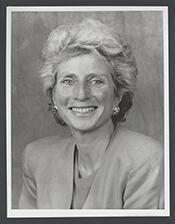
Here you will find contact information for Representative Jane Harman, including email address, phone number, and mailing address.
| Name | Jane Harman |
| Position | Representative |
| State | California |
| District | 36 |
| Party | Democratic |
| Status | Former Representative |
| Term Start | January 5, 1993 |
| Term End | February 28, 2011 |
| Terms Served | 9 |
| Born | June 28, 1945 |
| Gender | Female |
| Bioguide ID | H000213 |
About Representative Jane Harman
Jane Margaret Harman (née Lakes, June 28, 1945) is an American former politician who served as the U.S. Representative for California’s 36th congressional district from 1993 to 1999 and again from 2001 to 2011. A member of the Democratic Party, she served nine terms in the House of Representatives and was a prominent voice on national security and intelligence issues. During her congressional career she was the ranking member on the House Permanent Select Committee on Intelligence from 2002 to 2006 and later chaired the House Homeland Security Committee’s Subcommittee on Intelligence, Information Sharing, and Terrorism Risk Assessment from 2007 to 2011. Often identified as a conservative Blue Dog Democrat on security and some economic issues, she combined centrist positions on defense, trade, and foreign policy with liberal stances on most social issues.
Harman was born Jane Margaret Lakes in New York City on June 28, 1945, the daughter of Lucille (née Geier) and Adolf N. Lakes. She is Jewish. Her father, born in Poland, escaped Nazi Germany in 1935 and worked as a medical doctor in the United States. Her mother, born in the United States, was the first in her family to receive a college education; Harman’s maternal grandparents had immigrated from Russia. When she was four years old, her family moved to Los Angeles, California, where she attended local public schools and graduated from University High School in 1962. She went on to Smith College, earning a bachelor’s degree in government, magna cum laude, in 1966, and served as president of the Smith College Young Democrats. Harman then attended Harvard Law School, receiving her Juris Doctor in 1969, an educational foundation that would shape her subsequent legal and policy career.
After graduating from law school, Harman—then known as Jane Lakes—married attorney Richard A. Frank in 1969; they had two children and spent a short period living in Switzerland before returning to Washington, D.C. She worked for two years as an associate at the law firm Surrey, Karasik and Morse in Washington, D.C., before moving into public service. In 1972 she joined the staff of Senator John V. Tunney of California as a legislative assistant, and in 1973 he named her his senior counsel. She later served as staff director for the Senate Judiciary Subcommittee on Constitutional Rights in 1975, while also teaching at Georgetown. When Tunney lost his bid for reelection in 1976, Harman—by then known as Jane Lakes Frank—entered the Carter administration, serving as Deputy Secretary of the Cabinet at the White House. From 1979 to 1980 she was special counsel to the Department of Defense, deepening her expertise in national security and defense policy.
Harman was first elected to Congress in 1992, becoming the first Smith College graduate to be elected to the U.S. House of Representatives. Representing California’s 36th congressional district, which includes the aerospace center of California and coastal communities in the Los Angeles area, she served in the 103rd, 104th, and 105th Congresses from January 3, 1993, to January 3, 1999. In the Republican wave election of 1994, she narrowly won reelection, defeating Rancho Palos Verdes Mayor Susan Brooks by 812 votes. During her early terms she began building a reputation as a Democrat with strong national security credentials, serving on the House Armed Services Committee and engaging closely with defense and intelligence matters. In 1998 she chose not to run for the 106th Congress and instead entered the 1998 California gubernatorial race. After losing the Democratic nomination to Lieutenant Governor Gray Davis, she briefly taught public policy and international relations at the University of California, Los Angeles, as a Regents’ Professor.
Harman returned to electoral politics in 2000, running to reclaim her former House seat. She narrowly defeated Republican incumbent Steven T. Kuykendall in the general election and reentered Congress in January 2001. She was subsequently reelected with relative ease in 2002, 2004, 2006, 2008, and 2010, ultimately serving nine terms in the House from 1993 to 1999 and 2001 to 2011. Over the course of her service, she sat on all of the major security-related committees: six years on the Armed Services Committee, eight years on the Intelligence Committee, and eight years on the Homeland Security Committee. From 2002 to 2006 she was the ranking Democrat on the House Intelligence Committee, playing a central role in congressional oversight of the intelligence community during the post‑September 11 era. From 2007 to 2011 she chaired the Homeland Security Committee’s Intelligence Subcommittee, focusing on intelligence sharing, terrorism risk assessment, and homeland security policy.
Representing a district with a significant aerospace and defense industry presence, Harman became widely recognized as a national expert at the intersection of security and public policy. She undertook numerous congressional fact‑finding missions to global hotspots, including North Korea, Syria, Libya, Afghanistan, Pakistan, Yemen, and the U.S. detention facility at Guantánamo Bay. Her work earned her several high-level honors from the national security establishment, including the Defense Distinguished Service Medal in 1998, the CIA Agency Seal Medal in 2007, the CIA Director’s Award, and the Director of National Intelligence Distinguished Public Service Medal in 2011. On most domestic and social issues she was considered liberal, earning a 95 percent rating from the liberal advocacy group Americans for Democratic Action, but on intelligence and defense issues she was often described as a centrist. She was one of a number of Democrats who supported the Iraq War and generally adopted moderate positions on economic, trade, and foreign policy issues while maintaining liberal views on matters such as civil rights and reproductive freedom.
Harman’s foreign policy positions included strong support for Israel; she was widely regarded as a tenacious pro‑Israel legislator and maintained close ties to the U.S. intelligence and national security communities. In 2007 she co‑sponsored an Armenian genocide recognition resolution, but while remaining a cosponsor she wrote to House Foreign Affairs Committee Chair Tom Lantos urging him to delay a floor vote, arguing that although the genocide deserved recognition, it was not an opportune time to embarrass Turkey given its strategic role in moderating extremism in the Middle East. In 2009, press reports revealed that National Security Agency wiretaps had reportedly intercepted a 2005 phone call between Harman and an individual described as an agent of the Israeli government, in which she allegedly agreed to lobby the Department of Justice to reduce or drop criminal charges against two employees of the American Israel Public Affairs Committee (AIPAC) in exchange for support for her bid to chair the House Intelligence Committee. Harman denied the allegations and publicly called for release of the full transcript of the intercepted conversation, which the government did not provide. In June 2009 she received a letter from the Department of Justice and the House Ethics Committee stating that she was “neither a subject nor a target of an ongoing investigation by the Criminal Division.” The espionage charges against the two AIPAC employees were later dropped.
Harman resigned from Congress in February 2011, during her ninth term, to become president and chief executive officer of the Woodrow Wilson International Center for Scholars in Washington, D.C., a congressionally chartered foreign policy think tank. She succeeded former U.S. Representative Lee Hamilton and was the first woman to lead the organization. Under her leadership, the Wilson Center expanded its work on global security, regional studies, and public policy dialogue. She stepped down from the presidency in February 2021 after a decade of service and became a distinguished scholar and president emerita of the Center. In parallel with her Wilson Center tenure and afterward, she served on several high‑level advisory bodies, including the Defense Policy Board, the State Department’s Foreign Affairs Policy Board, the Director of National Intelligence’s Senior Advisory Group, and the Homeland Security Advisory Council. From 2011 to 2013 she was a member of the CIA External Advisory Board. She has also been a trustee of the Aspen Institute, an honorary trustee of the University of Southern California, a member of the Presidential Debates Commission and the Committee for a Responsible Federal Budget, and a member of the ReFormers Caucus of Issue One. In addition, she is a member of the Aspen Strategy Group and serves on the executive committees of the Trilateral Commission and the Munich Security Conference.
In her personal life, Harman’s first marriage was to Richard Frank, with whom she had two children. Her second marriage was to audio industry pioneer and businessman Sidney Harman, who served as Under Secretary of Commerce in the Carter administration from 1977 to 1979 before repurchasing and expanding his company, Harman International Industries, and later taking it public. Jane and Sidney Harman had two children together, and she is the grandmother of eight. Sidney Harman retired from Harman International Industries in 2008, purchased Newsweek magazine in 2010, and founded the Academy for Polymathic Study at the University of Southern California before his death in April 2011. Jane Harman maintains her primary residence in Venice Beach, California, and also has homes in Washington, D.C., and Aspen, Colorado. She has remained active in public life and policy debates and was known to be a close friend of Senator Dianne Feinstein; she was among the last people to visit Feinstein before the senator’s death in 2023. In 2021 Harman published a book, “Insanity Defense: Why Our Failure to Confront Hard National Security Problems Makes Us Less Safe” (New York: St. Martin’s Press), reflecting on her decades of experience in national security and offering critiques and recommendations on U.S. policy.