Representative Jay Kim
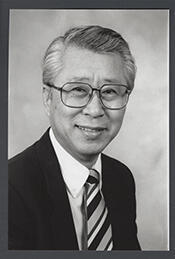
Here you will find contact information for Representative Jay Kim, including email address, phone number, and mailing address.
| Name | Jay Kim |
| Position | Representative |
| State | California |
| District | 41 |
| Party | Republican |
| Status | Former Representative |
| Term Start | January 5, 1993 |
| Term End | January 3, 1999 |
| Terms Served | 3 |
| Born | March 27, 1939 |
| Gender | Male |
| Bioguide ID | K000181 |
About Representative Jay Kim
Jay Chang Joon Kim (Korean: 김창준; born March 27, 1939) is a Korean-American engineer, businessman, and Republican politician who served as a Representative from California in the United States Congress from 1993 to 1999. A member of the Republican Party, he was the first Korean American to be elected to the United States Congress and represented California’s newly created 41st Congressional District for three consecutive terms. Over the course of his service in the House of Representatives, Jay Kim participated in the legislative process during a significant period in American history and received numerous awards recognizing his work in Congress, business, and engineering.
Kim was born in 1939 in Keijō, Korea, Empire of Japan (now Seoul, South Korea). His Korean name, Kim Chang Joon, roughly translates to “golden splendid law.” His early life was marked by the upheavals of mid‑20th‑century Korea; during the Korean War, his family home was destroyed. In 1961 he immigrated to the United States, part of an early wave of postwar Korean migration seeking educational and economic opportunity. After arriving in the United States, he attended a community college before transferring to the University of Southern California in Los Angeles. At USC he earned both a bachelor’s and a master’s degree in civil engineering, laying the foundation for a professional career in infrastructure and design. He later returned to Korea academically, earning a doctorate in political science from Hanyang University, reflecting a growing interest in public affairs and governance alongside his technical training.
In 1976, Kim founded JAYKIM Engineers, a civil engineering firm specializing in the design of highways and water reclamation projects. Under his leadership the company expanded to employ about 130 people with offices in three western states, and it was recognized as one of the top 500 design firms in the United States. Kim became a registered professional engineer in five western states and received multiple professional honors, including an Award for National Excellence in Civil Engineering, an Award for Outstanding Achievement in the Business Community, and an Engineer of the Year Award. His success as an entrepreneur and engineer helped establish his reputation in Southern California’s business community and provided a platform for his later entry into public office.
Kim’s political career began at the local level in Diamond Bar, a newly incorporated suburb in eastern Los Angeles County. In 1990 he was elected to the Diamond Bar City Council, and in 1991 he was chosen as mayor of the city. His service in municipal government coincided with rapid growth in the region and gave him experience in land use, transportation, and local infrastructure issues that would later inform his work in Congress. Building on his local profile and business background, Kim sought federal office as a Republican in the early 1990s, appealing to a diverse and fast‑growing constituency in the Inland Empire and eastern Los Angeles County.
In 1992, Kim was elected to the U.S. House of Representatives as a Republican from California’s newly created 41st District, taking office on January 3, 1993. His election made him the first Korean American to serve in the United States Congress. He was reelected in 1994 and 1996, serving three terms until January 3, 1999. During his tenure in the House of Representatives, Kim participated actively in the democratic process and represented the interests of his constituents during a period marked by debates over federal spending, regulatory reform, and U.S. engagement in Asia. He received a number of awards from advocacy and policy organizations, including the Outstanding Legislative Leadership Award of the 103rd Congress and an Outstanding Leadership Award from the National Asian Pacific American Women’s Forum (NAPAW). He was recognized by the National Federation of Independent Business as a “Guardian of Small Business,” by the 60 Plus Association as a “Guardian of Seniors Rights,” and by the League of Private Property Voters as a “Champion of Property Right.” Other honors included the Watchdogs of the Treasury “Golden Bulldog” Award, the Free Congress Foundation’s Award for Sound Dollar, the National Security Caucus Award for National Security Leadership, and the National Wholesale Grocers and International Food Service Distributors Association’s Thomas Jefferson Award. He also received recognition from Citizens Against Government Waste with an Award for Taxpayer Hero and an award from the U.S. Department of Commerce for the “Spirit of Enterprise.” In 1993 he was a recipient of the Ellis Island Medal of Honor, an award he is noted as having received twice in that year in some biographical listings.
Kim’s congressional career was overshadowed by a major campaign finance scandal. During investigations into his 1992 campaign, he came under scrutiny for accepting illegal campaign donations. He ultimately pleaded guilty to accepting approximately $230,000 in illegal contributions, which amounted to about one‑third of all donations to his 1992 campaign and, at the time, constituted a record level of campaign finance violations. The case placed him on later lists of American federal politicians convicted of crimes and of federal political scandals in the United States. The controversy weakened his political standing within his party and district. In 1998, he lost the Republican primary to Gary Miller, a former colleague from the Diamond Bar City Council. Miller went on to win the general election and held the seat until his election to California’s 31st Congressional District in 2012. Kim attempted a political comeback in 2000, running in the Republican primary for California’s 42nd District, but he was defeated by Elia Pirozzi, who subsequently lost the general election to incumbent Democrat Joe Baca.
After leaving Congress in 1999, Kim remained active in public affairs, business, and U.S.–Korea relations. He authored several books in Korean reflecting on politics and his personal experiences, including “I Am a Conservative” (1994), “Politics in Korea & in U.S.A” (1999), “Go Ahead Shake Me, I’ll Never Give Up My Hope” (2010), and “Be Ready for Next President Trump” (2016). He became a prolific columnist and commentator, contributing “Jay Kim’s Untold Story of U.S. Politics” to Hankook-Ilbo from 2008 to 2010; a bi‑weekly “Jay Kim Column” in the Korea Daily U.S. Edition (JoongAng Ilbo) beginning in 2009; “Jay Kim’s Korean Politics and U.S. Politics” in The Korea Economic Daily, bi‑weekly from 2009; a bi‑weekly column in The Korea Times English edition from 2010 to 2016; and a weekly “Jay Kim’s Congressional Memoir” in The Korea Times English edition from 2010 to 2011. He also hosted or appeared on “Jay Kim Desk” on WKTV in Washington, D.C., on a bi‑weekly basis from 2008 to 2016. His commentary and writing further established him as a bridge figure between Korean and American political discourse.
In the 2000s and 2010s, Kim increasingly focused on institutional efforts to strengthen U.S.–Korea economic and political ties and to cultivate political leadership in South Korea. He served as chairman of the Washington Korean-American Forum beginning in 2008 and, from 2011, as chairman of the Kim Changjoon Future US-Korea Foundation. In 2012 he became chairman of the KimChangJoon Academy, also known as the Kim Changjoon Politics and Economy Academy, which provides training and global market skills to small business owners and aspiring leaders in South Korea, encouraging them to expand abroad. In 2008 he was appointed an international advisor to Incheon International City and became an honorary citizen of Jeju Province and the City of Osan. He was named a goodwill ambassador for Soonchunhyang University Hospital in 2009 and an honorary ambassador for Gyeonggi Province that same year. In 2012 he joined the board of the U.S.–Korea Institute at Johns Hopkins University. In 2013, following the election of President Park Geun-hye, he was appointed to the National Economic Advisory Council in the Office of the President of Korea, where he worked to help small businesses seek opportunities in the global market under the U.S.–Korea free trade agreement. He later commented publicly on Park’s administration and its aftermath; Park was convicted on public corruption and influence‑peddling charges and on April 6, 2018, was sentenced to 24 years in prison in South Korea.
Kim’s later career has also been marked by numerous honorary and advisory roles within South Korea’s regional governments and institutions. In 1995 he was made an honorary citizen of Seoul. In 2008 he became an honorary citizen of Jeju Province and the City of Osan, and in 2015 he was appointed an honorary ambassador for Suhyup, the National Federation of Fisheries Cooperatives. He served as a foreign investment advisor to Gangwon Province beginning in 2015 and was named honorary governor of Gangwon Province—home of the PyeongChang Winter Olympics—in June 2016. He also became an honorary citizen of Osan, Gyeonggi Province, in March 2016 and an honorary ambassador for the Catholic Hospital of Yeouido in November 2019. In recognition of his contributions to bilateral relations and the Korean diaspora, he received the President’s Medal and Award from South Korea in 2012 and the Political Leadership Award from the Korean American Political Leadership Conference that same year. He continues to be listed among prominent Asian Americans and Pacific Islander Americans in the United States Congress.
In the 2010s and 2020s, Kim remained engaged in dialogue on peace and security on the Korean Peninsula and in philanthropic activities in the Korean American community. As chairman of The Washington Korean-American Forum and the Kim Changjoon US-Korea Foundation, he helped organize the Korea–U.S. Leaders Peace Strategy Dialogue held in conjunction with the 2021 PyeongChang Peace Forum in Gangwon Province. The first Korea–U.S. Leaders Peace Dialogue, convened on February 6, 2021, one day before the forum’s opening, brought together members of the National Assembly of South Korea and former members of the U.S. Congress, including Kim, former Representative Loretta Sanchez, and former Representative Bart Gordon, to discuss the South Korea–U.S. alliance, denuclearization of the Korean Peninsula, and peace exchanges with North Korea through sports. Korean-American Representative Young Kim and Representative Ami Bera sent video messages of support. In an interview with the Gangwon Ilbo on February 7, 2021, Kim argued that the Gangwon Winter Youth Olympics could stimulate inter‑Korean exchange and that North Korea’s economic difficulties created a “golden time” for U.S.–North Korea dialogue, emphasizing that “peace is not made with words, but made with strength, through consistent efforts for strengthening the alliance between Korea–U.S.” He has also engaged in charitable work, including a 2021 Lunar New Year donation through Happy Village, an NGO operated by LA’s JoongAng Daily newspaper, to provide hot rice cake soup to 300 elderly people living alone in Los Angeles. Throughout his later life, Kim has continued to use his position and experience in both the United States and Korea to encourage economic development, political leadership, and closer ties between the two nations.