Representative Jay Ford Laning
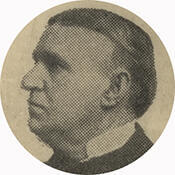
Here you will find contact information for Representative Jay Ford Laning, including email address, phone number, and mailing address.
| Name | Jay Ford Laning |
| Position | Representative |
| State | Ohio |
| District | 14 |
| Party | Republican |
| Status | Former Representative |
| Term Start | December 2, 1907 |
| Term End | March 3, 1909 |
| Terms Served | 1 |
| Born | May 15, 1853 |
| Gender | Male |
| Bioguide ID | L000079 |
About Representative Jay Ford Laning
Jay Ford Laning (May 15, 1853 – September 1, 1941) was an American lawyer and Republican politician who served as a one-term U.S. Representative from Ohio from 1907 to 1909. Over the course of his public career, he participated in the legislative process at both the state and national levels and represented the interests of his Ohio constituents during a significant period in American political and economic development.
Laning was born on May 15, 1853. Details of his early life, including his family background and childhood circumstances, are not extensively documented in the surviving public record, but his subsequent professional path indicates that he received sufficient early education to prepare him for legal study and public service. Coming of age in the post–Civil War era, he entered adulthood at a time when Ohio was emerging as a major center of industry, commerce, and political influence, a context that would shape his later legal and political career.
Educated in the law, Laning became an attorney and entered the legal profession in Ohio. As an American lawyer, he built a career that provided the foundation for his later work in politics. His legal training and practice would have familiarized him with the statutory and constitutional issues confronting a rapidly modernizing state and nation, and it positioned him to participate effectively in legislative deliberations once he entered public office.
Before his service in the United States Congress, Laning was active in Ohio state politics. He served as a member of the Ohio State Senate, where he took part in the formulation of state laws and policies during a period of growth and change in Ohio’s economy and infrastructure. His tenure in the state legislature helped establish his reputation as a public servant and gave him experience in representing constituents, negotiating legislation, and working within the framework of party politics as a member of the Republican Party.
Laning was elected as a Republican to the United States House of Representatives and served one term in Congress from 1907 to 1909. His service in Congress occurred during a significant period in American history, in the midst of the Progressive Era, when issues such as regulation of business, political reform, and social policy were prominent in national debate. As a member of the House of Representatives, Jay Ford Laning participated in the democratic process and contributed to the legislative work of the Sixtieth Congress. During his term, he represented the interests of his Ohio constituents, aligned with the Republican Party, and took part in the consideration of measures affecting both his state and the nation.
After completing his single term in the U.S. House of Representatives in 1909, Laning returned to private life. He resumed his legal and civic activities in Ohio, remaining part of the professional and political community shaped by the era’s industrial and social transformations. Although he did not return to Congress, his earlier service at both the state and national levels reflected a career devoted to law and public affairs.
Jay Ford Laning died on September 1, 1941. His life spanned from the years before the Civil War through the early decades of the twentieth century, encompassing major shifts in American political, economic, and social life. Remembered as an American lawyer and Republican politician who served as a one-term U.S. Representative from Ohio from 1907 to 1909, he left a record of participation in the legislative processes of both Ohio and the United States during a formative period in the nation’s history.