Representative Jay Le Fevre
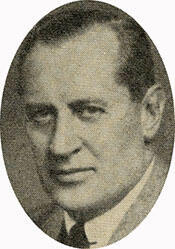
Here you will find contact information for Representative Jay Le Fevre, including email address, phone number, and mailing address.
| Name | Jay Le Fevre |
| Position | Representative |
| State | New York |
| District | 30 |
| Party | Republican |
| Status | Former Representative |
| Term Start | January 6, 1943 |
| Term End | January 3, 1951 |
| Terms Served | 4 |
| Born | September 6, 1893 |
| Gender | Male |
| Bioguide ID | L000161 |
About Representative Jay Le Fevre
Jay Le Fevre (September 6, 1893 – April 26, 1970) was a United States Representative from New York who served four terms in Congress from 1943 to 1951 as a member of the Republican Party. Over the course of his legislative career, he represented his constituents during a pivotal era that spanned the final years of World War II and the early Cold War, contributing to the work of the House of Representatives on issues of postwar recovery and territorial development.
Le Fevre was born in New Paltz, Ulster County, New York, on September 6, 1893, the son of Abram P. Le Fevre and Mary Emma (Van Derlyn) Le Fevre. He was a descendant of the LeFevre family who were among the Huguenot founders of New Paltz in 1678. The LeFevres were French Protestant followers of John Calvin who fled persecution by the ruling Catholic authorities in what is now northern France and southern Belgium. Their original settlement in New Paltz survives today as Historic Huguenot Street, a National Historic Landmark District, and this heritage shaped Le Fevre’s lifelong connection to the community and its institutions.
Le Fevre received his early education locally and graduated from the Lawrenceville School in Lawrenceville, New Jersey, in 1914. He then attended Dartmouth College in Hanover, New Hampshire, where he became a member of the Alpha Delta Phi fraternity. He left Dartmouth in 1916 to return to New Paltz and join his father’s diversified business, A. P. Le Fevre and Son, which dealt in coal, lumber, animal feed, and fuel oil. This early immersion in business and local affairs laid the groundwork for his later roles in both commerce and public service.
With the United States’ entry into World War I, Le Fevre enlisted in the United States Army in September 1918 as a private. His application for a commission was approved, and he was assigned to the Field Artillery Officer Training School at Camp Zachary Taylor in Kentucky. He was still in training as a member of the camp’s Casual Company when the Armistice of November 11, 1918, ended hostilities. Le Fevre was discharged from the Army in December 1918 and subsequently remained active in veterans’ affairs as a longtime member of the American Legion.
After the war, Le Fevre resumed his work with A. P. Le Fevre and Son in New Paltz, eventually becoming president of the company. He emerged as a prominent figure in regional business circles, serving as a director and later president of the Northeast Retail Lumbermen’s Association. In the financial sector, he was a longtime trustee of the New Paltz Savings Bank and a director of the Huguenot Branch of the State of New York National Bank. His civic and educational interests were reflected in his long service on the board of visitors of the State Normal School in New Paltz, an institution that later became the State University of New York at New Paltz. He was also active in cultural and historical organizations, serving as a director of the Huguenot Historical Society, and he belonged to the Holland Society of New York. A committed member of the New Paltz Dutch Reformed Church, he served for many years on its consistory.
A Republican in politics, Le Fevre began his public career at the local level. He served as a village trustee in New Paltz and was a member of the New Paltz Republican Committee from 1930 to 1946. He was also a delegate to the Republican state conventions in 1942 and 1946, participating in the party’s organizational and policy deliberations during a period of national and state political realignment. These roles helped establish his reputation within the party and prepared him for higher office.
In 1942, Le Fevre was elected to the United States House of Representatives as a Republican from New York and took his seat in the Seventy-eighth Congress on January 3, 1943. He was reelected three times, serving continuously through the Seventy-ninth, Eightieth, and Eighty-first Congresses until January 3, 1951. During his four terms in Congress, he participated in the legislative process at a time marked by the conclusion of World War II, the onset of the Cold War, and the beginning of major postwar reconstruction efforts. In 1946, he served on a special congressional committee that toured Europe to develop recommendations for the continent’s post–World War II economic development, contributing to the broader congressional understanding of European recovery needs. He also took part in territorial and statehood issues as a member of the House Interior Committee contingent that visited Hawaii; following this visit, he joined in recommending that the Territory of Hawaii be admitted to the Union. Throughout his tenure, he represented the interests of his New York constituents while engaging with national and international questions of reconstruction and expansion.
Le Fevre chose not to be a candidate for renomination in 1950 and left Congress at the conclusion of his fourth term in January 1951. He returned to his business and civic activities in New Paltz and the surrounding region. That same year he was appointed to the New York State Bridge Authority, where he served from 1951 to 1955, participating in the oversight and development of key transportation infrastructure across the Hudson River and contributing to the state’s postwar economic growth.
In his personal life, Le Fevre married Mildred B. Hiltebrant in January 1920. The couple remained married until his death and were the parents of three children. He continued to be identified with the historic Huguenot community of New Paltz and maintained his involvement in local religious, historical, and educational institutions well into his later years. Jay Le Fevre died in Kingston, New York, on April 26, 1970. He was interred at Lloyd Cemetery in Highland, New York, not far from his native New Paltz, closing a life closely tied to the community his ancestors had helped to found nearly three centuries earlier.