Senator Jean Noel Destréhan
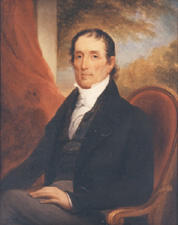
Here you will find contact information for Senator Jean Noel Destréhan, including email address, phone number, and mailing address.
| Name | Jean Noel Destréhan |
| Position | Senator |
| State | Louisiana |
| Party | Unknown |
| Status | Former Representative |
| Term Start | January 1, 1812 |
| Term End | March 3, 1813 |
| Terms Served | 1 |
| Gender | Male |
| Bioguide ID | D000273 |
About Senator Jean Noel Destréhan
Jean-Noël Destréhan de Tours (1754 – October 4, 1823), commonly rendered in English as Jean Noel Destréhan, was a prominent Creole politician and planter of Louisiana who briefly served as a United States Senator from Louisiana from 1811 to 1813. A member of an as-yet unidentified or unaffiliated political faction often described as of an “unknown party,” he participated in the legislative process during one term in office at a formative moment in the early history of the state and the nation. He was also a one-time owner of Destrehan Plantation in St. Charles Parish, one of Louisiana’s notable antebellum landmarks, and the nearby community of Destrehan was named for his family.
Destréhan was born in 1754 in colonial New Orleans, then part of French Louisiana, to Jean Baptiste d’Estrehan and Jeanne Catherine de Gauvret (1729–1773). His father served as colonial treasurer for France in Louisiana, placing the family within the upper ranks of the colonial administrative elite. As a youth, Jean-Noël was educated in France, reflecting both his family’s status and the close cultural and political ties between Louisiana and the French metropole. Through marriage connections he was linked to other leading Creole families; his brother-in-law was Étienne de Boré, who perfected the sugar granulation process that transformed the regional economy and later became the first mayor of New Orleans under American rule.
In 1786 Destréhan married Marie Claudine Eléonore Robin de Logny, further consolidating his position within the Creole planter aristocracy. In 1792 he purchased the property that became known as Destrehan Plantation in St. Charles Parish, where he developed a large sugar-producing estate worked by enslaved laborers. Over the ensuing decades he continued planting and managing his agricultural interests, and the plantation house that emerged there would later be recognized as one of Louisiana’s historic antebellum landmarks. His role as a major planter complemented his rising prominence in public affairs during the late colonial and early American periods.
Following the Louisiana Purchase in 1803 and the reorganization of the region under United States authority, Destréhan quickly assumed a leading role in territorial politics. He served as Speaker of the territorial House of Representatives from 1804 to 1806, representing the interests of the Creole population during the transition from French and Spanish to American governance. In 1806 President Thomas Jefferson appointed him to the Orleans Territorial Council, where he served as president of the council. In this capacity he helped shape the emerging legal and administrative framework of the territory. President James Madison later appointed him to a second legislative council for the Orleans Territory in 1811, and he again served as president. The Orleans Territorial Council, on which Destréhan was a central figure, crafted a legal system grounded in French and Spanish civil codes and established Louisiana’s parish system of local governance, a structure that endures in the state to this day.
As Louisiana moved from territorial status to statehood, Destréhan sought higher executive office. In the first gubernatorial election after statehood, he ran for Governor of Louisiana but finished a distant third behind William C. C. Claiborne and Jacques Villeré. Although unsuccessful in that contest, he was selected to serve in the United States Senate instead. Destréhan’s service in Congress occurred during a significant period in American history, as the nation confronted mounting tensions that would culminate in the War of 1812. He entered the Senate as one of Louisiana’s early representatives in the federal legislature and, as a senator from 1811 to 1813, participated in the democratic process and represented the interests of his constituents. However, he resigned his Senate seat within about a month of taking office and returned to state and local affairs, leaving his brief federal tenure as a relatively small but notable part of his long public career.
After leaving the United States Senate, Destréhan continued to serve in Louisiana’s state government. He was a member of the Louisiana State Senate from 1812 to 1817, participating in the organization and early legislative work of the new state. He again sought the governorship in the 1820 election but placed fourth, reflecting both the competitive nature of early Louisiana politics and the shifting balance among Creole and American-born political leaders. Despite these electoral defeats, he remained an influential figure in public life and in the Creole community.
During the British threat to New Orleans in the War of 1812, culminating in the 1814–1815 Battle of New Orleans, Destréhan played a role in the city’s defense. He served on the Committee of Defense, which coordinated local efforts to support the American military response to the British invasion. His family also contributed directly to the war effort: three of his sons served in a cavalry unit during the campaign. This period underscored his continued engagement in public affairs and his alignment with the American cause, even as he remained deeply rooted in Louisiana’s French Creole culture.
In his later years, Destréhan focused primarily on his plantation and agricultural pursuits in St. Charles Parish. He continued planting until his death at Destrehan Plantation on October 4, 1823. He was buried in the cemetery of St. Charles Borromeo Church in Destrehan, Louisiana. His life spanned the transition of Louisiana from a French and Spanish colonial outpost to an American state, and his career as planter, territorial leader, state legislator, and briefly United States Senator placed him among the key Creole figures who helped shape early Louisiana institutions and its distinctive legal and political traditions.