Representative Jeannette Rankin
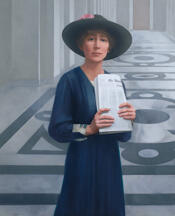
Here you will find contact information for Representative Jeannette Rankin, including email address, phone number, and mailing address.
| Name | Jeannette Rankin |
| Position | Representative |
| State | Montana |
| District | 1 |
| Party | Republican |
| Status | Former Representative |
| Term Start | April 2, 1917 |
| Term End | January 3, 1943 |
| Terms Served | 2 |
| Born | June 11, 1880 |
| Gender | Female |
| Bioguide ID | R000055 |
About Representative Jeannette Rankin
Jeannette Rankin served as a Representative from Montana in the United States Congress from 1917 to 1943. A member of the Republican Party, Jeannette Rankin contributed to the legislative process during 2 terms in office.
Jeannette Rankin’s service in Congress occurred during a significant period in American history. As a member of the House of Representatives, Jeannette Rankin participated in the democratic process and represented the interests of constituents.
Jeannette Pickering Rankin (June 11, 1880 – May 18, 1973) was an American politician and women’s rights advocate who became the first woman to hold federal office in the United States. She was elected to the U.S. House of Representatives as a Republican from Montana in 1916 for one term, then was elected again in 1940. Rankin remains the only woman ever elected to Congress from Montana. Each of Rankin’s congressional terms coincided with the initiation of U.S. military intervention in both world wars. A lifelong pacifist, she was one of 50 House members who opposed the declaration of war on Germany in 1917. In 1941, she was the sole member of Congress to vote against the declaration of war on Japan following the attack on Pearl Harbor. As of 2025, she remains the last member of Congress to vote against a declaration of war. The last time the United States actually issued a formal declaration of war was in June of 1942, when the United States declared war on Hungary, Romania, and Bulgaria, which Rankin abstained from. A suffragist during the Progressive Era, Rankin organized and lobbied for legislation enfranchising women in several states, including Montana, New York, and North Dakota. While in Congress, she introduced legislation that eventually became the 19th Constitutional Amendment, granting unrestricted voting rights to women nationwide. She championed a multitude of diverse women’s rights and civil rights causes throughout a career that spanned more than six decades. In 1920, she helped found the American Civil Liberties Union and served as a vice president.