Representative Jefferson Franklin Long
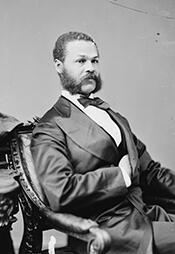
Here you will find contact information for Representative Jefferson Franklin Long, including email address, phone number, and mailing address.
| Name | Jefferson Franklin Long |
| Position | Representative |
| State | Georgia |
| District | 4 |
| Party | Republican |
| Status | Former Representative |
| Term Start | March 4, 1869 |
| Term End | March 3, 1871 |
| Terms Served | 1 |
| Born | March 3, 1836 |
| Gender | Male |
| Bioguide ID | L000419 |
About Representative Jefferson Franklin Long
Jefferson Franklin Long (March 3, 1836 – February 4, 1901) was a U.S. Representative from Georgia, serving one term in the United States Congress from 1869 to 1871. A member of the Republican Party, he was the second African American sworn into the U.S. House of Representatives and the first African-American congressman from Georgia. Long was also the first African-American Representative to speak on the floor of the House, and he remained the only African American to represent Georgia in Congress until the election of Andrew Young in 1972. His service in Congress occurred during the Reconstruction era, a significant period in American history, during which he participated in the legislative process and represented the interests of his constituents.
Long was born into slavery on March 3, 1836, near Knoxville in Crawford County, Georgia, to an enslaved Black mother and a white father. In defiance of laws prohibiting the education of enslaved people, he taught himself to read and write while working as a typesetter for a newspaper in Macon, Georgia. This early exposure to print and public affairs helped shape his political awareness and skills in communication, laying the groundwork for his later prominence as a public figure.
By 1860, Long had married Lucinda Carhart, and the couple began raising a family in Georgia. During these years, he continued to develop his trade skills, and by the end of the American Civil War he had been emancipated and had become a successful merchant tailor in Macon. His tailoring business provided him with economic independence and a respected position in the community, enabling him to emerge as a leader among newly freed African Americans and to engage actively in civic and political life during Reconstruction.
Long’s political career took shape as Reconstruction policies opened limited avenues for Black political participation in the South. By 1867 he had established himself as a prominent member of the Republican Party in Georgia, aligning with the party that championed emancipation and civil rights for formerly enslaved people. Georgia, however, faced federal scrutiny during this period; the state had no congressional representation from March 1869 to December 1870 because of its failure to ratify the Fifteenth Amendment, which guaranteed voting rights regardless of race.
In this turbulent context, Long was elected as a Republican to the Forty-first Congress and was formally seated to serve from January 16 to March 3, 1871. Although his tenure was brief, he contributed to the legislative process during a critical moment in Reconstruction. He gained national attention for his historic speech on the floor of the House of Representatives opposing an amnesty measure that would relieve former Confederates of political disabilities and exempt them from taking an oath of allegiance to the Constitution. Speaking as a man who had been born into slavery, with a mother and ancestors who had all been enslaved, Long warned that removing these disabilities from “disloyal men” who still opposed the federal government and terrorized loyal citizens through Ku Klux Klan violence would invite renewed conflict and undermine the security of loyal Americans, especially in the South.
Long was not a candidate for re-election in 1870, in part due to growing anti-Reconstruction sentiment and resistance within the white-majority Georgia Republican Party, which increasingly distanced itself from Black officeholders. Despite his short congressional service, he remained active in politics and in the Republican Party at the national level. He served as a delegate to the Republican National Conventions from 1872 to 1880, maintaining his involvement in party affairs and continuing to advocate for the rights and interests of African Americans during the waning years of Reconstruction and the onset of Jim Crow.
After leaving Congress, Long returned to Macon and resumed his work as a merchant tailor, operating his business with the assistance of one of his sons. His tailoring enterprise continued to support his family and sustained his standing in the local community. Long lived out his later years in Macon, where he remained a symbol of African-American political achievement during Reconstruction and a reminder of the brief window of opportunity for Black representation in the post–Civil War South.
Jefferson Franklin Long died from influenza on February 4, 1901, in Macon, Georgia. He was interred at Linwood Cemetery in Macon. His pioneering role as the first African-American congressman from Georgia, the first African-American Representative to address the House floor, and the only African American to represent Georgia in Congress until 1972 marks him as a significant figure in both Georgia and national political history.