Representative Jeffery Cohelan
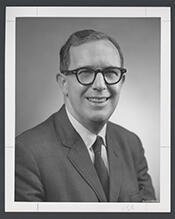
Here you will find contact information for Representative Jeffery Cohelan, including email address, phone number, and mailing address.
| Name | Jeffery Cohelan |
| Position | Representative |
| State | California |
| District | 7 |
| Party | Democratic |
| Status | Former Representative |
| Term Start | January 7, 1959 |
| Term End | January 3, 1971 |
| Terms Served | 6 |
| Born | June 24, 1914 |
| Gender | Male |
| Bioguide ID | C000596 |
About Representative Jeffery Cohelan
Jeffery Cohelan (June 24, 1914 – February 15, 1999) was an American politician and labor leader who served six terms as a United States Representative from California from 1959 to 1971. A member of the Democratic Party, he represented his constituents in the House of Representatives during a significant period in American history, contributing to the legislative process over the course of six consecutive terms in office. He was widely regarded as a “Johnson liberal” for his support of President Lyndon B. Johnson’s progressive domestic agenda, while also backing American involvement in the Vietnam War.
Cohelan was born on June 24, 1914, in San Francisco, California, and was educated in the city’s public schools. He later attended San Mateo Junior College before enrolling at the University of California, Berkeley. While working and remaining active in labor affairs, he completed his higher education and earned a Bachelor of Arts degree in economics from the University of California, Berkeley in 1950. Demonstrating an early interest in international and labor-related issues, he was awarded a Fulbright research scholarship and pursued further study in England, conducting research at the University of Leeds and the University of Oxford in 1953 and 1954.
Before entering national politics, Cohelan built a career in organized labor and local public service. Beginning in 1935, he worked as a milk truck driver, a job that grounded him in the concerns of working people and the daily realities of the labor force. Rising through the ranks of his union, he served as secretary-treasurer of the Milk Drivers and Dairy Employees, Local 302, covering Alameda and Contra Costa Counties, from 1942 until approximately 1958. He also served as a consultant to the University of California Institute of Industrial Relations, reflecting his growing expertise in labor relations and economic policy. Cohelan’s commitment to public service extended to municipal affairs: he was a member of the Berkeley Welfare Commission from 1949 to 1953 and served on the Berkeley City Council from 1955 to 1958. In addition, he was active in foreign policy circles as a member of the San Francisco Council on Foreign Relations.
Cohelan’s transition from local to national office came in the 1958 election, when he campaigned for Congress in a manner that underscored his working-class roots, notably using a milk truck as a campaign vehicle and symbol. Running as a Democrat, he was elected to the Eighty-sixth Congress and subsequently re-elected to the five succeeding Congresses, serving from January 3, 1959, to January 3, 1971. During his tenure in the House of Representatives, he participated actively in the democratic process and represented the interests of his California constituents at a time marked by the civil rights movement, the Great Society legislative program, and the escalation of the Vietnam War. As a Johnson liberal, he was a strong supporter of progressive domestic programs, including social welfare and economic reforms, while simultaneously endorsing continued U.S. involvement in Vietnam, a stance that increasingly placed him at odds with the growing anti-war sentiment in his district.
The changing political climate of the 1960s brought mounting challenges to Cohelan’s congressional career. In 1966, he faced a serious primary challenge from Robert Scheer, editor of Ramparts magazine, who was backed by local civil-rights activists and leaders of the emerging anti-war movement in the San Francisco Bay Area. Although Cohelan survived that challenge, his steadfast support for the Vietnam War and his alignment with more traditional liberalism left him vulnerable as opposition to the war intensified. In the 1970 Democratic primary, Berkeley City Councilman Ron Dellums, running on an anti-war and more insurgent progressive platform, defeated Cohelan. Dellums went on to win the general election and began what would become a long tenure in Congress, marking the end of Cohelan’s service in the House after twelve years.
Following his departure from Congress in 1971, Cohelan remained engaged in public policy, particularly in the field of health care. He served as executive director of the Group Health Association of America, a trade association of Health Maintenance Organizations (HMOs), from 1970 to 1979. In this role, he worked to advance the development and coordination of HMOs and to influence national health policy during a period of growing interest in managed care and cost containment in the American health system.
In his later years, Cohelan lived in Washington, D.C., where he continued to be involved in community and church life. After retiring from his professional responsibilities, he pursued personal interests, notably cooking, and sang in the choir of All Saints Episcopal Church. He resided in Washington, D.C., until his death at home on February 15, 1999. His congressional papers, documenting his legislative activities and public service, are preserved at the University of Oklahoma’s Carl Albert Congressional Research and Studies Center, where the Jeffery Cohelan Collection and Photograph Collection provide a resource for scholars studying mid-twentieth-century American politics, labor, and congressional history.