Representative Jeremiah Donovan
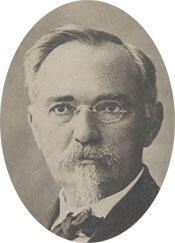
Here you will find contact information for Representative Jeremiah Donovan, including email address, phone number, and mailing address.
| Name | Jeremiah Donovan |
| Position | Representative |
| State | Connecticut |
| District | 4 |
| Party | Democratic |
| Status | Former Representative |
| Term Start | April 7, 1913 |
| Term End | March 3, 1915 |
| Terms Served | 1 |
| Born | October 18, 1857 |
| Gender | Male |
| Bioguide ID | D000422 |
About Representative Jeremiah Donovan
Jeremiah Donovan (October 18, 1857 – April 22, 1935) was a saloon owner and Democratic politician from Norwalk, Connecticut, who served as a Representative from Connecticut in the United States Congress from 1913 to 1915. He was born in Ridgefield, Connecticut, where he attended the public schools and was graduated from Ridgefield Academy. In 1870 he moved to South Norwalk, Connecticut, beginning a long association with the city that would define his business and political career.
After settling in South Norwalk, Donovan engaged in the retail liquor business, operating a saloon that became a well-known local establishment. His saloon was located at the corner of Washington and Water streets in South Norwalk and remained in operation for many years; it is noted that the business continued under the name Donovan’s and Mackenzie’s. He remained active in the retail liquor trade until 1898, when he retired from that line of work and increasingly devoted his time to public service and politics.
Donovan’s early public career developed at the local level in Norwalk. He served as a member of the Norwalk city council, where he gained experience in municipal governance, and he also held the position of deputy sheriff, reflecting his involvement in law enforcement and local administration. At the state and national party level, he was an active Democrat and served as a delegate to the Democratic National Conventions from 1896 to 1916, participating in the nomination processes and policy deliberations of his party over a twenty-year span.
His state legislative career began in the Connecticut House of Representatives, where he served as a member in 1903 and 1904. Donovan then advanced to the Connecticut Senate, representing the 26th District. He served in the Senate from 1905 to 1909 and again from 1911 to 1913. During these years in the General Assembly, he was part of the Democratic leadership in Connecticut and helped shape state legislation in the early twentieth century, building the record and reputation that would support his later election to national office.
Donovan was elected as a Democrat to the United States House of Representatives from Connecticut’s 4th congressional district, serving in the Sixty-third Congress from March 4, 1913, to March 3, 1915. His single term in Congress occurred during a significant period in American history, in the early years of the Woodrow Wilson administration, when major legislative initiatives in areas such as banking, tariffs, and regulatory reform were under consideration. As a member of the House of Representatives, Jeremiah Donovan participated in the democratic process and represented the interests of his constituents in southwestern Connecticut. Although he contributed to the legislative process during his one term in office, he was an unsuccessful candidate for reelection in 1914 to the Sixty-fourth Congress.
After leaving Congress, Donovan returned to municipal politics in Norwalk. He was elected the 17th mayor of the city of Norwalk, Connecticut, serving from 1917 to 1921. His mayoral tenure coincided with the World War I era and the immediate postwar period, years that brought economic and social adjustments to local governments across the country. As mayor, he oversaw city affairs during this time of transition, drawing on his long experience in both local and state government.
In his later years, Donovan retired from active public life. He continued to reside in Norwalk, where he had lived and worked for most of his life. Jeremiah Donovan died in Norwalk, Connecticut, on April 22, 1935. He was buried at St. John’s Cemetery, leaving a legacy as a prominent local businessman, long-serving Democratic Party figure, state legislator, United States Representative, and mayor who played a notable role in the civic life of Norwalk and the state of Connecticut.