Senator Jeremiah Brown Howell
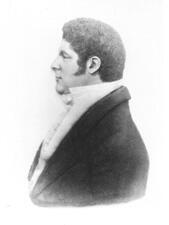
Here you will find contact information for Senator Jeremiah Brown Howell, including email address, phone number, and mailing address.
| Name | Jeremiah Brown Howell |
| Position | Senator |
| State | Rhode Island |
| Party | Republican |
| Status | Former Representative |
| Term Start | November 4, 1811 |
| Term End | March 3, 1817 |
| Terms Served | 1 |
| Born | August 28, 1771 |
| Gender | Male |
| Bioguide ID | H000865 |
About Senator Jeremiah Brown Howell
Jeremiah Brown Howell (August 28, 1771 – February 5, 1822) was a United States senator from Rhode Island who served one term in the early nineteenth century. Born in Providence, Rhode Island, he was the son of David Howell, a prominent jurist and statesman who had served as a delegate to the Continental Congress. Growing up in a family engaged in public affairs, Jeremiah Howell was exposed early to the political and legal currents of the new republic.
Howell attended private schools in Providence and pursued classical studies in preparation for higher education. He enrolled at the College of Rhode Island and Providence Plantations—later renamed Brown University—and graduated in 1789. His education reflected the rigorous classical curriculum of the period, emphasizing Latin, Greek, rhetoric, and moral philosophy, which prepared him for a career in law and public service.
After completing his formal education, Howell studied law and was admitted to the bar in 1793. He commenced legal practice in Providence, where he established himself as an attorney. In addition to his legal work, he became active in the state militia, rising to the rank of brigadier general. His militia service, combined with his legal background and family connections, helped position him as a figure of influence in Rhode Island’s civic and political life in the early decades of the United States.
Howell entered national politics as a member of the Republican Party, then commonly known as the Democratic-Republican Party. He was elected as a Democratic-Republican to the United States Senate from Rhode Island and served from March 4, 1811, to March 3, 1817. His tenure in the Senate coincided with a significant period in American history, including the mounting tensions with Great Britain that culminated in the War of 1812. As a senator, he participated in the legislative process and represented the interests of his Rhode Island constituents during a time of economic strain, maritime conflict, and partisan division.
During his Senate service, Howell took a notable stand on the question of war with Britain. On June 17, 1812, when Congress voted on declaring war, he cast his vote against the declaration. This opposition placed him among those legislators who were skeptical of or opposed to entering the conflict, reflecting concerns prevalent in New England about the impact of war on commerce and regional stability. Despite serving only one term, he held an important leadership role as chairman of the Senate Committee on Pensions during the Fourteenth Congress, where he oversaw matters related to veterans’ benefits and claims. He chose not to be a candidate for reelection at the conclusion of his term in 1817.
After leaving the Senate, Howell returned to private life in Providence. Although specific details of his later professional activities are less fully documented, he remained part of the community in which he had been born, educated, and practiced law. He died in Providence on February 5, 1822. Jeremiah Brown Howell was interred in North Burial Ground in Providence, a historic cemetery that holds the remains of many of the city’s early leaders, underscoring his place within Rhode Island’s political and civic history.